









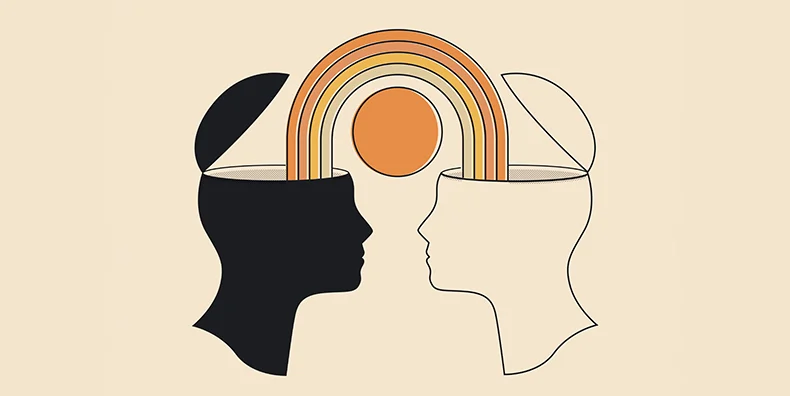
Bipolar disorder is frequently framed as an individual’s battle with brain chemistry, yet its effects rarely remain confined to the person diagnosed. Instead, the condition acts as a third party in every interaction, reshaping the dynamics of romantic partnerships, family structures, friendships, and professional ties. While clinical stability is the primary goal of treatment, the "relational wake" of mood episodes often requires a different kind of management—one rooted in communication, boundary-setting, and radical patience.
As public awareness of mental health grows, the focus is shifting toward how these connections can be preserved. With over 200,000 individuals seeking guidance on this topic through recent clinical resources, it is clear that the strain of unpredictability is a universal challenge for the bipolar community.
Main Facts: The Scope of Relational Impact
Bipolar disorder—encompassing Bipolar I, Bipolar II, and Cyclothymic disorder—is characterized by significant shifts in mood, energy, and activity levels. These shifts do more than alter an individual’s internal state; they fundamentally change how that individual perceives and responds to the world around them.
The Mechanism of Strain
The primary drivers of relationship tension are changes in emotional regulation and judgment. During mood episodes, the brain’s ability to read social cues and process emotional information can become impaired. Research suggests that individuals in the midst of an episode may struggle to interpret everyday facial expressions or vocal tones, leading to frequent misunderstandings. What a partner intends as a neutral comment may be perceived by a person in a depressive state as a harsh critique, or by someone in a manic state as an unnecessary obstacle.
The Breadth of the Connection
The impact is not limited to romantic partners. It extends to:
- Caregivers: Who often face "compassion fatigue" and a shifting of power dynamics.
- Children: Who may experience a lack of consistency or "predictable safety" at home.
- Colleagues: Who may witness fluctuations in productivity or professional reliability.
- Friends: Who may feel sidelined during periods of withdrawal or overwhelmed by the intensity of manic social energy.
Chronology: The Lifecycle of a Bipolar Relationship Cycle
To understand the strain on a relationship, one must look at the chronological progression of the disorder’s episodes. These cycles often follow a pattern of rupture and repair that can, over time, erode the foundation of trust if not managed proactively.
1. The Onset and Escalation (The Rupture)
Whether it is the "up" of mania or the "down" of depression, the beginning of an episode marks a departure from the relationship’s established "baseline."
- Manic/Hypomanic Phase: This is often characterized by a burst of energy that can initially feel positive but quickly becomes taxing. The individual may overcommit to social plans, work projects, or financial expenditures without consulting their partner. In more severe cases, impulsivity leads to risky behaviors, including substance use or hypersexuality, which can inflict deep wounds on romantic trust.
- Depressive Phase: Conversely, the onset of depression often manifests as an "emotional shutdown." The person may become distant, uncommunicative, and physically withdrawn. For the partner or friend, this feels like a sudden wall of silence.
2. The Acute Episode
During the height of an episode, the relationship often enters a "survival mode." The non-bipolar partner may find themselves stepping into a caregiving role—managing medications, handling all household finances to prevent overspending, or explaining the loved one’s absence to others. This period is marked by "expressed emotion," a clinical term for high-stress environments characterized by criticism or emotional over-involvement.
3. The Recovery and Repair
As the episode subsides, a period of "repair" begins. This is a delicate time where the individual with bipolar disorder may feel intense guilt or shame for their actions during the episode, while the loved one may feel lingering resentment or exhaustion. This phase requires significant emotional labor to reconnect and account for the damage done.
4. The Inter-Episode Period (The Vigilance)
Even during periods of stability, the relationship is rarely "free" of the disorder. Experts describe this as "walking on eggshells." Both parties remain hyper-vigilant, scanning for early warning signs (prodromal symptoms) of the next shift. This constant state of alert can prevent the relationship from reaching a state of true relaxation and intimacy.
Supporting Data: Clinical Insights into Connection
Scientific research provides a clearer picture of why these relationships are so uniquely challenged.
Emotional Cue Processing
Studies published in journals such as Frontiers in Psychology indicate that bipolar disorder can interfere with "social cognition." This means that during symptomatic periods, the biological ability to empathize or accurately read a partner’s emotional state is physically diminished. It is not a choice or a character flaw, but a neurological symptom.
The "Expressed Emotion" Factor
Clinicians track "Expressed Emotion" (EE) as a predictor of relapse. Families with high levels of criticism or hostility (High EE) are statistically more likely to see a recurrence of symptoms in the member with bipolar disorder. This creates a feedback loop: the disorder causes relationship stress, and the relationship stress, in turn, triggers the disorder.
Impact on Children and Family Stability
Longitudinal research into family dynamics shows that children of parents with bipolar disorder are sensitive to "mood instability." However, the data also highlights a protective factor: when families maintain clear routines and age-appropriate communication about the illness, children’s mental health outcomes improve significantly. Stability is not just about the absence of symptoms; it is about the presence of a plan.
Official Responses: Expert Strategies for Resilience
Psychiatrists and psychologists emphasize that while bipolar disorder is a permanent condition, the "relational trauma" associated with it does not have to be. Experts like Dr. Alex Dimitriu and Dr. Anne Holmes suggest several professional frameworks for protecting connections.
Professional Intervention Frameworks
- Family-Focused Therapy (FFT): This evidence-based approach brings the family together to view the illness as a "third party" rather than blaming the individual. It focuses on psychoeducation, communication enhancement, and problem-solving skills.
- Interpersonal and Social Rhythm Therapy (IPSRT): This therapy emphasizes the link between stable daily routines (sleep, meals, social interaction) and stable moods. For couples, this means mutually agreeing to protect sleep schedules and minimize chaotic environmental changes.
- The Wellness Plan: Organizations like the Depression and Bipolar Support Alliance (DBSA) advocate for a written "Crisis Plan" or "Wellness Contract." Created during a period of stability, this document gives the partner legal and emotional "permission" to intervene when they see specific warning signs, such as a change in spending or sleep patterns.
The Role of Accountability
Dr. Alex Dimitriu notes that accountability is essential for repair. While the symptoms are biological, the impact on the partner is real. Accountability involves acknowledging the hurt caused during an episode without falling into a cycle of self-loathing. It is the bridge that allows a partner to feel seen and valued after a period of chaos.
Implications: The Long-Term Outlook for Bipolar Connections
The implications of living with bipolar disorder in a social context are profound. It requires a fundamental shift in how we define a "healthy" relationship. In the context of bipolar disorder, health is not defined by the absence of conflict or episodes, but by the strength of the "repair mechanism."
The Evolution of Roles
In long-term marriages, roles may shift frequently between "partner" and "caregiver." A systematic review in Medicina highlights that these shifting power dynamics can lead to emotional fatigue. To combat this, couples must find ways to maintain "non-illness-related" intimacy, ensuring that the diagnosis does not become the sole focus of their life together.
Dating and Disclosure
For those entering new relationships, the disorder presents a unique hurdle: when to disclose. Experts suggest a "middle-path" approach—waiting until a foundation of trust is built, but not so long that the diagnosis feels like a hidden secret. The goal is for the disorder to be a "manageable part" of the conversation rather than a defining barrier.
The Power of Peer Support
Finally, the importance of external support systems cannot be overstated. When the primary relationship is under strain, having access to groups like NAMI (National Alliance on Mental Illness) provides a vent for the non-bipolar partner and a sense of belonging for the individual with the diagnosis.
Conclusion
Bipolar disorder undeniably strains the fabric of personal connections, but it also offers an opportunity for a unique kind of depth. Relationships that navigate these cycles often develop a level of communication, empathy, and resilience that "typical" relationships may never be forced to reach. By moving from a model of blame to a model of collaborative management—supported by data, professional therapy, and structured wellness plans—it is possible to build a stable life together, even in the face of an unpredictable illness.