Editor’s note: This story includes discussion of suicide. If you or someone you know needs help, the national suicide and crisis lifeline in the U.S. is available by calling or texting 988.
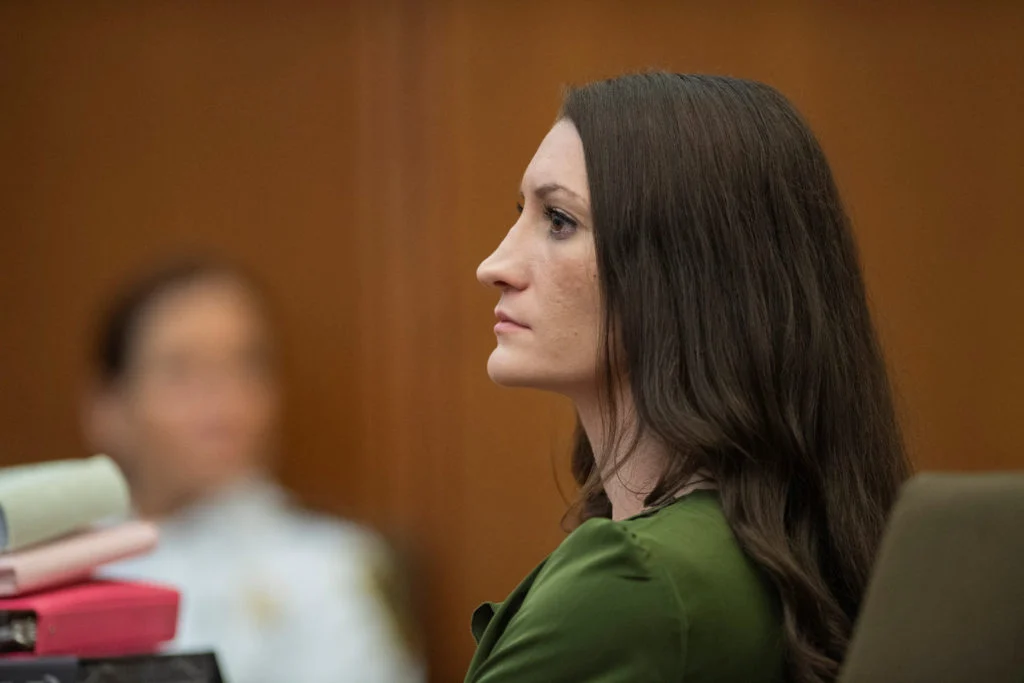
PLYMOUTH, Mass. — The courtroom in Plymouth, Massachusetts, has become the stage for a harrowing collision between clinical psychology and the rigid definitions of criminal law. At the center of this trial is Lindsay Clancy, a 36-year-old former labor and delivery nurse who stands accused of the unthinkable: the strangulation deaths of her three young children—Callan, 8 months; Dawson, 5; and Cora, 5—in January 2023.
As the trial moves through its most critical phase, the testimony of defense-retained psychologist Dr. Paul Zeizel has provided the most substantial argument to date for a verdict of not guilty by reason of mental illness. Zeizel’s testimony suggests that Clancy, suffering from a severe episode of postpartum psychosis exacerbated by bipolar disorder, was fundamentally detached from reality when she ended her children’s lives.
The Core Defense: A Mind Under Siege
Dr. Zeizel, who began treating Clancy following her hospitalization after the incident, spent over 35 hours in direct consultation with her and conducted an exhaustive review of her medical history. His testimony paints a picture of a woman spiraling into a profound psychological abyss long before the tragic events of January 2023.
"She was unable to conform her behavior to the rule of law. She had no appreciation for the wrongfulness of her act," Zeizel told the court, testifying to a "mental disease or a defect" that rendered her incapable of understanding the gravity of her actions.
The defense’s narrative rests on the assertion that Clancy was in the grip of postpartum psychosis, a rare but devastating condition affecting approximately 1 to 2 per 1,000 women after childbirth. Unlike postpartum depression, which is characterized by sadness and exhaustion, postpartum psychosis is a psychiatric emergency often involving delusions, paranoia, and a total break from reality. Zeizel argued that Clancy’s belief that her brain was "damaged" and her paralyzing fear that her children would be taken away from her were not mere worries, but symptoms of a fractured psyche.
Chronology of a Descent
The timeline leading up to the tragedy has been a focal point for both sides. According to records and testimony, Clancy’s mental health deteriorated sharply in late 2022. By December, she sought help at a perinatal clinic, explicitly expressing thoughts of self-harm and a conviction that her condition was irreversible.
Prosecutors, however, have challenged the spontaneity of the event. They allege that on the day of the murders, Clancy engaged in "everyday tasks of living"—taking her daughter to a doctor’s appointment, playing in the snow, and performing specific online searches for pharmacies and restaurants. The prosecution argues that this level of cognitive functioning contradicts the claim of a total psychotic break.
In a tense exchange, defense attorney Kevin Reddington pushed back against this logic, asking Zeizel, "So the fact she is not talking about the unicorns in the corner, she is not slurring her words and she is not unable to walk, to your opinion to a degree of medical certainty, does that mean she is not in a psychotic state?"
Zeizel was unequivocal in his response: "It does not." He maintained that patients suffering from psychosis can often mask their condition while performing routine tasks, a concept often referred to as "high-functioning" psychosis.
Supporting Data and Medical Context
Postpartum psychosis is increasingly recognized by the medical community as a condition distinct from typical parental burnout or depression. It is often triggered by a perfect storm of biological and environmental stressors: hormonal fluctuations following birth, severe sleep deprivation, and pre-existing vulnerabilities—in Clancy’s case, bipolar disorder.
The prosecution’s cross-examination of Dr. Zeizel centered on his potential lack of objectivity. Assistant District Attorney Shanan Buckingham questioned the methodology behind his report, highlighting specific errors and challenging the dual role Zeizel played as both a clinical provider and a witness for the defense. Furthermore, prosecutors noted that while Clancy expressed a desire to die, there were no documented instances in her medical records of her reporting "command hallucinations"—voices or directives instructing her to kill her children.
The trial has also scrutinized the period of Clancy’s recovery and her life in the state psychiatric facility, Tewksbury Hospital. The prosecution noted that in the months following the tragedy, reports from the facility made no mention of her grieving the children on their birthdays or the anniversary of their deaths. This, the prosecution implies, contradicts the defense’s portrayal of a mother who remains deeply connected to the memory of her children.
Zeizel countered this by suggesting the hospital records are incomplete reflections of a person’s internal state. "Lindsay Clancy has bad days and worse days," he stated, adding that in his private sessions, she frequently discusses her children, insisting that she thinks of them "almost every moment of the day."
Official Responses and Prosecution Strategy
The prosecution’s case is built on the premise of premeditation. By highlighting that Clancy sent her husband out of the house to run errands—specifically to pick up medicine and dinner—the state argues that she was acting with a clear, rational mind. This narrative is intended to strip away the defense of mental incapacity, framing the actions instead as a calculated, albeit horrific, series of choices.
The state’s approach is to emphasize the "wrongfulness" of the act, suggesting that if Clancy had the presence of mind to orchestrate her husband’s absence, she must have understood the nature of the violence she was about to commit. The legal definition of "criminal responsibility" hinges on whether a defendant understands the nature of their act and can control their impulses; the prosecution’s goal is to prove that Clancy possessed that capacity.
Implications for Mental Health and Law
The trial of Lindsay Clancy has broader implications for how the legal system handles postpartum mental health. It forces a public conversation about the difference between "postpartum depression" and "postpartum psychosis," and highlights the dangerous gaps in the maternal mental healthcare system.
If the jury finds Clancy not guilty by reason of mental illness, she will be committed to a state mental health facility for treatment, potentially for the rest of her life. If she is convicted, she faces the prospect of life in prison without the possibility of parole.
The case has also reignited debates regarding the "guilt" of mothers who kill their children during psychotic episodes. Legal experts suggest that cases like this are rare but pose significant challenges for juries who must reconcile the heinous nature of the act with the medical reality of a mind that has, in effect, betrayed its owner.
As the trial continues, the testimony of medical experts will remain the deciding factor. The question is not whether Lindsay Clancy killed her children—that is a fact she does not dispute. The question, which the jury must now answer, is whether a woman suffering from the most extreme form of postpartum illness can be held legally and morally accountable for a tragedy that, according to her defense, she was physically and mentally incapable of preventing.
The courtroom remains a somber place, where the clinical language of psychiatry struggles to capture the sheer magnitude of the loss. Whatever the verdict, the case will undoubtedly serve as a landmark study in the intersection of reproductive health, mental illness, and the American justice system.