




By Jackie Keating, LCSW
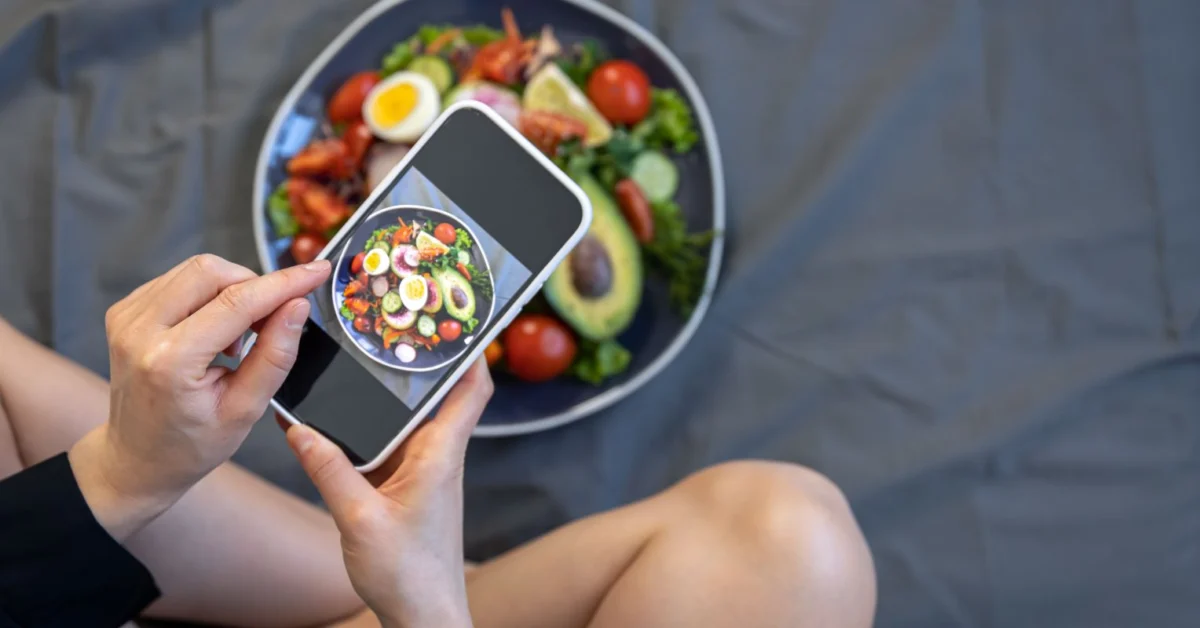
It is a familiar Sunday night ritual: you are tucked into bed, the room is dim, and you reach for your phone. You begin to scroll. Within minutes, the algorithmic feed serves up a “what I eat in a day” video from an influencer. The meals are surgically precise, carb-free, and suspiciously low in calories. Moments later, the algorithm pivots to a "relatable" post about partying, followed by a meme suggesting that a glass of wine is the only way to survive the stresses of modern motherhood. Interspersed between these glimpses into the lives of others are aggressive advertisements for fitness programs, all promising that your life—and your body—can be “fixed” in three simple, transformative steps.
This digital landscape is not merely a collection of harmless content; it is a meticulously designed ecosystem that commodifies insecurity. When you wake up on Monday morning, the echoes of this content follow you into the real world. A coworker mentions a restrictive new diet; a friend texts about “getting summer-ready”; a celebrity announces a new, exclusive plant-based protocol. The message is relentless: your body is a project, and your happiness is contingent upon your ability to optimize it.
The Architecture of Diet Culture in the Digital Age
Social media was built on the promise of connection, but it has inadvertently become the primary delivery system for diet culture. While the industry masquerades as a pursuit of “wellness,” it often functions as a engine for shame, guilt, and anxiety.
The wellness market has exploded into a global behemoth. Data indicates that the industry was valued at approximately $160 billion in 2024, with projections suggesting it will balloon to $360 billion by 2034 (Finklea, 2025). This massive influx of capital is driven by digital creators who monetize the promise of the “perfect” life. By promoting restrictive habits and demonizing entire food groups, these influencers position themselves as architects of health. However, the reality is far darker: they are often profiting from the very insecurities they help to cultivate.
The Myth of the Curated Life
The images presented on platforms like Instagram and TikTok are rarely reflective of reality. Beneath the filtered, aestheticized surface of “wellness” influencers often lie extreme restriction, obsessive fasting, and hidden psychological struggles including chronic stress, depression, and disordered eating. The tragedy is that these influencers are held up as benchmarks for success. The implication is clear: if you simply replicate their behaviors, you will achieve their body, and by extension, their happiness.
This creates a dangerous feedback loop. According to The REACH Institute (2025), nearly half of teens aged 13–17 report feeling significantly worse about themselves after engaging with social media. Furthermore, the data shows that individuals who spend more than three hours a day on social media platforms are twice as likely to develop eating disorders compared to those with lower screen time.
The Intersection of Eating Disorders and Substance Use
Perhaps the most alarming consequence of this digital saturation is the blurred line between healthy behavior and dangerous pathology. While eating disorders (EDs) and substance use disorders (SUDs) may appear distinct to the casual observer, they are deeply linked at a psychological level. Both often function as maladaptive coping mechanisms—tools used to manage unexpressed trauma, overwhelming stress, or a desire for control in an unpredictable world.
A Co-Occurring Crisis
The National Eating Disorders Association (NEDA, 2023) estimates that 50% of people suffering from an eating disorder also struggle with the misuse of alcohol or drugs. This is not a coincidence. Research by Xi and Galaj (2025) underscores an interdependent relationship between these two conditions, where the presence of one significantly increases the risk of developing the other.
Social media exacerbates this by normalizing both ends of the spectrum. Platforms frequently glamorize extreme, restrictive dieting on one hand while simultaneously normalizing “party culture,” where heavy alcohol consumption is presented as a necessary escape from the pressure to be perfect (Holland & Tiggemann, 2023). When both restrictive eating and substance misuse are presented as acceptable—or even aspirational—lifestyle choices, individuals can easily slide into dual disorders without realizing the severity of their condition.
The Deadly Reality: Why Integration is Essential
The mortality rates associated with eating disorders are among the highest of any mental health condition. Anorexia nervosa, in particular, has a staggering fatality rate. When an ED co-occurs with a substance use disorder, the risk becomes compounded. Physical depletion from malnutrition, combined with the physiological strain of substance abuse, creates a volatile environment for the human body.
Statistical Risks and Systemic Failures
Recent data suggests that the co-occurrence of alcohol or hard drug use with an eating disorder can nearly quadruple the mortality risk compared to an ED alone (Mellentin et al., 2022). These individuals also face higher rates of suicide, complex psychiatric comorbidities, and severe anxiety disorders (SAMHSA, 2025).
Despite these stark realities, our current healthcare infrastructure often fails the patient. Treatment centers frequently operate in silos: a facility may specialize in eating disorders while lacking the resources to address substance misuse, or vice versa. This forces patients into a fragmented system of care. For someone suffering from both, recovery becomes a demoralizing “game of whack-a-mole.” They may find stability in one area of their health only to see the other collapse, leading to a cycle of relapse that prevents sustained, long-term progress (Pierce, Joy, & David, 2025).
Implications for Future Prevention and Care
If we are to effectively combat the rise of these co-occurring disorders, we must shift our approach toward true clinical integration.
Toward an Integrative Treatment Model
Clinical care must move away from the separation of ED and SUD treatments. Patients deserve a holistic model that addresses the biological and psychological overlap of these disorders. An integrative approach must consider the cultural forces—the relentless advertisements, the toxic influencers, and the societal pressures—that shape the individual’s environment.
Furthermore, we must demand greater accountability from the digital platforms that profit from this cycle of misery. Early intervention is not just about therapy; it is about education and digital literacy. We must help individuals—particularly the youth—identify the signs of diet culture manipulation before it manifests into a clinical disorder.
A Call to Reclaim Health
The path to recovery is obstructed by a system that finds it more profitable to sell a “quick fix” than to support long-term, systemic healing. To turn the tide, we must:
- Demand Media Literacy: Educating users to recognize the “curated reality” of social media can help mitigate the psychological impact of unrealistic body standards.
- Support Integrated Care: Advocacy for healthcare policies that mandate the treatment of co-occurring disorders in a unified, multidisciplinary setting.
- Deconstruct the “Wellness” Myth: We must shift the public discourse from “optimization” and “perfection” toward a model of health that honors individual diversity and mental well-being over aesthetic results.
In a world that profits from our struggles, reclaiming our health is a radical act. It begins with acknowledging that the “perfect” body sold to us in a 15-second video is not just unattainable—it is often a facade covering deep, systemic pain. By integrating our understanding of how social media, diet culture, and substance use intersect, we can move toward a future where health is defined by our internal well-being rather than our external appearance.
References
- Dane, A., & Bhatia, K. (2023). The social media diet: A scoping review to investigate the association between social media, body image and eating disorders amongst young people. PLOS Global Public Health.
- Finklea, K. (2025). The wrong influence: The link between diet culture and eating disorder. HopeHealth.
- Gordon, K. H., et al. (2023). Co-occurring substance use and eating disorders. Psychiatric Times.
- Hambleton, A., et al. (2022). Psychiatric and medical comorbidities of eating disorders. Journal of Eating Disorders.
- Holland, G., & Tiggemann, M. (2023). Social media and body image: A systematic review. PLOS Global Public Health.
- Mellentin, A. I., et al. (2022). The impact of alcohol and other substance use disorders on mortality in patients with eating disorders. The American Journal of Psychiatry.
- National Eating Disorders Association (NEDA). (2023). Statistics & research on eating disorders.
- Pierce, S., Joy, J. M., & David, A. (2025). Abstinence-based treatment of comorbid eating disorders and ultra-processed food addiction. Frontiers in Psychiatry.
- SAMHSA. (2025). Breaking the silence: What everyone should know about eating disorders.
- The REACH Institute. (2025). How social media is impacting teens.
- Xi, Z.-X., & Galaj, E. (2025). Novel potential pharmacological approaches in treating eating disorders comorbid with substance use disorders. Biomedicine & Pharmacotherapy.