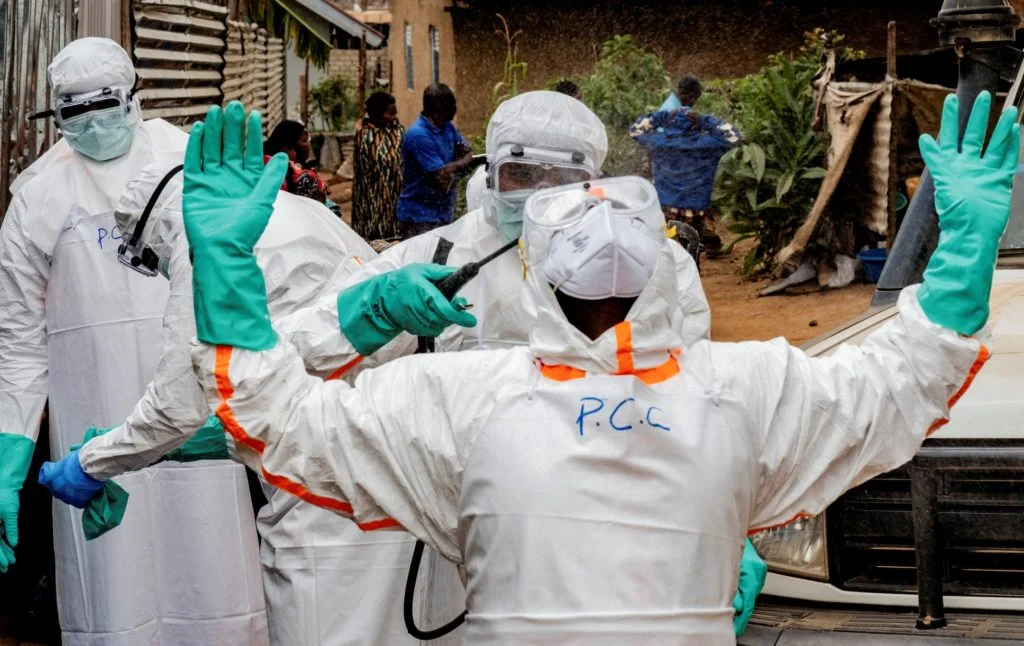
The Democratic Republic of Congo (DRC) is currently grappling with one of the most challenging public health crises of the modern era. As a virulent outbreak of Ebola continues to sweep through the region, the death toll has surged past 2,100, with total confirmed cases exceeding 4,600. Experts warn that this specific iteration of the virus is spreading with unprecedented velocity, outpacing previous outbreaks and threatening to eclipse the devastating West African epidemic of 2014–2016.
This is not merely a medical challenge; it is a complex humanitarian disaster unfolding in a region defined by long-standing political instability, fragmented infrastructure, and deep-seated community mistrust. As the World Health Organization (WHO) and international partners struggle to contain the pathogen, the intersection of conflict, economic hardship, and a lack of specialized resources has created a "perfect storm" that is pushing the DRC’s healthcare system to the brink of collapse.
The Anatomy of the Outbreak: Why This Strain is Different
The current crisis is driven by the Bundibugyo strain of the Ebola virus—a rare and particularly dangerous variant. Unlike the more commonly studied Ebola Zaire, the Bundibugyo strain presents unique diagnostic hurdles. Because global health response efforts had been heavily calibrated toward detecting and treating Ebola Zaire, the sudden emergence of the Bundibugyo variant caught medical teams off guard.
The virus, which exhibits a mortality rate ranging from 25% to 50%, is characterized by its ability to mimic other common illnesses, complicating early detection. By the time health officials identify a case as Ebola, the virus has often already moved through several layers of community transmission. Epidemiologists, including Dr. Anne Rimoin, director of the Center for Global Health Security at UCLA, have noted that the delay in identifying the specific strain allowed the virus to gain a massive head start.
Chronology of the Crisis: A Delayed Detection
The timeline of the current outbreak reveals a critical gap that may have cost thousands of lives. While the official declaration of the outbreak occurred in May, retrospective analysis by the WHO suggests that the virus had been circulating in local communities as early as February.
This three-month "blind spot" was largely due to the diagnostic mismatch mentioned above. Local laboratories, equipped with assays designed for Ebola Zaire, consistently returned negative results for patients who were clearly symptomatic. It was not until samples were transported to advanced laboratories in Kinshasa—capable of identifying the Bundibugyo variant—that the nature of the threat was understood. By then, the "exponential" nature of Ebola had taken hold. Every day of delay in an Ebola outbreak creates an exponential increase in the number of transmission chains that must be tracked, isolated, and broken. Consequently, the international community has spent the subsequent months playing a desperate game of "catch-up."
Supporting Data and Socioeconomic Implications
The impact of the outbreak extends far beyond the hospital walls. In cities like Bunia, the economy is suffering as authorities implement restrictive measures to curb the virus’s spread. For individuals like Claude Steven Kato, a local motorcycle taxi manager, the regulations have been devastating. Authorities have limited motorcycle capacity to a single passenger to reduce physical contact, effectively halving the income of operators who were already living on the margins.
"We used to carry two passengers," Kato explained through an interpreter. "Now, with the restrictions, we are barely making any money."
This economic strain is mirrored in the public health sector. Frontline workers, including nurses and hygienists at facilities like the Elikya Ebola Treatment Center, have reported going as long as three months without pay. The result has been sporadic strikes and a demoralized workforce that is arguably the most essential element in the fight against the disease. Chadrack Rilego, a nurse on the front lines, described the precarious position of health workers: "Without the effort of nurses, doctors, and hygienists, there is nothing. You can’t defeat Ebola. We put our lives in danger, and our families’ lives as well."
Official Responses and the Challenge of Insecurity
The World Health Organization, led by Director General Dr. Tedros Adhanom Ghebreyesus, has consistently sounded the alarm, labeling this the second-biggest Ebola epidemic on record. However, the international response is being severely hampered by the volatile security situation in the DRC.
The eastern part of the country, where the outbreak is most concentrated, is a theater of conflict for various armed groups, including Rwandan-backed factions competing for control over lucrative mineral deposits. This violence creates "no-go zones" for medical teams and prevents civilians from seeking timely treatment. According to the United Nations, between 60% and 70% of Ebola-related deaths are occurring within the community, rather than in clinical settings. This indicates that patients are either unaware of the signs of the disease, fearful of treatment centers, or physically unable to reach them due to insecurity.
Farhan Haq, a UN deputy spokesman, reiterated the urgent need for humanitarian corridors, stating: "We continue to support the response, but our work is hindered by insecurity. We reiterate our call on all parties to the conflict to protect civilians and facilitate safe and sustained humanitarian access."
Clinical Challenges and the Path Forward
Dr. Anne Rimoin emphasizes that overcoming this crisis requires a multi-pronged approach that moves beyond simple medical intervention.
1. Support for the Healthcare Workforce
Health workers are the "cornerstone" of the response. Protecting them requires consistent pay, adequate personal protective equipment (PPE), and mental health support. When nurses and doctors are not supported, they become vulnerable, which in turn leads to further transmission as they return to their families or interact with other patients.
2. Diagnostics and Surveillance
The shift to using appropriate assays for the Bundibugyo strain is a priority. Rapid, accurate testing is the only way to shorten the detection gap. Surveillance must also become more community-centric, utilizing local leaders to build trust and encourage early reporting of symptoms.
3. Community Engagement and Trust
Perhaps the most difficult hurdle is the misinformation that persists in affected areas. As Bienvenu Kambale Vayilanda, director of the Tokobika Medical and Surgical Center, noted, there are still segments of the population who refuse to accept the existence of the virus. Addressing these cultural and psychological barriers is essential for successful contact tracing.
4. Integrating the Response
As Dr. Rimoin pointed out, the Ebola outbreak is an "emergency on top of an emergency." The response must be integrated into a broader effort to stabilize the DRC’s health infrastructure. Treating Ebola in isolation, while the surrounding systems for maternal health, nutrition, and general medicine remain broken, will not yield long-term success.
Implications for Global Health Security
The current DRC crisis serves as a stark reminder of the fragility of global health security. As the virus spreads into new provinces, the window for containment narrows. The international community is watching closely, not only out of humanitarian concern but because the speed and scale of this outbreak highlight systemic weaknesses in how the world prepares for emerging pathogens.
If the current trend continues, this outbreak risks becoming a permanent fixture of the regional landscape, with devastating consequences for the population. Success, if it comes, will not be achieved through technology or medicine alone; it will require a sustained commitment to peace, the empowerment of local healthcare workers, and the rebuilding of trust between the state, international aid organizations, and the people of the Democratic Republic of Congo.
The world is once again reminded that in the face of an invisible, rapidly mutating killer, there is no substitute for a robust, well-funded, and deeply integrated public health infrastructure. The path to resolution is narrow, fraught with political peril, and requires a level of coordination that has yet to be fully realized.