By Editorial Staff
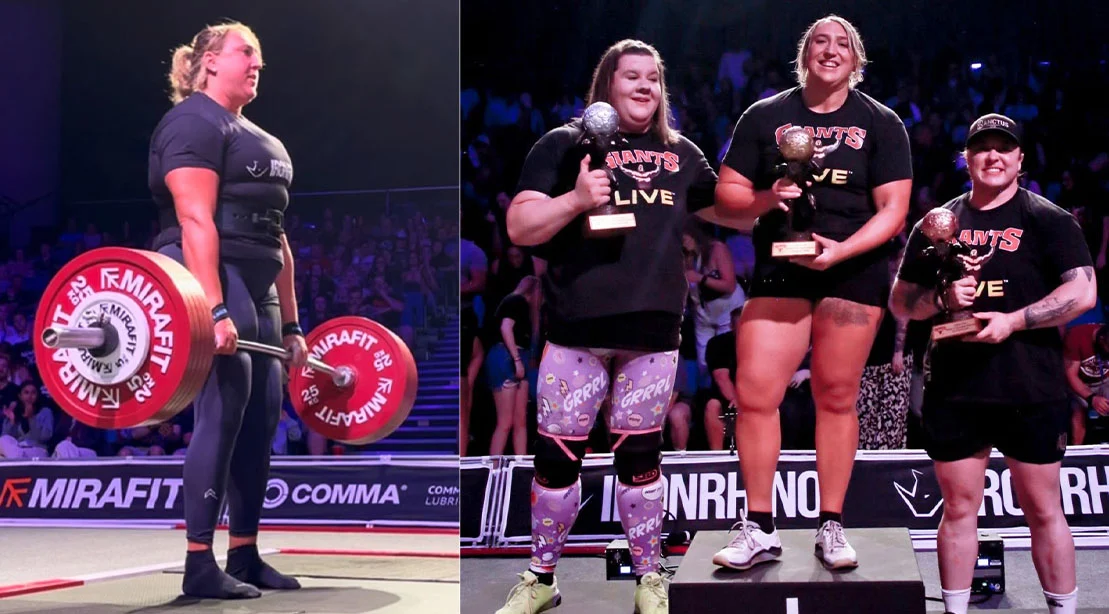
In the demanding world of professional strongwoman competition, consistency is often the most elusive variable. Yet, for 36-year-old Lucy Underdown, the podium has become a familiar second home. On July 25, 2026, at the iconic York Barbican, Underdown once again cemented her status as the premier strength athlete in the United Kingdom, capturing her third consecutive "Britain’s Strongest Woman" title.
Underdown’s victory was not merely a win; it was a masterclass in tactical execution and mental fortitude. By the time the final event concluded, she had established a commanding 4.5-point lead over runner-up Rebecca Roberts, effectively silencing any questions regarding her dominance in the domestic circuit.
The Main Facts: A Display of Unrivaled Power
The 2026 edition of Britain’s Strongest Woman served as a showcase for Underdown’s versatility. While she is internationally renowned for her record-breaking deadlift capabilities, this year’s competition required a more holistic approach to strength.
Underdown secured her victory through a blend of explosive power and technical precision, most notably in the Deadlift and Stone to Shoulder events, which she won outright. These victories were the cornerstones of her performance, allowing her to build a point buffer that her competitors could not overcome. For those who have followed her career since she first claimed the national title in 2024, this year’s performance marked a significant evolution in her composure under pressure.
A Chronological Journey to the Top
The rise of Lucy Underdown is a narrative of transition and relentless pursuit. Before she was a household name in the strength sports community, Underdown was a highly competitive discus thrower, reaching a peak ranking of No. 3 in the United Kingdom. This background in track and field provided her with the foundational explosive power necessary for the heavy, dynamic movements of modern strongwoman events.
The Evolution of a Champion:
- Pre-2024: Underdown builds a reputation as an elite deadlifter, eventually setting female world records with both the standard bar (717 pounds / 325 kilograms) and the elephant bar (701 pounds / 318 kilograms).
- 2024: The breakthrough. Underdown captures her first "Britain’s Strongest Woman" title, signaling a shift in the hierarchy of the sport.
- 2025: A successful defense of her title, proving that her initial win was no fluke.
- 2026: The three-peat. Underdown dominates the field at the York Barbican, solidifying her legacy as one of the most consistent athletes in the history of the sport.
Supporting Data: The Anatomy of the Win
To understand the scale of Underdown’s achievement, one must look at the specific demands of the 2026 competition. The Deadlift event, often considered the "gladiator’s event" of strongwoman, saw Underdown perform a 280kg (617-pound) lift for four repetitions.
"Deadlift was where I come into my own," Underdown remarked post-competition. "Claire Myler (who placed fifth) was always going to lay down the gauntlet, and my deads weren’t always feeling great in training. But on the day, 280kg x 4 was comfortable with loads left in the tank, and left me feeling confident for bigger things."
This confidence allowed her to navigate the remainder of the competition with a sense of clarity that she attributes to her mental preparation. When compared to the runner-up, Rebecca Roberts, Underdown’s ability to maximize points in the primary strength events proved to be the decisive factor in the final standings.
Balancing the Badge and the Barbell
Perhaps the most compelling aspect of Underdown’s career is her life outside the arena. Serving as a police officer in Kent, England, Underdown manages the high-stress, unpredictable nature of law enforcement alongside the rigorous demands of professional athletics.
The transition from the police beat to the competition floor is not lost on the athlete. The discipline required for her professional career often bleeds into her training philosophy. However, this dual life also brings challenges, including the psychological toll of maintaining high performance while under the scrutiny of the public eye.
In recent interviews, Underdown has been transparent about the "negative voices" often encountered on social media. Like many modern athletes, she has had to navigate the pressures of online discourse, which she admits can sometimes exacerbate the nerves and anxiety associated with elite competition. Her success in 2026 is, therefore, a victory over internal obstacles as much as it is a victory over external rivals.
Official Responses and Coaching Insights
The victory was a collective effort, with Underdown quick to credit her coach, Shane Reece. The partnership between athlete and coach has been instrumental in refining Underdown’s training cycles and ensuring she remains injury-free during her grueling preparation.
"Thanks also to my coach @mstsystems for putting up with me for another year, and helping to keep me at the top of the game," Underdown stated in a celebratory Instagram post. "We did it again."
The sentiment of the strength community has been overwhelmingly positive, with fans and peers alike noting that Underdown’s "sense of calm" was the standout feature of the 2026 event. She noted, "I knew exactly what I needed to do and when it came down to the competition, I had a sense of calm I have never felt before. I knew each event, what was needed, and I executed everything perfectly."
The Broader Implications for Women’s Strength Sports
Lucy Underdown’s three-peat has broader implications for the trajectory of women’s strongwoman as a sport. Her professional background, combined with her record-breaking feats, has elevated the profile of the sport, moving it further into the mainstream.
1. Professionalism and Longevity
Underdown’s career demonstrates that elite performance is sustainable through intelligent coaching and mental health management. By prioritizing her "calm" as much as her "max," she sets a template for younger athletes entering the sport.
2. The Multi-Disciplinary Athlete
Having transitioned from discus throwing to the pinnacle of strongwoman, Underdown serves as a case study for the value of multi-sport backgrounds. Her story encourages the integration of track and field mechanics into the strength training of future power athletes.
3. Advocacy and Transparency
By speaking openly about her struggles with anxiety and social media pressure, Underdown is breaking down the "invincible" facade often expected of strength athletes. This vulnerability has made her a more relatable figure, potentially increasing the sport’s appeal to a wider audience.
Looking Ahead: What’s Next for the Champion?
As the dust settles at the York Barbican, the question remains: what can we expect from Lucy Underdown in the coming year? With three titles under her belt, she has little left to prove on the domestic stage. However, for an athlete of her caliber, the hunger to improve is rarely satisfied by a gold medal.
Observers anticipate that she will now look toward international competitions, aiming to translate her domestic dominance into global recognition. With her deadlift records already making waves, her focus will likely shift to refining the overhead and movement-based events to ensure she is a complete threat on the world stage.
For now, however, the police officer from Kent can take a well-deserved moment to reflect on her journey. She is no longer the "underdog" she once might have felt like; she is the standard-bearer for British strength. Her 2026 performance is a testament to the fact that when preparation, mental clarity, and sheer power converge, the results are historic.
As she continues to balance her duties with her training, the strength community will undoubtedly be watching, waiting to see if the "Iron Sovereign" can make it four in a row. For Lucy Underdown, the path forward is clear: keep training, keep the calm, and keep raising the bar.