











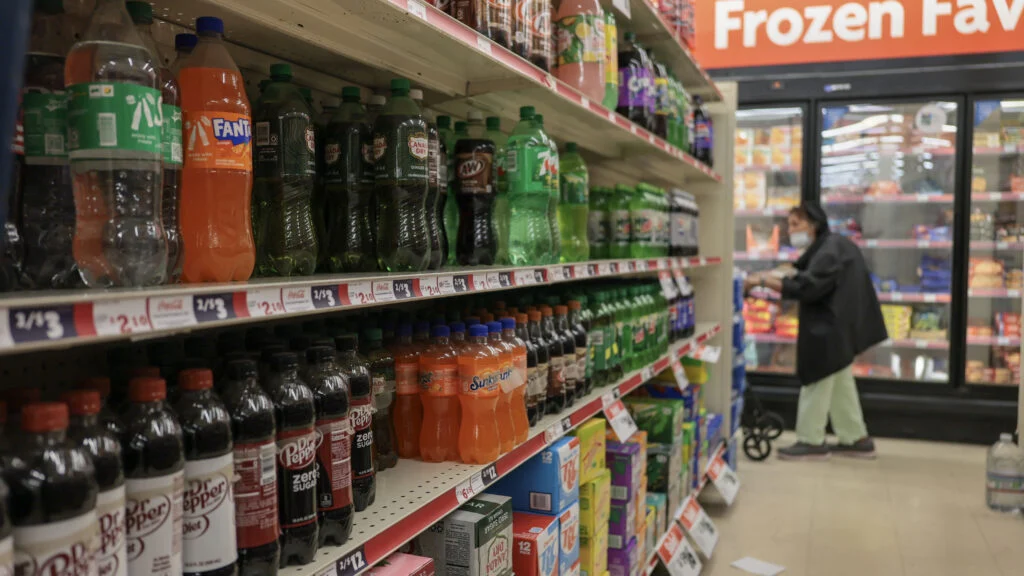
The "Make America Healthy Again" (MAHA) movement has successfully brought the intersection of federal food policy and chronic disease into the national spotlight. Among its most significant and controversial policy victories is the implementation of restrictions on the use of Supplemental Nutrition Assistance Program (SNAP) benefits to purchase soda, candy, and other non-nutritious items.
While the initiative has been lauded by health advocates as a necessary step toward curbing the nation’s obesity and diabetes crises, a central question has haunted the policy since its inception: Does restricting government-funded food choices actually lead to healthier outcomes, or do consumers simply shift their spending to other unhealthy, albeit unrestricted, products? A new, comprehensive study suggests the reality lies somewhere in the middle—a modest win for public health that comes with significant social costs.
The Data: A 12% Shift in Consumption
According to a recent study published by the National Bureau of Economic Research (NBER), the answer to whether these bans work is a cautious "yes." Researchers analyzed grocery purchase data from 15,000 households using SNAP benefits during the first six months of 2026. Among the 3,291 households located in the 10 states where these restrictions were enforced, soda purchases dropped by approximately 12%.
For the average consumer, this translates to a reduction of about 34 fewer 12-ounce cans of soda per year. While the study’s authors admit this shift is not transformative on a macro scale, they emphasize that it is far from negligible.
"If the goal is to reduce obesity and the cases of diabetes caused by the overconsumption of sugary beverages, this is likely one vital component of a much broader set of policies," explained Matt Notowidigdo, an economics professor at the University of Chicago Booth School of Business and a co-author of the study.
The projections are statistically significant: The researchers estimate that this decrease in soda consumption could reduce the risk of developing type 2 diabetes by 2.6% over the next decade, potentially preventing 34,000 new cases of the disease across the United States. Furthermore, the study suggests this shift could save the U.S. health care system roughly $1 billion annually. While Notowidigdo acknowledges that in the context of the $5.3 trillion annual U.S. health care spend, $1 billion is a "drop in the bucket," he maintains that "it is still $1 billion per year."
A Chronology of the MAHA Movement’s Food Policy
The push to restrict "junk food" within the SNAP program is the culmination of years of advocacy by nutritionists and public health organizations concerned about the link between processed sugar and chronic disease.
- Early 2025: The "Make America Healthy Again" movement gains political traction, pushing for stricter nutritional standards for government-subsidized food programs.
- Mid-2025: Following intense lobbying, the USDA begins granting waivers to states, allowing them to experiment with restricting the use of SNAP funds for sugar-sweetened beverages and candy.
- Late 2025: 23 states receive federal approval to implement variations of these bans.
- Early 2026: Implementation begins in earnest. Simultaneously, the policy faces immediate legal pushback from civil rights groups and retailers, leading to the suspension of the bans in five of the participating states by federal judicial order.
- Mid-2026: NBER conducts its initial analysis of household purchasing data to gauge the effectiveness of the restrictions during the first half of the year.
The "Substitution Effect" and Policy Loopholes
One of the most critical findings in the NBER study is the phenomenon of substitution. The data revealed that when SNAP recipients were blocked from purchasing soda, they did not necessarily pivot to water or unsweetened tea. Instead, approximately 39% of the money that would have been spent on soda was reallocated to other sugary drinks and fruit juices that did not fall under the specific definitions of "restricted items" in their respective states.
"If the goal is to truly reduce sugar consumption, you want the ban to be more comprehensive, not less," Notowidigdo noted. This suggests that without a precise, blanket definition of what constitutes a "sugary beverage," consumers will simply move down the shelf to the next available high-sugar alternative, limiting the overall health efficacy of the policy.
The Stigma Factor: A Hidden Social Cost
Beyond the economic and nutritional data lies a more human concern: the psychological impact on the millions of Americans who rely on SNAP. The study included a survey of SNAP recipients, which found that the restrictions often left participants feeling judged, stigmatized, or disrespected.
Benjamin Chrisinger, an assistant professor of community health at Tufts University, expressed concern over these findings. "Unfortunately, stigma is difficult to compare to other health indicators, which complicates any assessment of trade-offs," he noted.
For many, the policy feels less like a health initiative and more like a moral judgment on the purchasing habits of low-income families. Critics argue that when government programs begin to dictate the minutiae of a person’s diet, it erodes the dignity of the recipient. The question then becomes whether a modest reduction in diabetes risk is worth the social cost of making vulnerable populations feel marginalized.
Expert Perspectives: Are There Better Alternatives?
The debate over the NBER study has triggered a broader discussion among policy experts about whether "banning" is the most effective tool in the public health arsenal. Robert Paarlberg, a professor emeritus of political science at Wellesley University, argues that while the study is methodologically sound, the "national health gain" is insufficient to justify the potential harm.
"I wonder if it is worth the stigma," Paarlberg stated. He advocates for a different approach: universal taxation. Citing the case of Philadelphia’s sugary beverage tax, Paarlberg points out that such policies achieved a 31% reduction in consumption across all demographic groups—not just those on government assistance.
"The Philadelphia policy also avoided the problem of stigma," Paarlberg added. "The mayor never mentioned concerns about health or obesity; he claimed he was doing it for the revenue." By using the generated revenue for neighborhood projects, cities can offset the regressive nature of the tax, making it a more palatable and effective public policy tool.
Implications for Future Federal Policy
As 23 states continue to navigate the implementation of these restrictions—and as the legal battles continue in the five states where the bans are suspended—the NBER study provides a necessary baseline for future legislative action.
The findings suggest that while nutritional restrictions on SNAP have the potential to produce tangible health benefits, they are currently hindered by inconsistent state-level definitions, the "substitution effect," and a significant public perception problem. For policymakers, the path forward likely involves:
- Standardization: Moving toward a federal, rather than state-by-state, definition of "sugar-sweetened beverages" to prevent consumers from simply switching to unregulated sugary alternatives.
- Addressing Stigma: Finding ways to incentivize healthy purchases—such as "double-up" programs that provide extra funds for fresh produce—rather than exclusively relying on punitive bans.
- Broad-Based Taxation: Considering whether broad consumption taxes are more equitable and effective than restricting the purchasing power of only the poorest segment of the population.
In conclusion, the MAHA movement’s efforts to clean up the American diet are clearly shifting consumer behavior, but the results indicate that there is no "silver bullet." As the nation grapples with a $5.3 trillion healthcare bill and a persistent, chronic disease crisis, the debate over SNAP restrictions serves as a microcosm for a larger national tension: how much control should the government exercise over individual choices in the pursuit of the public good? The answer, according to the latest research, is that while these interventions can move the needle, the social costs and the complexity of human behavior require a more holistic, and perhaps less stigmatizing, approach.