





By Jonathan Gardner
Published August 24, 2026
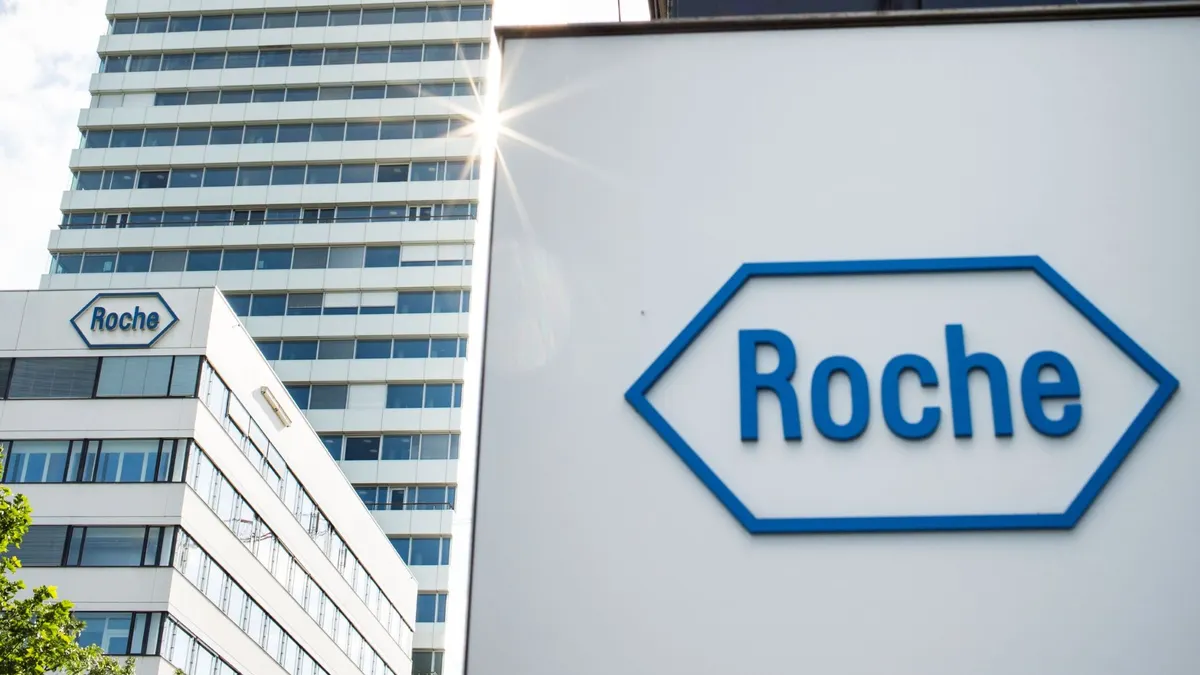
In a strategic maneuver to cement its position within the increasingly competitive weight-loss landscape, Swiss pharmaceutical giant Roche has announced a massive licensing agreement with South Korea’s Hanmi Pharma. The deal, valued at up to $2.3 billion, grants Roche exclusive rights to develop and commercialize HM17321, an experimental obesity therapeutic designed to revolutionize how clinicians approach weight loss by focusing on the preservation of lean muscle mass.
The agreement includes an upfront payment of $190 million, with the remaining $2.1 billion contingent upon the achievement of specific clinical, regulatory, and commercial milestones. This high-stakes acquisition underscores a fundamental shift in the pharmaceutical industry: the transition from "weight loss at any cost" to "quality weight loss," where the maintenance of metabolic health and physical strength is as vital as the reduction of body fat.
The Core Strategy: Prioritizing Body Composition
For years, the obesity market has been dominated by the spectacular success of GLP-1 receptor agonists, such as Novo Nordisk’s Wegovy and Eli Lilly’s Zepbound. While these blockbuster drugs have transformed the treatment of obesity, they carry a notable clinical caveat: significant weight loss often includes a concurrent reduction in healthy muscle tissue.
Roche, having entered the obesity space relatively late, has spent the last several years aggressively building a portfolio that addresses these limitations. By acquiring assets from Carmot Therapeutics and in-licensing candidates from Zealand Pharma, the Swiss firm has been working to catch up to the multi-billion-dollar incumbents. The partnership with Hanmi Pharma, however, marks a distinct evolution in that strategy.
HM17321, the asset at the center of this deal, is being developed as a "lean-mass-sparing" agent. While traditional incretin-targeting drugs focus primarily on satiety and gastric emptying, HM17321 utilizes a novel mechanism aimed at optimizing body composition. By targeting specific metabolic pathways, the drug aims to shed adipose tissue while mitigating the muscle wasting that typically accompanies rapid, drug-induced weight loss.
Chronology of Development: A Calculated Sprint
The journey toward this partnership has been marked by rapid preclinical validation and a streamlined clinical rollout.
- Preclinical Phase (2024–2025): Hanmi Pharma conducted rigorous head-to-head testing against current market leaders, including studies in non-human primates. These studies, which compared HM17321 directly against the efficacy of Wegovy, were designed to demonstrate that the novel candidate could achieve comparable weight reduction while maintaining superior muscle density.
- November 2025: Hanmi Pharma officially initiated the Phase 1 clinical trial (NCT07219589) of HM17321. This study was strategically designed to enroll healthy, non-obese volunteers first to establish a robust safety profile and assess initial biological markers before progressing to cohorts of individuals living with obesity.
- August 2026: With the Phase 1 trial showing promising preliminary data, Roche finalized the licensing agreement, signaling its intent to fast-track the drug into larger Phase 2 trials.
This timeline has given Hanmi an eight-month head start over competitors like Gubra, which is pursuing similar mechanisms. By securing this partnership now, Roche gains a significant logistical advantage, potentially completing the transition to mid-stage trials 18 months ahead of the current industry benchmarks for similar early-stage assets.
Supporting Data and Scientific Rationale
The scientific rationale behind HM17321 is rooted in its role as a novel CRFR2-selective UCN2 analog. Urocortin 2 (UCN2) has long been a subject of interest for metabolic researchers, including a notable exploration by Pfizer in previous years.
Unlike broad-spectrum incretin drugs, HM17321’s selective targeting allows for a more refined metabolic response. In data presented at international diabetes forums, Hanmi demonstrated that the drug influences thermogenesis and lipid metabolism without the harsh catabolic effects on skeletal muscle often triggered by extreme caloric deficits.

The Phase 1 trial currently underway is collecting high-resolution data on:
- Safety and Tolerability: Monitoring the incidence of gastrointestinal side effects, which remain a primary hurdle for patient adherence to GLP-1 therapy.
- Biological Markers: Tracking insulin sensitivity, lipid profiles, and specific muscle-sparing enzymes in the blood.
- Body Composition Analysis: Utilizing DEXA scans and bioelectrical impedance to quantify the specific ratio of fat loss versus muscle preservation.
Official Responses and Industry Outlook
"The paradigm of obesity treatment is evolving beyond simple weight reduction toward improving body composition and restoring metabolic health," said In-Young Choi, head of Hanmi’s research and development division, in a statement released shortly after the deal’s announcement. "We are very pleased that the differentiated scientific mechanism and development potential of HM17321 have been recognized by the global market. This partnership with Roche validates our long-term commitment to metabolic research."
For Roche, the deal is a statement of intent. By positioning itself in the "second wave" of obesity drugs, the company is betting that the market will inevitably demand more sophisticated solutions. Analysts suggest that while the first generation of obesity drugs captured the public’s attention through sheer weight loss, the next generation will be judged on the "quality" of that loss.
"We aren’t just looking for the next weight-loss pill," says one industry analyst. "We are looking for the next healthy aging tool. If Roche can prove that HM17321 prevents the frailty that often follows rapid weight loss in older adults, they will have a competitive advantage that goes far beyond the current blockbuster landscape."
Future Implications: The "Quality" Obesity Market
The implications of the Roche-Hanmi partnership are profound for the pharmaceutical industry at large.

1. The End of the "One-Size-Fits-All" Model
The success of GLP-1s has proven that obesity is a treatable chronic condition. However, the medical community is increasingly vocal about the risks of sarcopenia—the loss of muscle mass—in patients losing 15–20% of their body weight. The integration of muscle-sparing technology will likely become the standard requirement for any new obesity drug entering the market after 2030.
2. Strategic Consolidation
Big Pharma is currently in a state of hyper-competition for metabolic assets. With Lilly and Novo Nordisk generating tens of billions of dollars annually, the incentive to acquire small-cap innovators like Hanmi and Gubra has never been higher. This deal suggests that Roche is willing to pay a premium for "differentiated" assets rather than attempting to compete directly with existing, high-volume generic-equivalent incretins.
3. Long-term Health Outcomes
Beyond the aesthetics of weight loss, the focus on body composition has significant implications for long-term health outcomes. Muscle tissue is a primary site for glucose disposal; preserving muscle mass may prevent the "rebound" weight gain often seen after patients stop taking GLP-1 medications. If HM17321 can demonstrate that it restores true metabolic health, it could significantly lower the long-term healthcare costs associated with obesity-related complications like type 2 diabetes, cardiovascular disease, and mobility issues.
4. The Race to the Clinic
As Roche prepares to take over the development of HM17321, the pressure will be on to maintain the clinical momentum established by Hanmi. With the eight-month advantage over competitors, Roche is now in a position to shape the clinical trial design for Phase 2/3, potentially focusing on populations—such as the elderly—who are most at risk from muscle loss.
In conclusion, the $2.3 billion partnership between Roche and Hanmi Pharma is more than just a financial transaction; it is a signal of where the industry is heading. As the obesity epidemic continues to challenge global health systems, the shift toward muscle-preserving, metabolic-restorative therapies represents the next frontier in medicine. For patients, the promise is a future where weight management does not come at the expense of physical strength and vitality.