









For many fitness enthusiasts, "arm day" evokes images of seated machine presses, isolated lat pulldowns, and heavy cables at the local gym. While these tools certainly have their place in a structured hypertrophy program, they may not be the most functional way to build strength, especially for those over the age of 60.
As we age, the focus of fitness shifts from purely aesthetic goals to functional longevity—the ability to move through life with ease, balance, and independence. According to fitness experts, shifting your focus toward standing, free-weight-based exercises can provide a superior stimulus for your muscles, your core, and your long-term health.
Domenic Angelino, MS, MPH, CSCS, CPT, and Chief Exercise Scientist at FitCraft, argues that the transition to standing movements is a game-changer. By stepping away from the support of a machine, you unlock a hidden layer of engagement that mirrors the demands of daily life.
The Functional Advantage: Beyond Isolation
The primary critique of traditional gym machines is their reliance on fixed planes of motion. While these machines effectively isolate a specific muscle group—making them useful for addressing imbalances or rehabilitating specific injuries—they often "turn off" the stabilizing muscles required to keep the body upright and balanced.
"The best thing about standing exercises is that they allow you to build whichever muscle you’re focusing on, while also incidentally training other muscles that help keep your body stable as you do," explains Angelino.
When you perform a standing exercise, your core, glutes, and even your stabilizer muscles in your legs are constantly firing to maintain your center of gravity. This is not just a theoretical benefit; it is a practical one. In real-world scenarios—such as reaching for a heavy pot on a high kitchen shelf or hoisting a grocery bag—your body does not operate in isolation. You rely on a chain of muscles working in harmony. By training while standing, you are essentially "training for life."
The Science of Sculpting: A Chronological Approach to Training
To maximize upper arm definition, one must target both the biceps and the triceps through a variety of angles. The following five exercises, recommended by Angelino, provide a comprehensive routine that can be performed at home with a basic set of dumbbells or a barbell.
1. The Barbell Curl: Building Base Strength
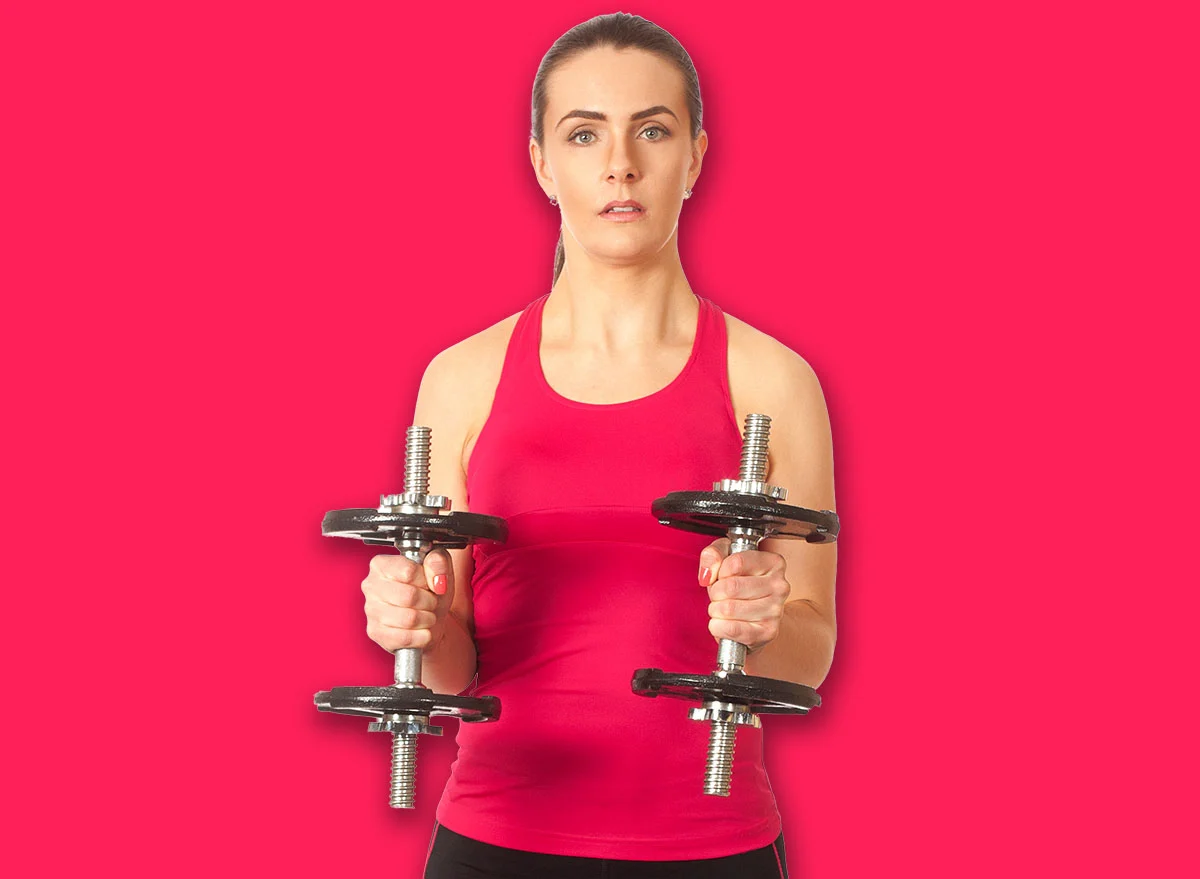
The barbell curl is the gold standard for building overall bicep volume. Because both hands are fixed to a single bar, you can typically handle more weight than you would with independent dumbbells.
"The bicep curl allows you to directly isolate your biceps in a way that places a lot of demand on stabilizer muscles in your body," says Angelino. By forcing your arms to work as a single unit, the barbell curl allows for heavier loading, which triggers greater muscle fiber recruitment—essential for those seeking to combat age-related muscle atrophy (sarcopenia).
2. The Hammer Curl: Targeting the Brachialis
If your goal is to make your arms look broader and more muscular, you cannot ignore the brachialis. This muscle sits deep beneath the bicep.
"In addition to training your biceps, the hammer curl helps you build the brachialis muscle," Angelino notes. By holding the weights with a neutral grip (palms facing each other), you emphasize the brachialis. As this muscle grows, it physically pushes the bicep upward, creating a more pronounced peak and increased overall arm girth.
3. Overhead Tricep Extensions: Maximizing the Long Head
The tricep makes up two-thirds of the upper arm. To effectively target the long head of the tricep—the portion that provides the "horseshoe" shape—overhead extensions are non-negotiable. Because this movement involves extending the arm overhead, it places the tricep in a stretched position, which is highly conducive to muscle growth and range of motion.
4. Tricep Kickbacks: Defining the Shape
While heavy compound movements build mass, the tricep kickback is a precision tool for sculpting. By keeping the upper arms pinned to your sides, you force the triceps to work against gravity without the assistance of the shoulders or back.
"If you keep your upper arms closer to your sides during a triceps exercise, you’ll prioritize the other two tricep heads," Angelino points out. "They may not be as effective at increasing how voluminous your upper arm looks, but they play a big role in giving the triceps its distinctive shape."
5. Narrow-Grip Curl-to-Press: The Efficiency Expert
For those short on time, the narrow-grip curl-to-press acts as a "super-set" in a single motion. By combining a bicep curl with an overhead shoulder press, you maximize time under tension for both the front and back of the arms. "This movement lets you train your biceps and triceps back to back. You can train both major parts of your upper arm in a single repetition," says Angelino.
Supporting Data: Why Free Weights Matter Over 60
The biological necessity for resistance training after 60 cannot be overstated. Research consistently shows that resistance training improves bone density, metabolic rate, and cognitive function.
While machines provide a safe environment for beginners, they lack the "proprioceptive challenge" of free weights. Proprioception—the body’s ability to sense its position in space—declines with age, contributing to an increased risk of falls. By performing standing exercises, you are essentially practicing balance and coordination simultaneously with strength training. This dual-purpose approach is the hallmark of a high-quality longevity program.
Implications for Your Fitness Routine
It is important to emphasize that this is not an argument to abandon the gym entirely. Machines remain a highly effective tool for those who have specific physical limitations or are recovering from injury. They provide a controlled environment that reduces the risk of joint strain.
However, the implication of Angelino’s expert advice is clear: Variety is the key to longevity. If you have spent your entire fitness career relying on the safety of a seated chest press or a machine-assisted row, incorporating these five standing exercises will likely feel challenging. This challenge is precisely what your body needs.
How to Integrate These Movements:
- Warm-up: Always dedicate 5–10 minutes to light cardio and mobility work (arm circles, shoulder rolls) before touching weights.
- Volume: Start with 2–3 sets of 10–12 repetitions. Focus on slow, controlled eccentrics (the lowering phase of the lift).
- Progressive Overload: Once the movement feels natural, incrementally increase the weight. Consistency is more important than intensity in the early stages.
- Recovery: Since your stabilizer muscles are being taxed more heavily than usual, allow for at least 48 hours of recovery between "arm day" sessions.
Conclusion: A New Standard for "Arm Day"
The pursuit of firm, strong upper arms is often framed as a superficial goal, but for individuals over 60, it is a vital component of physical independence. By choosing exercises that require you to stand, stabilize, and engage your entire kinetic chain, you are doing more than just building muscle; you are fortifying your body against the wear and tear of aging.
Whether you are working out in a home gym or looking to change up your routine at the local facility, prioritize movements that require your feet to be planted and your core to be engaged. As Domenic Angelino suggests, the best workout is the one that prepares you not just for the mirror, but for the demands of the world outside the gym doors.
Disclaimer: Always consult with a physician or healthcare provider before beginning any new exercise program, especially if you have pre-existing health conditions or mobility concerns.