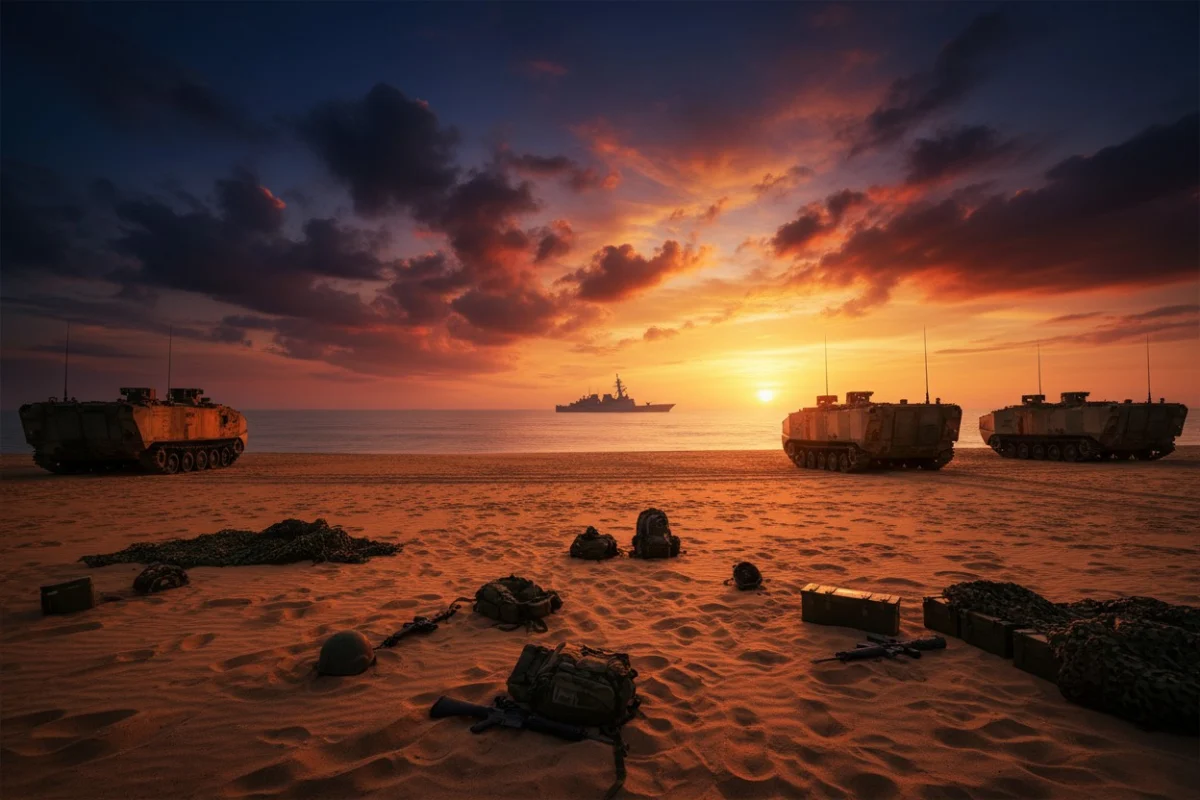
SEOUL — The U.S. Marine Corps has officially canceled the September “Ssangyong” (Twin Dragons) amphibious exercise, a cornerstone of the bilateral defense partnership between Washington and Seoul. The decision, confirmed by a spokesperson for the South Korean Marine Corps (ROKMC), marks a significant shift in U.S. force posture in the Indo-Pacific, underscoring the mounting pressures of competing global military commitments.
As the United States finds itself increasingly entangled in the Middle East, the reallocation of specialized units and naval assets has forced a recalibration of military readiness in the Pacific. For observers of the U.S.-South Korea alliance, the cancellation is not an isolated event but rather the latest indicator of a thinning American military footprint in a region where tensions with North Korea remain at a historic high.
The Cancellation: A Shift in Global Priorities
Han Seung-jeon, a spokesman for the ROKMC, stated in a press briefing on Monday, August 24, that the U.S. Marine Corps formally notified South Korean authorities in June regarding the cancellation. The primary rationale provided was the depletion of available personnel and equipment, which have been diverted to support ongoing operations in the Middle East.
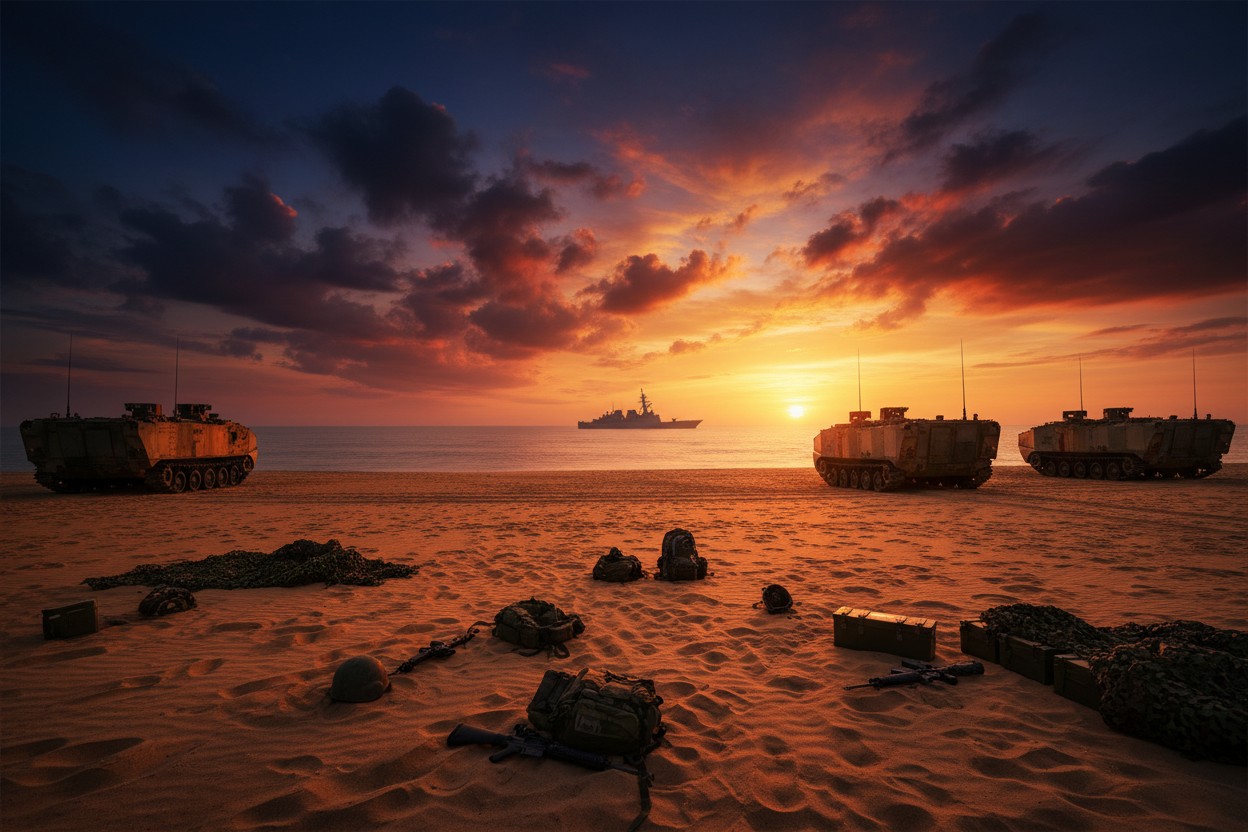
The Ssangyong exercise is no small-scale event. At its peak, the drill functioned as a massive display of interoperability, involving over 20 naval vessels, 30 warplanes, and more than 40 amphibious-assault vehicles, with troop counts frequently exceeding 10,000 personnel. The absence of this exercise leaves a void in the training calendar, specifically impacting the ability of the U.S. and South Korean Marines to conduct high-intensity beachhead operations—a key deterrent against potential aggression from Pyongyang.
This decision follows the early termination and scaling back of the “Ulchi Freedom Shield” drills in August. Reports indicate that President Donald Trump ordered these reductions as part of a broader strategy, which critics argue is inadvertently signaling a diminished American appetite for large-scale conventional military presence in the peninsula.
Chronology of Declining Readiness
The erosion of the regular training schedule has been a multi-stage process, influenced by both diplomatic outreach to North Korea and tactical necessity in the Middle East.
- March 2025: Over 2,000 U.S. Marines stationed in Japan were redeployed to the Middle East to bolster forces amid escalating regional conflict. This movement marked the beginning of a noticeable "hollowing out" of Pacific-based expeditionary units.
- Spring 2025: The South Korean government reportedly raised concerns over the withdrawal of U.S. air defense assets from the peninsula, highlighting a growing anxiety in Seoul regarding the balance between U.S. global responsibilities and local security needs.
- August 2025: The Ulchi Freedom Shield exercises were scaled down significantly under White House guidance, drawing immediate fire from bipartisan factions in the U.S. Congress who argued that such moves embolden adversaries.
- June 2026: The U.S. Department of War formally notifies the ROKMC of the cancellation of the Ssangyong exercise, citing sustained operational demands in the ongoing Iran war theater.
- August 2026: Official public confirmation of the cancellation is released, sparking a debate on the future of the 1953 Mutual Defense Treaty.
Supporting Data: Stretched Thin
The logistical reality facing the U.S. military is one of overextension. The Pacific-based aircraft carrier USS George Washington was recently forced to rotate into the Middle East to replace the USS Abraham Lincoln, which had been on station for an grueling 250-day deployment. This “carrier shuffle” highlights the lack of reserve capacity in the U.S. Navy; when one region demands a carrier strike group, another region—the Indo-Pacific—inevitably loses its primary power projection asset.
Military analysts point out that the cumulative effect of these reallocations is a decrease in the “readiness index” for U.S. Forces Korea (USFK). The withdrawal of air defense batteries and the cancellation of amphibious exercises mean that should a conflict erupt on the Korean Peninsula, the time required to mobilize a response has effectively increased.
Official Responses and Political Friction
The decision to cancel the Ssangyong exercises has ignited a firestorm on Capitol Hill. Democrats and Republicans, usually divided on defense spending and foreign policy, have found common ground in their criticism of the administration’s strategy.
"Pulling back on these drills undermines the very foundation of the alliance," a senior congressional aide noted. "When we cancel exercises, we aren’t just saving money; we are telling North Korea that our commitment to Seoul is secondary to our involvement in the Middle East."
The Wall Street Journal has reported that lawmakers are demanding a formal review of the U.S. military’s capacity to handle “two-theater” conflicts. The Department of War, however, maintains that the cancellations are a temporary measure necessitated by the volatility of the Iran war, insisting that the core security guarantee to South Korea remains ironclad.
Implications: A Vulnerable Peninsula?
The reduction of visible military activity has not gone unnoticed by Kim Jong-Un. Pyongyang’s state media has maintained a posture of aggressive defiance, with Kim recently instructing his military to “thoroughly annihilate” the U.S.-ROK forces should they initiate a conflict.
The North Korean Threat Profile
Beyond rhetoric, North Korea’s technical capabilities are expanding at a pace that has alarmed intelligence agencies. The April 2025 unveiling of the regime’s first nuclear-powered submarine represents a paradigm shift in the North’s ability to conduct a second-strike capability. Coupled with suspected hypersonic missile tests and threats of tactical nuclear strikes, the region is arguably more volatile now than at any point in the last decade.
Diplomatic Paradox
The cancellation of the drills coincides with President Trump’s renewed efforts to pursue direct diplomacy with Kim Jong-Un. While supporters of this policy argue that reducing military activity creates space for negotiation, skeptics warn that it creates a “vacuum of deterrence.” If the U.S. is seen as retreating from its military commitments to court Pyongyang, the leverage gained at the negotiating table may be undermined by the loss of credible military threat.
Strategic Conclusion: The Indo-Pacific Dilemma
The cancellation of the Ssangyong exercises serves as a microcosm of the larger challenge facing the United States in the 21st century: how to balance the demands of a volatile Middle East with the long-term, systemic competition in the Indo-Pacific.
For South Korea, the message is stark. As U.S. assets are stripped from the region to fight battles thousands of miles away, the burden of defense falls increasingly on Seoul. While the alliance remains intact on paper, the practical manifestation of that alliance—joint training, personnel presence, and integrated defense—is undergoing a contraction.
The coming months will be critical. If the U.S. fails to restore its training schedule or demonstrate a commitment to maintaining its Pacific force levels, regional partners may begin to question the long-term viability of the “pivot to Asia.” For now, the suspension of the Twin Dragons serves as a sobering reminder that in a world of limited resources, military commitments are not always as permanent as the treaties that establish them.
As the geopolitical landscape shifts, the U.S. must decide if the price of maintaining its Middle Eastern presence is the erosion of its most important strategic foothold in East Asia. Until then, the silence at the Ssangyong training grounds will echo loudly in the capitals of both Seoul and Pyongyang.