










For decades, the standard prescription for a toned midsection has been the classic sit-up. From high school physical education classes to modern fitness magazines, the image of the crunch has become synonymous with abdominal strength. However, as our understanding of exercise physiology and spinal health evolves, fitness experts are increasingly moving away from repetitive spinal flexion in favor of more functional, stabilizing movements—particularly for those over the age of 60.
If your goal is to shrink and firm your lower belly, traditional sit-ups may not only be inefficient, but potentially counterproductive. Achieving a defined midsection requires a dual approach: a consistent caloric deficit to manage body composition, and a targeted movement strategy that emphasizes core stability over repetitive motion.
The Core Paradigm Shift: Why Sit-Ups Aren’t the Gold Standard
According to Bruno Pontes, an ACSM and AFAA-certified personal trainer at Muscle Booster, the reliance on sit-ups as the primary vehicle for core development is a common misconception. While sit-ups can indeed activate abdominal muscles, they are not without risk, especially as the body ages.
"Sit-ups aren’t inherently bad for you, and when performed correctly, they can be an effective abdominal exercise," Pontes explains. "The issue is that repeatedly flexing the spine under load or performing a high volume of sit-ups can place significant stress on the lower back. This doesn’t mean you need to avoid sit-ups altogether, but it highlights why variety is essential in a mature training routine."
The shift in modern fitness training is toward "anti-movement" or stability-based core work. By forcing the muscles of the abdomen to resist external forces, you build a more robust, injury-resistant core. This approach, which includes planks, dead bugs, and loaded carries, creates a more functional midsection that supports daily activities and improves posture.
The Five Pillars of Functional Core Strength
To help you achieve a flatter and more defined lower belly, we have curated five exercises that prioritize spinal safety and functional engagement. These moves are designed to be performed at home with minimal equipment, making them accessible for any fitness level.
1. The Dead Bug: Mastering Stability
The "dead bug" is perhaps the most effective exercise for teaching the body to maintain a neutral spine while the limbs are in motion. It acts as a foundation for all other core movements.
- Why it works: By keeping your back pressed firmly against the floor while moving your arms and legs independently, you force the deep core muscles—the transverse abdominis—to engage. This is crucial for protecting the lower back and creating that "cinched" look.
- The Technique: Lie flat on your back with arms extended toward the ceiling and legs in a tabletop position (knees bent at 90 degrees). Slowly lower your right arm behind your head while extending your left leg straight out, hovering just above the floor. Return to center and repeat on the opposite side.
2. The Suitcase Deadlift: Functional Strength
Often, the best core exercise isn’t a "core" exercise at all. The suitcase deadlift mimics the real-world action of picking up a heavy grocery bag or a suitcase, requiring the obliques to fire to stabilize the spine against uneven weight.
- Why it works: This movement trains the core to handle asymmetrical loads. Unlike a standard deadlift, the weight is held at your side, creating a "lateral" challenge for your abdominals.
- The Technique: Stand with feet hip-width apart, a weight (like a heavy water jug) placed to the outside of your right foot. Hinge at your hips, keeping a flat back, and grip the weight. Drive through your heels to stand, ensuring your torso remains perfectly upright.
3. The Bear Crawl: Dynamic Stability
The bear crawl takes the concept of the plank and adds movement. It requires coordination, shoulder strength, and constant abdominal tension.
- Why it works: It forces the core to stabilize the body while the base of support is constantly shifting. This builds functional strength that carries over into balance and agility.
- The Technique: Start on all fours with your knees hovering an inch off the ground. Keep your back flat like a table. Crawl forward by moving the opposite arm and opposite leg simultaneously, keeping your hips steady and avoiding side-to-side rocking.
4. Leg Drops: Targeting the Lower Abdominals
Many people find that their "lower belly" is the most stubborn area to tone. Leg drops are specifically designed to isolate the lower portion of the rectus abdominis.
- Why it works: Because the legs act as long levers, they create significant resistance for the lower core to overcome. Controlled movement is the key to success here, as momentum can negate the benefits.
- The Technique: Lie on your back, hands under your hips for support. Lift both legs toward the ceiling. Slowly lower them toward the floor, stopping just before your lower back loses contact with the ground. Engage your core to pull your legs back up.
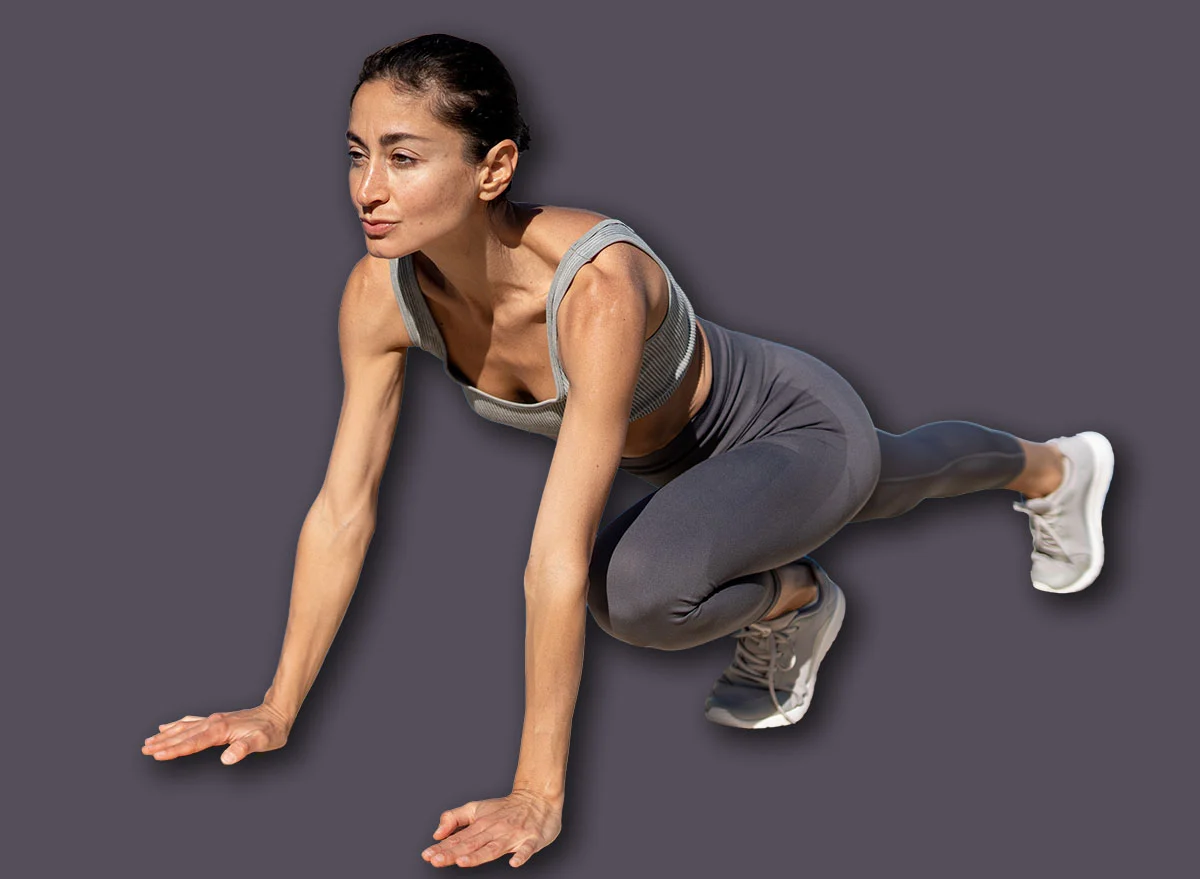
5. Mountain Climbers: Cardio-Core Integration
To see definition in your abs, you must manage your overall body fat. Mountain climbers bridge the gap between high-intensity cardio and core-specific strengthening.
- Why it works: You are essentially performing a running motion in a plank position. This keeps the heart rate elevated for calorie burning while the core works overtime to keep the hips stable.
- The Technique: Start in a high plank position. Drive your right knee toward your chest, then quickly switch to drive your left knee in. Maintain a steady, rapid pace while keeping your shoulders stacked over your wrists.
Supporting Data: Why "Spot Reduction" is a Myth
It is important for those over 60 to understand the role of body composition. No amount of abdominal exercise will "spot reduce" fat from the stomach. The physiology of fat loss is systemic; when you maintain a caloric deficit, your body pulls energy from fat stores across the entire body, not just the area you are training.
According to the Centers for Disease Control and Prevention (CDC), muscle mass naturally declines after the age of 30—a process known as sarcopenia. By age 60, preserving this muscle mass is as important as fat loss. Therefore, combining the core exercises above with a high-protein diet and strength training is the most evidence-based path to a leaner midsection.
Implications for Longevity and Quality of Life
The focus on a "toned belly" often centers on aesthetics, but the implications for health go much deeper. A strong core is the primary defense against lower back pain, which affects approximately 80% of adults at some point in their lives.
By transitioning away from spinal-flexion exercises like sit-ups and toward stability-focused movements, you are investing in your long-term mobility. A stable core improves balance, reduces the risk of falls—a major health concern for seniors—and facilitates better posture, which can alleviate chronic neck and shoulder tension.
Expert Consensus: A Holistic Approach
The consensus among modern fitness professionals is clear: there is no "magic bullet" exercise for the midsection. The most successful approach is a multi-modal one.
- Prioritize Protein: As you age, your body becomes less efficient at processing protein. Aim for a high-quality protein source at every meal to support the muscle tissue you are working to build.
- Monitor Your Metabolism: As metabolism naturally slows with age, caloric intake must be adjusted. Small, sustainable food swaps—such as replacing refined carbohydrates with high-fiber vegetables—can make a significant difference in achieving a caloric deficit without feeling deprived.
- Prioritize Consistency Over Intensity: The best workout is the one you can sustain for the long haul. Performing these five exercises three times a week is far more effective than an occasional, exhaustive "ab shredding" session that leaves you prone to injury.
In conclusion, while the goal of a firm, flat stomach is achievable after 60, it requires a strategy that respects the changing needs of the body. By abandoning the outdated sit-up and embracing functional movements that stabilize the spine, you can build a core that is not only visually defined but functionally powerful.