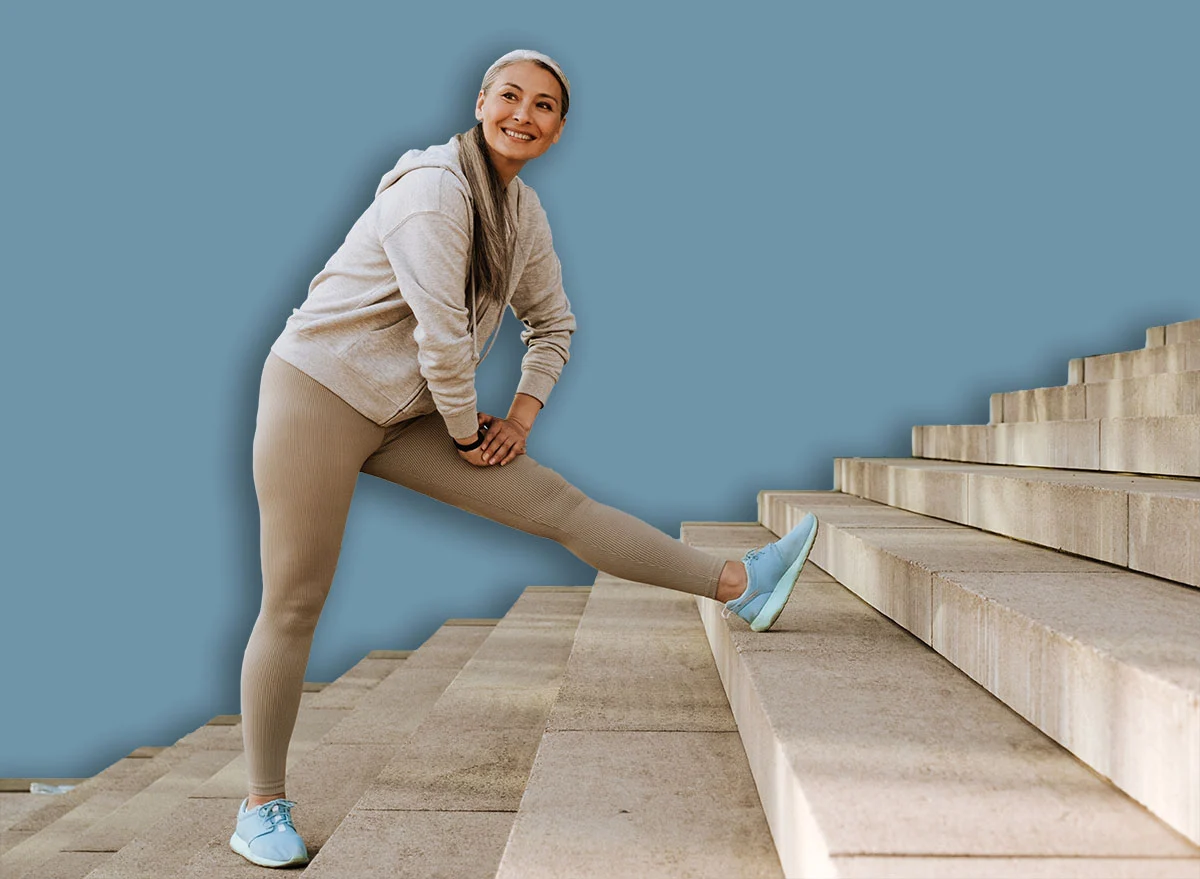
As we navigate the second half of life, the conversation around health often shifts from high-intensity aesthetics to functional longevity. While many prioritize cardiovascular health or flexibility, there is one pillar of physical wellness that is arguably more critical for independence after age 60: lower body strength.
According to exercise physiology, our muscle mass and force capacity naturally begin to decline after age 30—a process known as sarcopenia. Without consistent intervention, this decline accelerates significantly in the later decades. However, there is a silver lining: you do not need a monthly gym membership or expensive equipment to combat this. The most effective tool for rebuilding leg power, balance, and coordination is likely already in your home: your staircase.
The Science of Sarcopenia and Mobility
The decline in muscle strength is not merely about appearance; it is a fundamental issue of "force capacity." To navigate the world safely, your body requires the ability to propel itself against gravity. This is most evident in the "activities of daily living"—the ability to rise from a chair, step over a curb, or ascend a flight of stairs without hesitation.
When we lose strength in the quadriceps, glutes, and calves, our gait changes. We become more tentative, our stride shortens, and our risk of falls increases. Research consistently shows that resistance training is the single most effective antidote to this decline. By utilizing the incline and mechanics of a staircase, you can simulate functional movements that engage the posterior chain, providing a high-impact strength-building workout with low-impact equipment.
Chronology of Strength: Why Age 60 is a Pivotal Milestone
In the fitness industry, age 60 is often viewed as the "optimization window." It is the period where the habits you build will determine your autonomy in your 70s, 80s, and beyond.
- The Baseline (Ages 30–50): The subtle, almost invisible erosion of muscle fiber begins. Most individuals notice a slight decrease in stamina but rarely take corrective action.
- The Transition (Ages 50–60): The "use it or lose it" reality sets in. Balance and proprioception—the body’s ability to sense its position in space—begin to rely more heavily on visual cues rather than internal reflex.
- The Empowerment Phase (Age 60+): By focusing on targeted, eccentric-focused movements (the lowering phase of an exercise), older adults can actually stimulate muscle fiber growth, even at this stage. Stair training serves as the primary mechanism for this restoration.
Supporting Data: Why Stairs Work
Stair climbing is a form of weight-bearing exercise that specifically targets the kinetic chain. Unlike a treadmill, which provides a flat, predictable surface, stairs require:
- Eccentric Control: The ability to lower the body weight slowly and under control.
- Unilateral Stability: The ability to balance on one leg while the other moves, a crucial skill for preventing falls.
- Core Integration: The muscles of the torso must engage to stabilize the pelvis during each step.
By integrating these four trainer-approved moves into a twice-weekly routine, you are effectively training your nervous system to be more reactive and your musculature to be more resilient.
4 Trainer-Approved Stair Moves for Post-60 Power
1. The Step-Up: The Foundation of Single-Leg Strength
The Step-Up is a gold-standard exercise because it mimics the natural motion of climbing while removing the "stumble risk" associated with complex lunges.
- The Technique: Stand facing the bottom step. Place one foot firmly on the stair. Using the strength of that lead leg, press through your heel to lift your body, bringing your trailing foot up to meet the lead foot.
- Safety First: Keep your hand on the railing for stability. Do not push off with the back foot; ensure the front leg does 100% of the work.
- Why it Works: It isolates the glute and quad, building the specific power needed to climb stairs and rise from deep sofas. Because the back leg remains straight, you avoid the knee torque often associated with traditional lunges.
2. Slow Step-Downs: Mastering Eccentric Control
If Step-Ups build power, Step-Downs build "braking" strength. Most falls occur not because we can’t go up, but because we cannot control our descent.
- The Technique: Stand on the second step. Slowly lower one foot to the floor, taking 3 to 5 seconds to touch down. Use the lead leg to guide the motion. Keep the movement smooth; avoid "dropping" down.
- The Benefit: By slowing the tempo, you increase the time under tension for the quadriceps, which is essential for joint health and stability.
- Form Tip: Focus on keeping the knee aligned over the middle of your foot. Use the handrail to support your balance as you build the necessary control.
3. Stair Calf Raises: Beyond Aesthetics
Calf raises are often overlooked, yet the calves are the "secondary heart" of the legs and are vital for ankle stability.
- The Technique: Stand on the edge of the first step with your heels hanging off. Press up onto your toes, holding the contraction for a second at the top, then slowly lower your heels below the level of the step.
- Range of Motion: Performing this on a step allows for a deep stretch that you cannot achieve on flat ground. This improves ankle mobility, which is crucial for a natural walking gait.
- Intensity: If you feel steady, attempt this one foot at a time to double the load on the calf muscle.
4. Stair Marches: Coordination and Balance
Stair marches act as the "dynamic finisher" of your routine. They challenge the body’s ability to stabilize while the limbs are in motion.
- The Technique: Stand at the base of the stairs. Bring one knee up high as if you are marching, placing the foot firmly on the first step, then return to the starting position. Alternate legs with a steady, controlled rhythm.
- The Goal: The objective is to maintain a tall, upright posture. As you lift the knee, engage your core.
- Progression: As you become more confident, increase the tempo. This mimics the coordination required to walk on uneven surfaces, keeping your reflexes sharp.
Implications for Long-Term Independence
The primary goal of any fitness regimen after 60 is to ensure the "freedom of movement." When you incorporate these four movements into your life, you are doing more than just building leg strength; you are investing in your future ability to travel, play with grandchildren, and live independently.
Expert Advice on Implementation
- Consistency over Intensity: Start with 5–10 minutes, twice a week. It is better to perform 10 perfect repetitions than 50 sloppy ones.
- Prioritize Form: Always use a handrail. There is no shame in using support; the goal is to safely load the muscles, not to test your balance to the point of danger.
- The "Slow" Rule: If you feel shaky, slow the movement down. Speed is the enemy of form in the beginning.
Conclusion
Your staircase is a functional gym that never closes and requires no commute. By embracing these movements, you are reclaiming the power in your legs and setting a new standard for your physical capabilities. Age is a number, but mobility is a choice—and with every step you take, you are choosing to stay strong, capable, and empowered.
Disclaimer: Always consult with your physician before beginning any new exercise program, especially if you have pre-existing joint issues or cardiovascular conditions. Tyler Read is a certified personal trainer with 15 years of experience in the field of functional longevity.