









In a significant legal victory for academic innovation and biotech intellectual property, a U.S. court has issued a final judgment confirming that Guardant Health willfully infringed upon two foundational patents related to high-accuracy DNA sequencing. The ruling, which solidifies a November 2023 jury verdict, marks a pivotal moment in the competitive landscape of liquid biopsy and oncology diagnostics. The case, brought by TwinStrand Biosciences and the University of Washington (UW), underscores the legal and financial stakes involved when advanced genetic technologies move from the laboratory bench to the commercial market.
The judgment is not merely a symbolic win; it imposes a substantial financial burden on Guardant Health, totaling over $160 million in damages, accrued royalties, and interest. This development highlights the growing tension between rapid commercialization in the medtech sector and the protection of foundational research developed within academic institutions.
Chronology of the Dispute
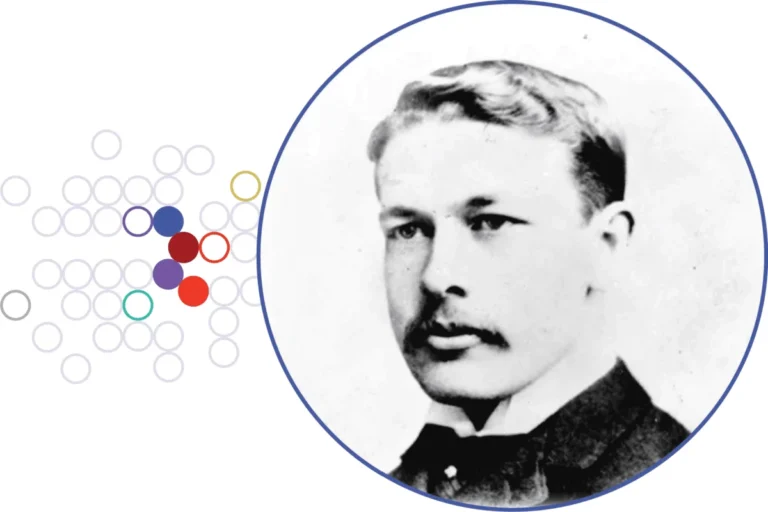
The roots of this legal battle trace back to the innovative work of Jesse Salk, who, while a medical student at the University of Washington, sought to solve a persistent limitation in genomics: the "noise" or error rate inherent in standard next-generation sequencing (NGS). Alongside academic colleagues, Salk developed a method known as Duplex Sequencing, which utilizes the molecular information of both strands of a DNA molecule to eliminate sequencing errors, thereby identifying ultra-rare genetic variants that would otherwise remain invisible.
The Foundation
- The Invention: In the early 2010s, Salk and his team at the University of Washington developed the Duplex Sequencing protocol. The technology was patented by the university, with TwinStrand Biosciences later securing an exclusive license to commercialize the methods.
- The Conflict: As Guardant Health expanded its portfolio of cancer diagnostic tools—including its flagship Guardant360 test—TwinStrand alleged that the company’s underlying sequencing methodologies were built upon the very patents they held.
- The Litigation: The legal proceedings began in earnest as TwinStrand sought to protect its intellectual property, arguing that Guardant had bypassed the necessary licensing agreements.
- The Jury Verdict (November 2023): After reviewing technical testimony regarding DNA sequencing protocols, a jury concluded that Guardant’s infringement was not only present but "willful," a designation that carries significant weight in patent law and often leads to enhanced damages.
- The Final Judgment: The recent court order affirmed the jury’s decision, codifying the financial penalties and outlining the operational requirements imposed on Guardant regarding future sales reporting.
Technical Context: Why Accuracy Matters
To understand the gravity of this case, one must appreciate the scientific breakthrough represented by Duplex Sequencing. Conventional NGS platforms typically rely on a single-strand read or simplified sequencing approaches, which can inadvertently amplify "stray" signals or sequencing errors as actual biological variants.
TwinStrand’s technology addresses this by physically labeling and sequencing both complementary strands of a DNA molecule. By comparing the strands, the system can distinguish between a true mutation and a random sequencing error. In the context of cancer diagnostics—where detecting a tiny fraction of circulating tumor DNA (ctDNA) in a patient’s bloodstream is the difference between early detection and a missed diagnosis—this precision is not merely an incremental improvement; it is a clinical necessity.
The patents at the center of the dispute, licensed from the University of Washington, are considered "core" to this high-fidelity process. The court’s recognition of these patents validates the University of Washington’s role as a primary incubator for high-impact biotechnology.
Supporting Data: The Financial Breakdown
The final judgment imposes a multi-faceted financial obligation on Guardant Health. Beyond the initial jury award, the court has mandated the following:

- Supplemental Damages: $19.5 million.
- Accrued Royalties: $119.4 million.
- Pre-judgment/Post-judgment Interest: $22.9 million.
- Operational Compliance: Guardant is required to provide the plaintiffs with a quarterly accounting of U.S. sales specifically related to the products covered by the judgment.
These products include the Guardant360 test, a staple in the oncology community for guiding treatment decisions, as well as older iterations of the Guardant Reveal and Shield product lines. The cumulative weight of these figures serves as a stark reminder of the "cost of doing business" when intellectual property claims are ignored or challenged unsuccessfully in court.
Official Responses and Corporate Strategy
The responses from both parties reflect a complex maneuvering of public perception and regulatory positioning.
The Stance of TwinStrand
For TwinStrand, the judgment is a vindication of the academic-industrial pipeline. Chad Waite, Chair of TwinStrand, emphasized the importance of the technology in a statement following the ruling: "Duplex Sequencing solved an accuracy problem the sequencing field had worked on for years, and this judgment affirms the jury’s finding that Guardant Health built products on that invention without a license."
TwinStrand has made it clear that while this judgment is a major milestone, their legal efforts are not over. They have confirmed that ongoing proceedings before the U.S. Patent and Trademark Office (USPTO) and the Patent Trial and Appeal Board (PTAB) remain active. Waite noted, "We will continue to defend these patents and the innovation they protect for the researchers and clinicians worldwide who rely on the accuracy our technology makes possible."
The Stance of Guardant Health
Guardant Health has adopted a strategy of containment, focusing on the future of its product line rather than the past infringement. In a public statement, the company noted that current iterations of its Guardant Reveal and Shield products are not covered by the court order. Furthermore, Guardant claims to have implemented "validated design improvements" to its Guardant360 test and related services, which the company asserts will exclude the impact of potential future royalties.
This suggests a "design-around" strategy, where the company seeks to maintain its market share while distancing itself from the patented methodologies that led to the litigation. Whether these design changes effectively circumvent the patents or invite further litigation remains an open question for industry analysts.
Implications for the Medtech Industry
The TwinStrand-Guardant dispute holds profound implications for the biotechnology and medical device industries.

1. The Value of Academic Intellectual Property
The case reinforces the vital importance of university-linked research. When institutions like the University of Washington cultivate proprietary methodologies, they provide the backbone for massive commercial success. This ruling sends a clear signal to large corporations: academic patents are not "optional" technologies to be adopted at will; they are legally protected assets that require robust licensing frameworks.
2. High Stakes for "Willful" Infringement
The label of "willful infringement" is particularly damaging. In patent litigation, it implies that the defendant was aware of the patents and chose to proceed anyway, or showed a reckless disregard for them. This often empowers judges to increase damage awards. For medtech firms, the risks of litigation—reputational, financial, and operational—have arguably reached a new high-water mark.
3. The Future of Liquid Biopsy Competition
As the liquid biopsy market moves toward increased sensitivity and earlier detection, the "accuracy wars" will likely continue. Companies are under immense pressure to deliver diagnostic results that are beyond reproach. This legal outcome may force competitors to either seek collaborative licensing agreements early in the R&D process or to invest more heavily in developing truly proprietary, non-infringing sequencing architectures.
4. Continued Regulatory Scrutiny
With the USPTO and PTAB still reviewing aspects of these patents, the battle is far from a closed chapter. These regulatory bodies often look at the "obviousness" or "patentability" of claims. Any reversal or narrowing of the patent scope in these venues could shift the leverage in this ongoing feud.
Conclusion
The court’s final judgment in the case of TwinStrand Biosciences and the University of Washington vs. Guardant Health is a watershed moment for the genomics sector. It validates the high-accuracy technology that Jesse Salk and his colleagues pioneered and reinforces the sanctity of the patent system as a driver of medical innovation.
As Guardant Health seeks to pivot its product offerings and mitigate the financial impact of the ruling, the broader industry must grapple with the shifting landscape of intellectual property. For startups, the message is one of hope: your inventions have teeth. For established giants, the message is one of caution: the path to market dominance must be paved with respect for the innovations that came before.
The coming months will likely see further developments as the parties navigate the appeals process, regulatory reviews, and the technical implementation of Guardant’s design improvements. Regardless of the immediate fallout, one thing remains certain: the demand for precision in diagnostics will only grow, and with it, the necessity for a fair and functional intellectual property ecosystem.