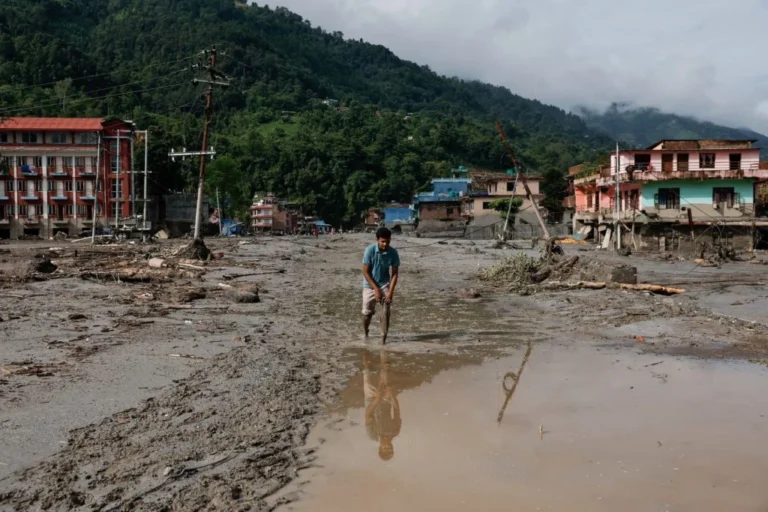









In the landscape of American emergency management, few figures carry the weight of experience held by Craig Fugate. As the Administrator of the Federal Emergency Management Agency (FEMA) during the Obama administration, Fugate presided over an era defined by an unrelenting cadence of record-breaking disasters. From the devastation of Superstorm Sandy to a series of unprecedented wildfires and flooding events, Fugate’s tenure was a masterclass in navigating the volatile intersection of public safety and environmental change.
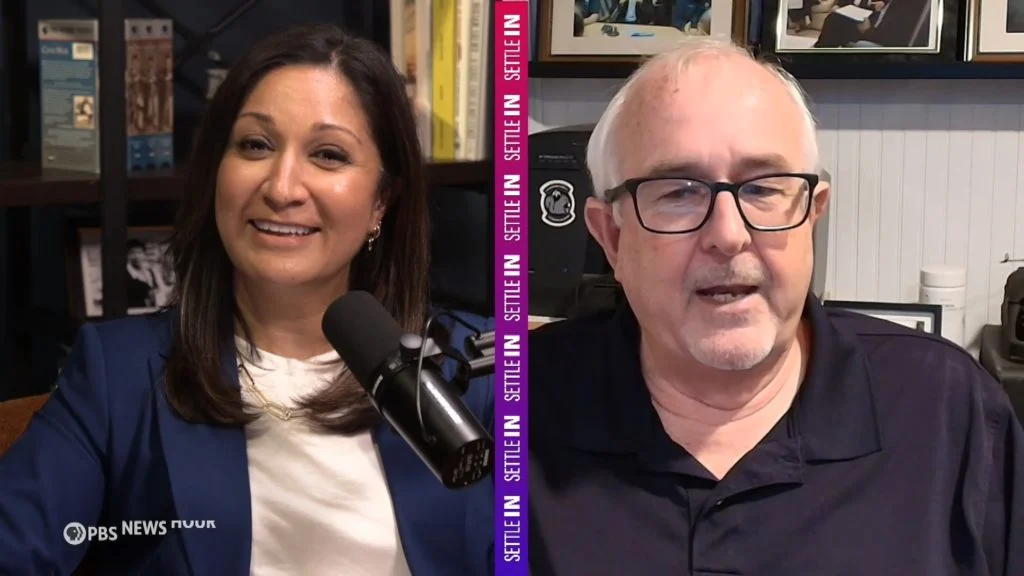
In a recent appearance on the PBS News podcast Settle In, host Amna Nawaz engaged Fugate in a candid discussion about how climate change has fundamentally upended the agency’s mission. Beyond the logistical challenges, the conversation touched upon the fraught political atmosphere surrounding FEMA today and the urgent need for a shift in strategy from reactive recovery to proactive adaptation.
The Paradigm Shift: From Mitigation to Adaptation
For years, the word "mitigation" served as the bedrock of emergency management. Traditionally, in the FEMA lexicon, mitigation meant reducing the physical impact of a disaster—strengthening a levee, elevating a home, or upgrading building codes to withstand high winds. However, as Fugate explains, the term became a point of linguistic and strategic confusion during his time in Washington.
"Most of the conversations were really about we needed to mitigate the effects of climate," Fugate told Nawaz. "But that caused a problem, because when people use the word ‘mitigate’ in emergency management, that means reducing the impacts of a disaster. What the rest of the administration was talking about was reducing greenhouse gases and transitioning away from carbon-based energy. They were calling that mitigation, too."
This semantic overlap obscured the agency’s primary challenge: the climate was not merely a future threat to be mitigated through carbon reduction; it was a present reality that required immediate adaptation.
The Sandy Turning Point
The pivot in strategy crystallized during the recovery efforts following Superstorm Sandy. While flying with President Barack Obama to meet with then-Governor Chris Christie, Fugate received a mandate that would alter the trajectory of FEMA’s policy.
"The President said something I really took to heart," Fugate recalled. "He said, ‘Craig, I think the debate about climate change is over. We need to start talking about climate adaptation.’"
That moment, according to Fugate, was a watershed. It forced a confrontation with a stubborn segment of the climate discourse that viewed the concept of "adaptation" as an admission of defeat. To some, acknowledging that we must adapt to a changing climate was tantamount to giving up on the fight against global warming. To Fugate and Obama, however, it was a pragmatic recognition of reality. The storms were no longer "once-in-a-century" events; they were the new baseline.
Chronology of a Crisis: Building for the Future, Not the Past
For decades, FEMA’s guidance was anchored to historical data—the "100-year flood" model. This approach assumed that the climate was static and that the future would mirror the past. Fugate realized that this foundation was no longer just inadequate; it was dangerous.
1. The Era of Historic Extremes
Under Fugate’s leadership, FEMA dealt with an unprecedented frequency of high-impact events. These disasters proved that relying on the last 100 years of data was a recipe for failure. Infrastructure built to survive a "100-year event" was frequently being overwhelmed by events occurring every few years.
2. Redefining Guidance
Fugate spearheaded a shift in how the agency approached rebuilding. Instead of simply restoring infrastructure to its previous state, the new focus became "future-proofing." This meant asking, "What are the future impacts?" rather than "What was the previous standard?" This was a profound departure from traditional bureaucratic processes, which often prioritized the speed of reconstruction over the durability of the project.
3. The Institutional Resistance
The transition wasn’t seamless. Fugate notes that there was internal and external friction. Some stakeholders were comfortable with the status quo, and others viewed the shift as a political agenda. However, Fugate’s pragmatic, results-oriented approach helped depoliticize the necessity of change. By framing adaptation as a fiscal responsibility—protecting taxpayer dollars by building resilient infrastructure that wouldn’t need to be replaced after the next storm—he gained traction where purely environmental arguments had failed.
Supporting Data: The Cost of Inertia
The economic implications of Fugate’s argument are staggering. According to recent federal audits and climate impact reports, the cost of disaster recovery in the United States has soared. When FEMA funds the reconstruction of a bridge or a power grid using outdated standards, it effectively guarantees that the government will be footing the bill for a secondary reconstruction when the next, stronger storm hits.
- Financial Liability: The Congressional Budget Office has noted that federal spending on disaster relief has grown exponentially, outpacing historical averages by billions annually.
- The Resilience ROI: Studies from the National Institute of Building Sciences consistently demonstrate that for every dollar spent on hazard mitigation—such as elevating homes or retrofitting infrastructure—the nation saves approximately six dollars in future recovery costs.
- The "New Normal" Metric: Current climate models indicate that extreme precipitation events are increasing in intensity, meaning that the "historical data" approach is consistently underestimating the potential damage, leading to a systemic underfunding of resilience projects.
Official Responses and Political Criticism
In the years since Fugate left office, FEMA has faced renewed scrutiny, with critics often citing the politicization of disaster response. Some argue that the agency has become a tool for partisan messaging, particularly in the allocation of disaster relief funds.
Fugate, however, maintains that the agency’s strength lies in its ability to focus on the technical, non-partisan mission of saving lives and restoring communities. When asked about the criticism that the agency has been politicized, Fugate emphasizes that the pressure usually comes from the public’s desire for federal intervention during localized disasters.
"The agency is at its best when it acts as an extension of local capability," Fugate noted. He argues that the perception of politicization often arises when the scale of disaster exceeds state and local capacity, forcing the federal government to step in, which then becomes a focal point for political theater.
Implications: The Road Ahead
The insights provided by Craig Fugate highlight a sobering truth: the era of "predictable" disasters is over. The implications for the future of the United States are vast, touching upon urban planning, insurance markets, and national security.
1. Reimagining Urban Planning
The primary implication is that zoning and urban development must change. Building in floodplains or wildfire-prone wildland-urban interfaces is no longer sustainable under a model of "building back the same way." Local governments will need to partner with FEMA to restrict development in high-risk zones, a move that often faces intense pushback from developers and local tax-base advocates.
2. The Insurance Conundrum
As risk increases, the private insurance market is retreating from high-risk areas. This leaves FEMA’s National Flood Insurance Program (NFIP) as the insurer of last resort, a position that places an immense burden on the federal budget. The need to adjust premiums to reflect true risk—rather than subsidized historical risk—is a political third rail that policymakers must eventually address.
3. Resilience as a National Security Issue
Finally, the degradation of critical infrastructure due to climate-driven disasters is a national security concern. If our power grids, water systems, and transportation networks are consistently failing, the resilience of the nation as a whole is compromised. Fugate’s legacy, and his current advocacy, center on the idea that resilience is not a "green" issue—it is a foundational requirement for a functioning, stable nation.
Conclusion
Craig Fugate’s reflection on his time at FEMA serves as a vital reminder that disaster management is a dynamic, evolving field. The shift from a reactive, past-oriented framework to one of proactive, future-focused adaptation is not merely a policy preference—it is a necessity for survival in a warming world. As the climate continues to change, the guidance provided by leaders like Fugate will remain essential in bridging the gap between political rhetoric and the cold, hard reality of the storms to come.
For those interested in the full scope of Fugate’s insights, his conversation on Settle In offers a masterclass in the intersection of climate science and crisis management, underscoring that while we cannot stop the changing weather, we can certainly change how we weather the change.