








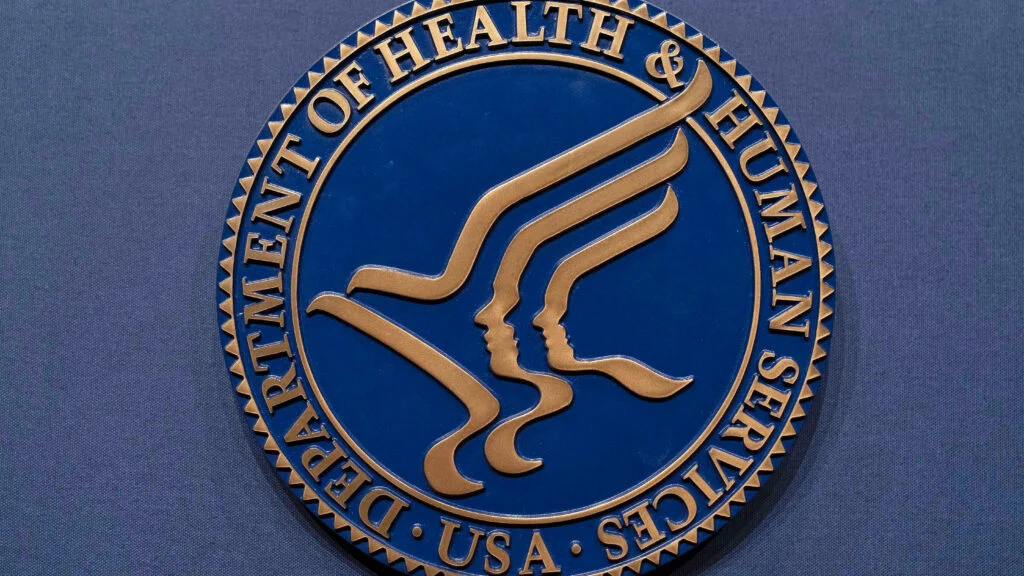
The landscape of American public health is currently undergoing a period of profound turbulence. From the halls of the Department of Health and Human Services (HHS) to the research laboratories of elite universities, the intersection of political ideology and scientific rigor has become a flashpoint for debate. As federal agencies navigate shifting leadership and new mandates, the medical community finds itself grappling with a fundamental question: How can the integrity of scientific evidence be preserved in an era of heightened polarization?
1. The Kennedy Question: Testimony and Contradiction
The Samoa Controversy
The tenure of Robert F. Kennedy Jr. as health secretary has been defined by his vocal skepticism regarding established vaccine science. Central to the current scrutiny is a 2019 trip Kennedy made to Samoa, which occurred shortly before a devastating measles outbreak that claimed the lives of 83 people, the vast majority being children under the age of five.
During recent testimony before lawmakers, Kennedy firmly asserted that his visit to the Pacific island nation had "nothing to do with vaccines." However, new documentation unearthed by The Associated Press and The Guardian presents a significant challenge to this narrative. Correspondence sent by Kennedy to the Samoan prime minister—prior to his arrival—explicitly requests an audience to study the nation’s measles, mumps, and rubella (MMR) vaccination protocols following the deaths of two children who had received the inoculation. The letter, which mentions the words "vaccine" or "vaccination" eight times, suggests that Kennedy’s interest was not merely humanitarian but specifically focused on undermining vaccine confidence.
Implications for Public Trust
Critics argue that Kennedy’s rhetoric has provided fuel for global anti-vaccine movements, directly contributing to the erosion of herd immunity. The discrepancy between his private correspondence and his public testimony has sparked calls for further investigation, with several Democratic senators demanding an accounting of his prior statements. If it is determined that a high-ranking health official misled Congress regarding their influence on public health crises, the implications for executive accountability will be severe.
2. Institutional Shifts: The IACC and the Autism Debate
Reshaping the Advisory Committee
The Interagency Autism Coordinating Committee (IACC), traditionally a bastion of evidence-based policy, underwent a radical transformation in January when Kennedy replaced its leadership with individuals who align with his views on vaccine safety. In a recent session, the committee took the unprecedented step of formally discussing the debunked link between vaccines and autism as a credible subject for federal research.
The lack of internal dissent during these proceedings was notable, as committee members largely bypassed the consensus of the broader medical community, which has long maintained that no causal link exists between vaccines and autism spectrum disorder.
A New Strategic Direction
The committee’s recent vote to reallocate funding priorities marks a departure from the "genetics-first" approach that has defined autism research for the past two decades. The new strategic plan pivots toward areas such as diet, inflammation, and metabolic stress. While exploring diverse avenues of research is standard, the move has drawn sharp criticism from the scientific community, which views the reallocation as a diversion of resources toward theories lacking robust empirical support. The meeting concluded with a testy, highly publicized exchange between the committee chair and an autistic federal employee, underscoring the deep tensions currently simmering within federal health advisory bodies.
3. Academic Integrity: The Stanford Case
Tessier-Lavigne’s Defense
The ripples of controversy have extended beyond government offices into the ivory tower. Three years after the high-profile resignation of Stanford University President Marc Tessier-Lavigne—following an investigation into research misconduct—the former president has launched a public defense.
Tessier-Lavigne has released a cache of documents, including nine emails, intended to refute allegations of fraudulent data manipulation. This counter-offensive is a direct response to the book How to Rule the World: An Education in Power at Stanford University, written by former Stanford Daily reporter Theo Baker. Baker’s investigative work as an undergraduate exposed systemic concerns regarding studies co-authored by Tessier-Lavigne, characterizing them as indicative of a "corner-cutting" culture prevalent in Silicon Valley research circles.
The Standard of Evidence
By publicly challenging these findings, Tessier-Lavigne is attempting to rehabilitate his academic reputation. However, the case serves as a broader case study in the vulnerability of high-impact research. The debate highlights the tension between institutional prestige and the necessity of rigorous, transparent peer review, leaving the academic community to weigh the former president’s self-defense against the investigative evidence compiled by his critics.
4. The CDC: A Call for Structural Resilience
The Legacy of Resignation
One year ago, a trio of senior health leaders—Debra Houry, Daniel Jernigan, and Demetre Daskalakis—resigned from their posts at the Centers for Disease Control and Prevention (CDC). Their exit was a symbolic protest against what they described as the politicization of public health and the systematic dismantling of the agency’s credibility.
As Erica Schwartz assumes the mantle of CDC director, these former leaders have issued a joint blueprint for reform. Their recommendations are not merely about restoring the status quo, but about building an institutional firewall to protect the CDC from partisan interference.
Recommendations for Reform
- Shielding Science: Ensuring that public health policy is driven by clinical data rather than political expediency.
- Protecting Publication: Maintaining the integrity of the Morbidity and Mortality Weekly Report (MMWR) and other agency publications from external vetting.
- Independent Advice: Restoring the autonomy of expert advisory committees, which have historically provided the backbone for sound epidemiological decision-making.
- Financial Safeguards: Ensuring that funding allocated by Congress remains insulated from the changing whims of the executive branch.
As they noted in their joint statement, the goal is to create a "more resilient public health institution" capable of weathering any administration, regardless of party affiliation.
5. Medicare and the Billing Code Conundrum
The Intent of G2211
Two years ago, Medicare introduced a specialized billing code, G2211, designed to incentivize primary care physicians to provide comprehensive, relationship-based care. The $16 supplemental fee was intended to acknowledge the time spent on longitudinal tasks such as medication management, mental health support, and vaccine counseling.
The Reality of Implementation
However, recent data analyzed by Dr. Ishani Ganguli of Harvard Medical School indicates that the policy has failed to reach its intended target. Instead of empowering primary care, the code is being utilized disproportionately by medical specialists. This outcome highlights a structural weakness in the "fee-for-service" system, where administrative incentives can be easily gamed or diverted, failing to address the fundamental economic challenges facing primary care providers.
The findings serve as a sobering reminder that even well-intentioned policy interventions in healthcare often result in unintended consequences when they fail to account for the complexities of clinical practice and provider behavior.
Conclusion: The Road Ahead
The current state of American health and medicine is characterized by a struggle for the soul of the scientific establishment. Whether through the scrutiny of federal appointments, the debates within research committees, or the reform of institutional structures, the underlying theme is a demand for transparency and evidence-based governance. As the nation watches the developments at the CDC, the IACC, and the HHS, the consensus among the public health community remains clear: for science to effectively serve the public, it must be protected from the shifting tides of politics. The coming months will be critical in determining whether these institutions can stabilize their operations and restore the trust of a skeptical public.