









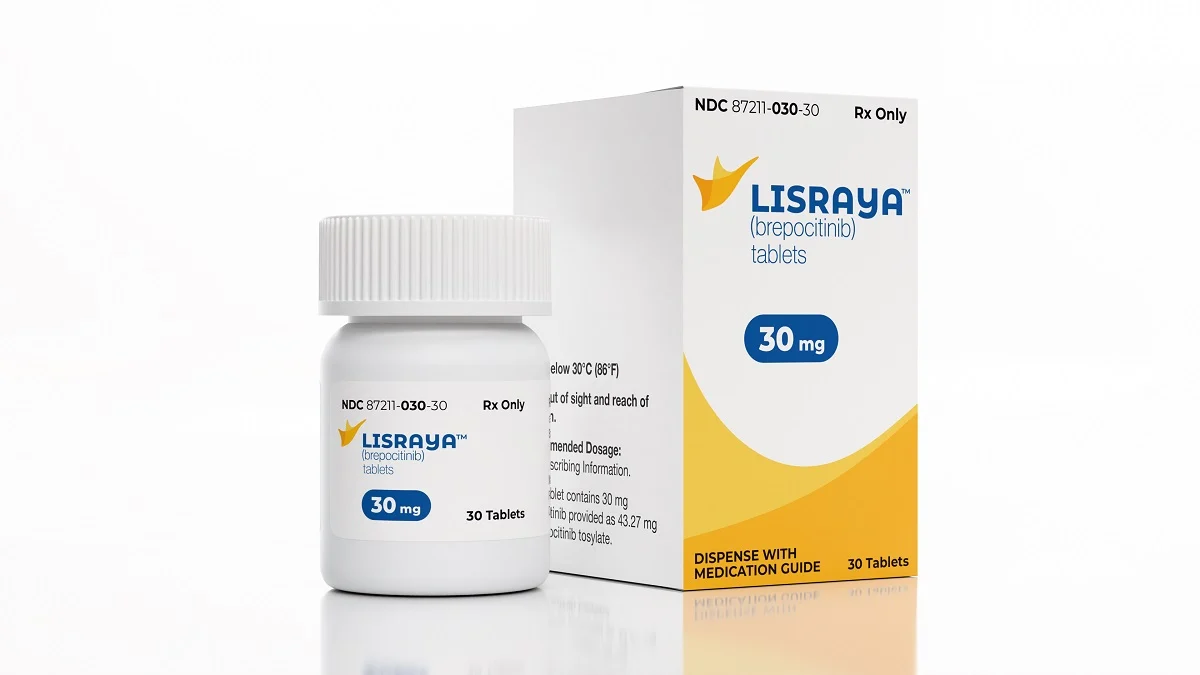
In a landmark development for immunology, the U.S. Food and Drug Administration (FDA) has granted approval for Lisraya (brepocitinib), the first-ever oral medication specifically indicated for the treatment of dermatomyositis in adults. For a patient population that has relied for decades on broad-spectrum, non-specific immunosuppressants, this approval represents a paradigm shift in the management of a debilitating, rare autoimmune disease.
Dermatomyositis—a chronic condition characterized by severe skin rashes and progressive muscle weakness—has long defied targeted therapeutic intervention. While medical history is littered with attempts to repurpose high-profile immunology blockbusters like Rituximab or Remicade for this condition, none have historically succeeded in dermatomyositis-specific clinical trials. With the approval of Lisraya, developed by Priovant Therapeutics (a subsidiary of Roivant Sciences), the medical community finally has a tool designed to address the underlying drivers of the disease rather than merely suppressing the entire immune system.
The Landscape of Dermatomyositis: A History of Unmet Needs
Dermatomyositis is a rare, complex, and chronic condition affecting approximately 70,000 individuals in the United States. It manifests when the immune system mistakenly attacks the body’s skin and muscle tissues, resulting in distinct, often painful rashes and a decline in motor function that can severely impact quality of life.
For decades, the standard of care has been archaic. Patients have primarily relied on high-dose corticosteroids to mitigate inflammation, often followed by long-term, non-specific immunosuppressants. In severe cases, physicians have resorted to intravenous immunoglobulin (IVIG)—a treatment derived from the plasma of thousands of donors designed to dampen an overactive immune response.
These legacy treatments are blunt instruments. They fail to address the specific pathways triggering dermatomyositis and carry a heavy burden of side effects, including increased susceptibility to infection, metabolic disturbances, and potential organ damage. The arrival of Lisraya marks the first time that clinicians can offer patients a targeted therapy designed specifically to combat the molecular mechanisms of their disease.
A Targeted Breakthrough: The Science of Brepocitinib
Lisraya is a small molecule inhibitor engineered to target and block two critical proteins in the inflammatory cascade: JAK1 and TYK2. While the Janus kinase (JAK) inhibitor class is well-validated in medicine, Lisraya is unique in its dual-target approach. By simultaneously inhibiting both JAK1 and TYK2, the drug creates a more comprehensive barrier against the inflammatory signals that propagate the disease.
The regulatory approval was anchored by a robust, placebo-controlled Phase 3 study involving 241 adults. The primary endpoint was the improvement of disease activity as measured by a specialized rating index, which tracks both skin health and muscle function. The results, published in the New England Journal of Medicine in March, were decisive: patients treated with Lisraya showed significantly higher average improvement scores compared to the placebo group at 52 weeks.
Beyond the primary metrics, the data demonstrated tangible real-world benefits: improved physical function, clearer skin, and, perhaps most importantly for patients, a significantly higher likelihood of reducing their reliance on systemic steroids. Common adverse events reported in the trial included upper respiratory tract infections, headaches, fatigue, and nausea, a profile generally consistent with the existing JAK inhibitor class.
The Roivant Strategy: Turning Abandoned Assets into Blockbusters
The success of Lisraya is as much a testament to Roivant Sciences’ unique business model as it is to the science of immunology. Unlike traditional pharmaceutical giants that invest billions in long-term, internal R&D, Roivant functions as a strategic scout. The company specializes in identifying promising drug candidates that have been deprioritized or shelved by larger firms, then building dedicated subsidiaries—such as Priovant—to shepherd those assets through the final stages of clinical development and regulatory review.
Lisraya itself was originally developed by Pfizer. The drug had reached Phase 3 in dermatomyositis and Phase 2 in lupus, but the path forward was clouded by a broader crisis within the JAK inhibitor category. In 2021, a post-marketing study for Pfizer’s Xeljanz (a related JAK drug) indicated elevated risks of cardiovascular events and cancer, leading the FDA to mandate "black box" warnings for the entire class.
While many firms retreated from the category, Roivant saw an opening. They recognized that for rare diseases where the benefit-risk ratio is significantly different from common conditions like rheumatoid arthritis, the clinical value of such a drug remained exceptionally high. By acquiring the rights to brepocitinib, Roivant successfully navigated the regulatory storm, bringing a much-needed therapy to market despite the broader industry’s hesitation.
Official Responses and Strategic Outlook
During a conference call with investors and analysts, Roivant CEO Matt Gline reflected on the significance of the achievement. "Not for lack of trying, there have been a lot of attempts in history to bring some of the greatest drugs in immunology across the finish line in dermatomyositis, and none of those have been successful," Gline noted. "It’s just really exciting that we’ve been able to deliver this kind of opportunity and I think the DM patient and physician community have been waiting for a moment like this."
The commercial strategy for Lisraya is aggressive. With a list price of $35,000 per month—or $420,000 annually—the drug is positioned as a premium, high-value specialty medicine. While this price point is significantly higher than that of broad-use JAK inhibitors like Xeljanz, industry analysts argue that the comparison is imperfect, as Lisraya targets a rare, orphan disease population with few other options.
Leerink Partners, a leading healthcare investment bank, has modeled the potential for Lisraya to reach $4.2 billion in annual revenue by 2032, provided it secures approvals for additional indications.
Looking Ahead: The "Wall of Patient Benefit"
Roivant is not treating the approval of Lisraya as an end goal, but rather as the foundation of a broader strategy. The company is already in the advanced stages of testing the drug across several other rare immunological disorders.
- Non-infectious Uveitis: A Phase 3 trial is currently underway, with preliminary data expected by the end of the year.
- Cutaneous Sarcoidosis: A Phase 3 study is ongoing, with results anticipated in 2028.
- Lichen Planopilaris: A Phase 2b/3 study is currently enrolling, targeting this inflammatory condition that causes permanent hair loss.
"For Lisraya, this is really just the beginning," Gline stated. "This is the first brick in what we hope is going to be a large wall of patient benefit that we’re able to build across indications."
Implications for the Pharmaceutical Industry
The success of Lisraya serves as a case study for the evolving pharmaceutical ecosystem. It highlights a shift where the "innovation" is found not only in the laboratory bench but in the strategic re-evaluation of stalled assets. By focusing on niche, high-unmet-need indications, Roivant has successfully resurrected a drug that might have otherwise languished in a corporate archive.
However, the high price point will likely spark renewed debate regarding drug affordability and the sustainability of pricing models for rare disease therapies. As the healthcare community celebrates this milestone for dermatomyositis patients, it must also grapple with the economic realities of bringing such specialized, targeted therapies to a market that is increasingly cost-conscious.
For the patients currently suffering from dermatomyositis, the discourse around pricing is secondary to the immediate, practical reality: for the first time in history, they have a dedicated, FDA-approved treatment that offers the potential to move beyond the constraints of legacy immunosuppression and reclaim their quality of life. The "brick" has been laid, and the broader community is watching to see how the rest of this medical wall will be built.