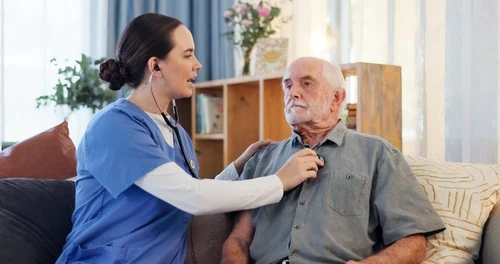










In the sterile, high-stakes environment of a modern examination room, communication is the primary tool for diagnosis, treatment, and healing. Yet, for millions of immigrants across the United States, the threshold of a doctor’s office is often viewed not as a sanctuary, but as a site of potential vulnerability. When a patient arrives carrying the weight of systemic fears—specifically the threat of Immigration and Customs Enforcement (ICE) activity—the ability of a healthcare provider to speak their native language becomes more than a mere convenience; it is a critical act of reassurance, clinical safety, and human dignity.
As the U.S. demographic landscape shifts, the healthcare system faces a mounting crisis of accessibility. Spanish, the most prevalent non-English language in the country, is spoken by approximately 43 million people. Despite this, a profound disconnect persists between the linguistic needs of the patient population and the clinical proficiency of the physician workforce.
The Linguistic Divide: A Snapshot of the Crisis
The statistics are sobering. Nearly 28 million Americans possess limited English proficiency (LEP), a status that frequently acts as a gatekeeper to essential medical services. Among this demographic, roughly three in ten individuals report that the inability to communicate effectively with their providers has hindered their ability to obtain necessary healthcare.
The medical community has struggled to keep pace with these shifting demographics. A recent comprehensive analysis of over 107,000 first-year resident physicians revealed that while 43.2% reported some level of Spanish proficiency, only 22.7% possessed the advanced or native-level fluency required to provide truly "language-concordant care"—the gold standard for medical communication.
This is not merely a matter of vocabulary; it is a matter of clinical precision. Taking a nuanced medical history, explaining the complex risks of a pharmaceutical regimen, or navigating a delicate mental health assessment requires a level of fluency that extends far beyond conversational "survival Spanish." When a provider lacks this clinical fluency, the potential for diagnostic error increases, and the patient’s trust in the institution begins to erode.
A Personal Perspective: The Anatomy of a Language Gap
For Karina Morales, a fourth-year medical student and a Public Voices Fellow, this crisis is not an abstract policy debate—it is her lived history. Growing up as a bilingual child, Morales frequently served as the primary medical interpreter for her mother, who has limited health literacy and speaks only Spanish.
"I sat beside her during doctor’s appointments, struggling to find an interpreter and helping to relay descriptions of her seizures, medication side effects, and questions she was sometimes afraid to ask in English," Morales recalls. She witnessed firsthand the "translation leakage" that occurs when a child, rather than a professional, navigates complex medical terminology. She observed the frustration in her mother’s eyes as critical details regarding her health were lost in the gap between what she felt, what she said, and what the physician ultimately understood.
Today, as a medical student at a large public academic center, Morales sees this dynamic mirrored in the faces of her patients. Her mother, now an adult who has experienced the difference firsthand, refuses to see providers who do not speak her language. For her, the presence of a Spanish-speaking doctor is not just about clarity; it is about psychological safety.
Research and Clinical Outcomes: The Value of Direct Connection
The scientific literature confirms that direct, language-concordant care produces superior outcomes compared to the use of mediated interpretation. In a landmark randomized clinical trial involving Spanish-speaking patients undergoing cancer treatment, researchers found that patients treated directly by bilingual physicians reported significantly higher satisfaction, deeper empathy, and greater confidence in their care teams.
Crucially, these patients were more likely to ask probing questions and volunteer sensitive, diagnostic-relevant information. When a patient feels the barrier of a third-party interpreter—or worse, a non-professional intermediary—the therapeutic alliance is often interrupted. The nuance of a patient’s tone, their hesitation, and their emotional state can be diluted, leading to a "check-box" style of medicine that fails to address the holistic needs of the individual.
Chronology of Growing Barriers: Immigration Policy and Public Health
The urgency of this issue has been amplified by a volatile political climate. The 2025 KFF/New York Times survey of immigrant experiences paints a bleak picture of how federal policy is reshaping healthcare-seeking behavior.
- 2023: Data indicated that 22% of immigrant adults had skipped or postponed healthcare in the previous 12 months, citing a variety of structural and personal barriers.
- 2024: As rhetoric surrounding immigration enforcement intensified, the psychological burden on immigrant communities began to manifest as a public health crisis. Reports of "clinic avoidance" surged as rumors of ICE activity near sensitive locations proliferated.
- 2025: The share of immigrant adults who reported avoiding or postponing medical care jumped to 29%. Among this cohort, nearly one in five explicitly identified immigration-related concerns as the primary deterrent to seeking treatment.
When a patient is already navigating the terror of potential detention or deportation, the healthcare system must act as a fortress of confidentiality and trust. If that patient encounters a provider who cannot understand their symptoms or, conversely, cannot explain their rights and the privacy protections of the medical environment, the "chilling effect" on public health becomes total.
Implications for Healthcare Infrastructure
The implications for the healthcare system are twofold: administrative and educational.
The Administrative Imperative
Healthcare administrators must move beyond superficial gestures. Printing a waiver form in Spanish or placing a sign in the lobby is not enough. Systems must move toward a model where bilingualism is treated as a core clinical competency rather than an "extra" skill. This involves hiring practices that prioritize language proficiency, as well as developing robust, system-wide policies that protect patient data from being used in immigration enforcement contexts.
The Educational Pipeline
Medical schools and residency programs are the frontline of this necessary transformation. Educators must:
- Expand Medical Spanish Curricula: Move beyond introductory courses to include rigorous clinical language training that focuses on history-taking, physical exams, and informed consent.
- Formalize Assessment: Standardize the ways in which clinical language proficiency is measured, ensuring that residents who claim fluency can be verified through objective, high-stakes assessments.
- Incentivize Proficiency: Recognize that the additional time a bilingual physician spends navigating a language barrier is a value-add to the institution, and compensate or support them accordingly.
Reconciling Interpretation with Language-Concordance
It is essential to clarify that the push for bilingual physicians is not a call to replace professional medical interpreters. Trained interpreters remain the backbone of equitable care for the vast majority of non-English speakers. Instead, the goal is to expand the repertoire of the healthcare workforce.
In situations where a provider is not proficient in the patient’s language, the interpreter is the bridge that prevents disaster. However, we must aim for a future where that bridge is not the only path available. By fostering a workforce where more providers can meet patients in their own language, we can reduce the reliance on interpreters for routine care and reserve them for the most complex, high-stakes interactions where specialized, neutral interpretation is required.
Conclusion: The First Step Toward Trust
The challenge of providing care in a climate of fear is immense, and it is true that no healthcare system can entirely mitigate the external anxieties of a vulnerable population. However, the medical community has a duty to ensure that the clinic is not a source of further marginalization.
"My mother taught me that language can determine whether a patient is heard and whether she understands," says Morales. "For patients today navigating both language barriers and fear of ICE, being heard and understood can be the first step toward building enough trust to seek care in the first place."
The future of American medicine depends on its ability to embrace its diverse reality. By investing in the language skills of our clinicians, we are not just teaching a new vocabulary—we are ensuring that the most vulnerable among us have the confidence to walk through the door, speak their truth, and receive the care they deserve. True health equity begins with the ability to hear and be heard.