









On July 31, the Netherlands Ministry of Defense released its Energy Security Roadmap 2026, a document that serves as a sobering reality check for the North Atlantic Treaty Organization (NATO). While framed as a national strategic directive, the roadmap exposes a deep, structural fissure within the European Union: the growing friction between aggressive climate-driven energy policies and the raw industrial and logistical requirements of military deterrence.
As the continent faces a resurgent Russia and a rapidly modernizing China, the Dutch report suggests that European energy policy is no longer just a domestic or economic concern—it has become a fundamental vulnerability in the West’s defense posture.
Main Facts: The Collision of Policy and Reality
The core of the Dutch roadmap is a candid acknowledgment that the modern military remains tethered to the very fossil fuels the European Union is seeking to phase out. According to the document, more than 95% of Dutch military assets—including aircraft, naval vessels, and armored ground vehicles—are reliant on hydrocarbons.
This is not a failure of innovation, but a necessity of interoperability. NATO’s "Single Fuel Policy" was designed to ensure that any allied force can refuel at any allied base, standardizing logistics around high-energy-density liquid fuels. The roadmap sets an ambitious goal of 30% fossil fuel independence by 2030, alongside comprehensive energy master plans for 68 military installations. Yet, the report implicitly asks the question that looms over all of Brussels: Can these targets be met without sacrificing the operational readiness required to confront a peer adversary?
Chronology: A Decade of Strategic Drift
To understand the current crisis, one must look at the sequence of events that has left Europe in its current precarious position:
- 2014–2021: The EU deepens its commitment to the European Green Deal, prioritizing rapid decarbonization while simultaneously increasing reliance on Russian natural gas as a "transition fuel."
- Winter 2021/2022: A precursor to disaster. European natural gas storage levels hit ten-year lows, and the Yamal pipeline—a critical artery of energy supply—begins to experience disruptions, signaling the fragility of Europe’s energy architecture.
- February 2022: Russia launches its full-scale invasion of Ukraine. The immediate shock to energy markets forces the EU to pivot away from Russian supplies, driving energy costs to record highs and exposing the lack of domestic production capacity.
- 2023–2025: Industrial manufacturing across Europe begins to stutter. High energy costs lead to widespread plant closures, most notably in the steel and chemical sectors, which are vital for defense production.
- July 31, 2026: The Netherlands releases the Energy Security Roadmap 2026, formally acknowledging that the disconnect between energy policy and defense capability has reached a critical threshold.
Supporting Data: The Industrial Cost of High Energy Prices
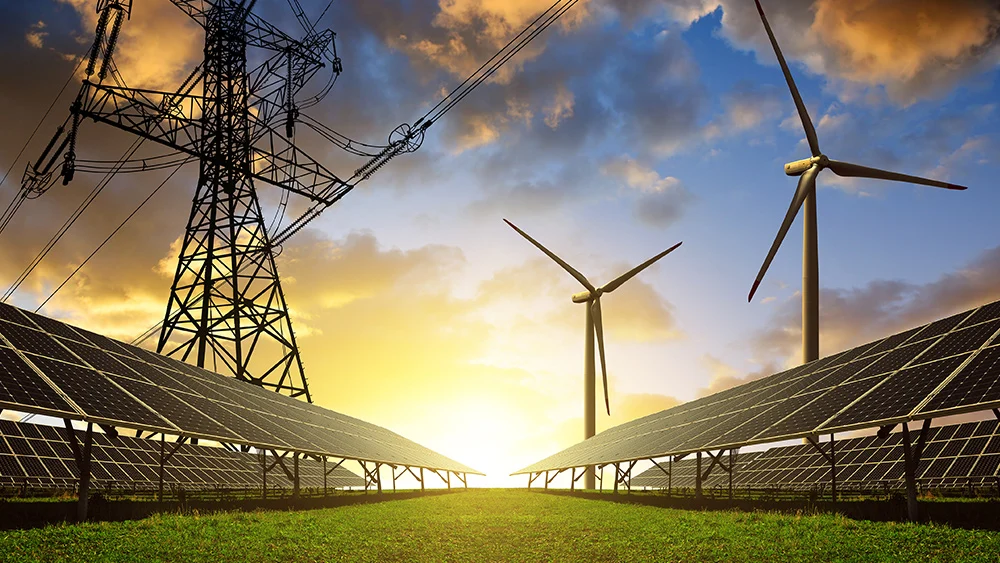
The 2026 Statistical Review of World Energy confirms that despite two decades of massive subsidies for wind and solar, fossil fuels still account for 86% of global primary energy consumption. Meanwhile, the European industrial base is suffering from a "price trap."
Currently, European industrial electricity prices are roughly double those in the United States and 50% higher than those in China. This disparity has triggered a wave of deindustrialization. The most striking example is the European steel sector, which saw output fall to its lowest level since 1960 last year. ThyssenKrupp’s decision to cut 11,000 jobs is not merely a corporate restructuring; it is a loss of national security infrastructure.
Defense manufacturing requires massive amounts of energy to produce steel, chemicals, advanced electronics, and semiconductors. If the cost of energy makes it cheaper to import these materials than to produce them locally, the domestic defense industrial base (DIB) erodes. A nation that cannot smelt its own steel or refine its own chemicals cannot scale up munitions production in the event of a sustained, high-intensity conflict.
Official Responses and Expert Analysis
The Dutch Ministry of Defense’s document has been met with a mix of bureaucratic caution and stark academic alarm. Dr. Samuel Furfari, a leading expert on energy geopolitics, has been particularly vocal regarding the findings.
"The European Union remains heavily dependent on imported energy and critical raw materials," Furfari noted in his critique of the roadmap. "While the EU pursues a climate agenda that constrains domestic energy development, our competitors in the East and our economic rivals in the West are moving in the opposite direction. The U.S. has leveraged its domestic oil and gas wealth to lower industrial costs, while China is adopting a dual-track strategy—expanding renewables while simultaneously securing fossil fuel supply chains."
Official EU sources, conversely, maintain that the transition to green energy is the ultimate long-term security strategy, arguing that reducing dependence on imported oil and gas will eventually liberate Europe from the geopolitical coercion of petrostates. However, the Energy Security Roadmap subtly counters this by noting that "energy security is not simply an environmental or economic issue; it is fundamentally an issue of national security." The implication is clear: the transition period—which could last decades—is a window of maximum vulnerability.
Implications: Strategic Divergence and the Risk of Obsolescence
The most dangerous aspect of the current situation is the strategic divergence between NATO members and their adversaries. China, for instance, has demonstrated a pragmatic approach to energy security. While Beijing is a world leader in green energy deployment, it is simultaneously building new coal-fired power plants at a record pace to ensure that its factories—and its military-industrial complex—never face a power shortage.
Russia, similarly, has weaponized its energy sector to maintain its sovereignty and fund its military operations. By contrast, the EU’s approach has been characterized by "policy-induced scarcity."
The Historical Precedent
History teaches us that military power is a function of industrial output, and industrial output is a function of energy availability. From the coal-fired navies of the 19th century to the oil-fueled mechanized warfare of the 20th century, the state with the most secure access to affordable energy has almost invariably held the strategic upper hand.
By increasing the cost of production, the European energy policy is essentially placing a "tax" on its own defense manufacturing. If the cost of producing a 155mm artillery shell or a tank component becomes prohibitively expensive due to electricity prices, the volume of production will inevitably drop. In a war of attrition—like the one being fought in Ukraine—production volume is the single most important factor in victory.
Conclusion: A Call for Alignment
The Netherlands Ministry of Defense has issued a warning that the entire Western alliance would do well to heed. The Energy Security Roadmap 2026 is not a rejection of environmental goals, but a demand for realism. It highlights that the defense of sovereignty requires a stable, affordable, and abundant energy supply.
As NATO looks toward the next decade, the question is no longer just about military spending targets (the "2% of GDP" benchmark). It is about whether the industrial foundation that makes that spending possible is being dismantled by well-intentioned but strategically blind energy policies.
If Europe continues to prioritize decarbonization at the expense of energy affordability, it risks arriving at a future where its military is technologically sophisticated but physically incapable of sustaining itself in a crisis. The gap between the green agenda and the requirements of hard power is widening. Whether European leaders adjust their policies to bridge this gap before it is too late will likely determine the continent’s security for the remainder of the 21st century.
Sources and Further Reading
- Energy Security Roadmap 2026, Netherlands Ministry of Defense (July 31, 2026).
- "EU Decarbonization is a Security Threat for the West," WattsUpWithThat.com.
- "Dutch Defence Sets Energy Security Roadmap," Global-Political-Spotlight.com.
- Statistical Review of World Energy (2026 Edition).
- Furfari, S., "The Geopolitics of Energy and the Future of European Industry," ScienceDirect.