










For generations, a cool, dark room has been the gold standard for a restorative night’s rest. However, as the global climate undergoes rapid transformation, the fundamental biological necessity of a cool environment is becoming an elusive luxury. Emerging research indicates that rising nighttime temperatures—a direct consequence of climate change—are creating a silent public health crisis, stripping millions of people of the sleep required to function, heal, and thrive.
The physiological connection between ambient temperature and sleep is deep-rooted. Human beings are homeothermic, meaning we must maintain a stable internal core temperature to survive. As part of our natural circadian rhythm, the body initiates a cooling process in the hours leading up to and during sleep. When the external environment remains stubbornly warm throughout the night, this thermoregulatory mechanism is disrupted, preventing the body from reaching the depths of sleep necessary for physical and cognitive restoration.
The Cumulative Cost of Hot Nights: Data and Trends
The impact of heat on human biology is not merely anecdotal; it is quantifiable and staggering. A recent comprehensive analysis by Climate Central highlights the scale of this issue, estimating that from 2020 to 2025, elevated nighttime temperatures caused the average person worldwide to lose nearly 56 hours of sleep annually.
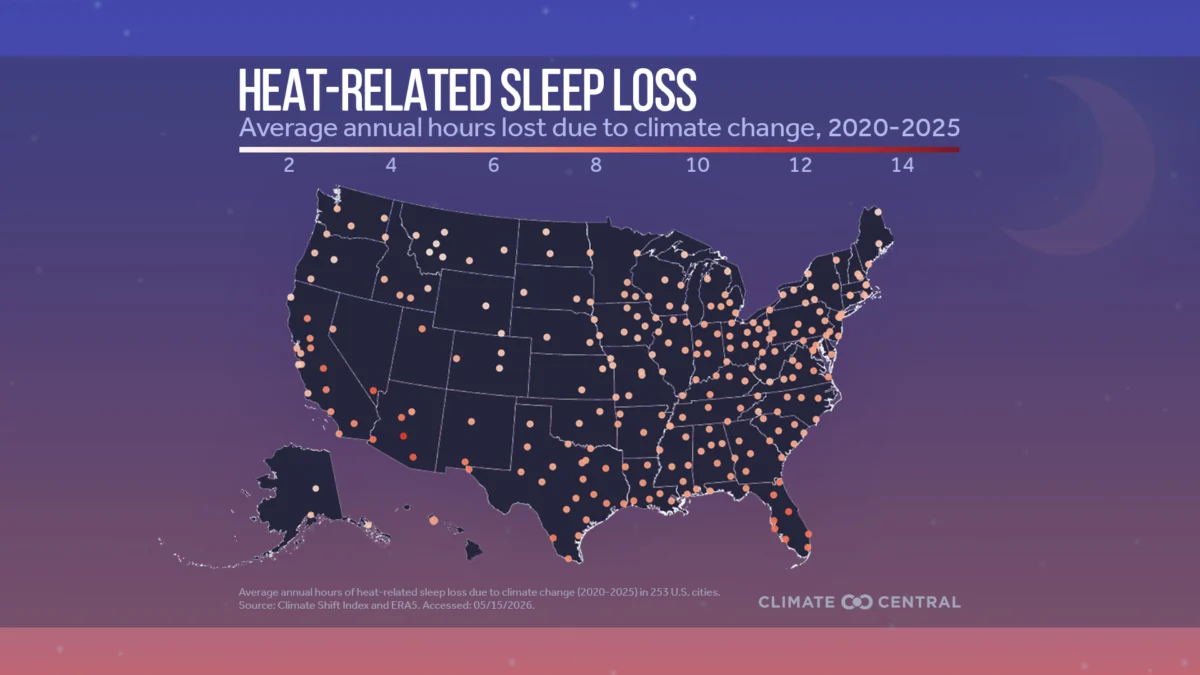
In the United States, the data is equally concerning. An analysis of 253 cities revealed an average loss of 36 hours of sleep per year per person. The burden is not distributed equally; geographical vulnerabilities play a massive role. Cities in Arizona, California, Florida, and Nevada have recorded the highest climate-linked sleep deficits, with residents losing between seven and nine hours of sleep annually due to heat.
Perhaps most alarming is the trendline: across nearly every city studied, the amount of temperature-related sleep loss has at least doubled since the early 1970s. This suggests that as nights continue to warm, we are trending toward a future where "getting a good night’s rest" becomes increasingly impossible for large swaths of the global population.
Chronology: From Occasional Heat to Chronic Disruption
To understand how we reached this point, we must look at the shift in global weather patterns over the last half-century.
- The 1970s–1990s: Nighttime temperatures remained relatively stable, with traditional cooling periods allowing for urban heat islands to dissipate during the late night and early morning hours.
- The Early 2000s: The frequency of "tropical nights"—where temperatures do not drop below 68°F (20°C)—began to climb. Researchers started noticing early signals of sleep architecture disruption in clinical populations.
- 2022: A landmark study published in the journal One Earth analyzed over 7 million sleep records alongside local weather data. The study confirmed a direct correlation: when nighttime temperatures exceeded 86°F (30°C), sleep duration dropped by an average of 14 minutes. Furthermore, temperatures exceeding 77°F (25°C) were found to significantly increase the probability of individuals failing to secure seven hours of sleep.
- 2026: A major heat wave in the United Kingdom served as a case study for the developed world. A YouGov poll conducted during the event revealed that 65% of adults struggled to sleep, with nearly half of those affected reporting a loss of three or more hours of sleep per night.
The data suggests that human beings are not naturally adapting to these higher temperatures. Despite the evolutionary capacity for acclimatization, our internal sleep systems remain stubbornly vulnerable to heat, indicating that without environmental intervention, the sleep crisis will only deepen.
The Physiological and Cognitive Implications
The consequences of sleep loss go far beyond morning fatigue or a reliance on extra caffeine. Sleep is the brain’s "maintenance mode," where neural pathways are cleared of toxins and memory is consolidated.
A PLOS Medicine study focusing on young adults during a 2016 Boston heat wave provided a sobering look at the cognitive fallout of warm nights. Students residing in buildings without air conditioning demonstrated measurable deficits in attention, processing speed, and working memory. The study concluded that thermal conditions within the living space directly influence performance on tasks that require complex executive function.
When this sleep loss is compounded over weeks or months, the implications for public health are profound. Chronic sleep deprivation is linked to:

- Metabolic Dysfunction: Increased risk of obesity and Type 2 diabetes.
- Cardiovascular Strain: Elevated blood pressure and increased risk of heart disease.
- Mental Health Declines: Higher rates of anxiety, depression, and emotional dysregulation.
- Safety Hazards: Increased rates of workplace accidents and traffic collisions due to slowed reaction times and impaired judgment.
Societal Disparities and the "Cooling Gap"
While heat affects all, it does not affect all equally. The "cooling gap"—the disparity in access to air conditioning and well-insulated, energy-efficient housing—is a primary determinant of who suffers most.
Those in lower-income brackets, the elderly, and individuals residing in urban heat islands (areas with high concentrations of asphalt and low tree cover) face the highest risks. Climate Central notes that while air conditioning is a critical tool for mitigation, it is not a panacea. Not everyone has access to cooling systems, and even for those who do, rising energy costs and the environmental impact of increased A/C usage create a paradoxical loop: as we cool our homes, we contribute to the energy consumption that exacerbates climate change.
Regions in the Middle East, Southeast Asia, and parts of India and West Africa are currently experiencing the most extreme manifestations of this crisis. In these areas, the lack of nocturnal cooling is not just an inconvenience—it is a critical barrier to maintaining the health of the workforce and the wellbeing of the general population.
Strategies for Resilience: Can We Protect Our Sleep?
While we cannot unilaterally reverse global climate trends, individuals can implement evidence-based strategies to protect their sleep health. The goal is to create a "micro-climate" conducive to the body’s natural cooling process.
Environmental Adjustments
- Ventilation Strategy: Keep windows closed and curtains drawn during the hottest parts of the day to prevent heat gain. Open windows only when the outside air temperature falls below the indoor temperature.
- Optimizing the Bed: Utilize breathable fabrics like cotton or moisture-wicking materials. Consider cooling mattress pads or pillows designed to dissipate heat.
- The Pre-Sleep Cool Down: Taking a lukewarm shower before bed can help facilitate the body’s internal cooling shift. Avoid cold showers, which can cause the body to respond by generating internal heat.
Lifestyle and Behavioral Adjustments
- Circadian Consistency: Even on hot nights, maintaining a consistent wake and sleep time helps keep the internal biological clock regulated.
- Hydration Management: While staying hydrated is crucial, avoid heavy meals or excessive alcohol near bedtime, as these increase metabolic heat production.
- Managing Cognitive Load: Given that heat impairs cognition, try to tackle demanding tasks earlier in the day when your brain is fresh, rather than relying on late-night sessions that may be hampered by sleep-deprived brain fog.
When to Seek Professional Intervention
Occasional nights of restless sleep are a normal part of life, but chronic insomnia is not. If heat-related sleep problems persist to the point of impacting daily life, safety, or emotional health, it is imperative to seek professional help.
Primary care physicians can help distinguish between environmental sleep disruption and underlying sleep disorders, such as obstructive sleep apnea or chronic insomnia. For complex cases, a referral to an AASM-accredited sleep center provides access to multidisciplinary teams, including sleep specialists, neurologists, and psychologists, who can provide personalized treatment plans.
The Bottom Line: A Public Health Imperative
The evidence is clear: the warming climate is no longer just an environmental concern; it is a fundamental challenge to human health. As we look toward the future, the integration of heat-resilient housing, urban greening projects, and public health policies that address sleep equity will be essential.
Ultimately, sleep is the foundation upon which all other health outcomes are built. We must treat the preservation of our sleep as a priority in the age of climate change, acknowledging that while the mercury continues to rise, our ability to rest must be protected through innovation, policy, and personal vigilance. Healthy sleep is not just a luxury—it is a vital pillar of our collective survival.
Medical review by Dionne Morgan, MBBS, FCCP.