









By Barbara Hoffmann, Advocacy Council Chair, European Respiratory Society
25 August, 2026
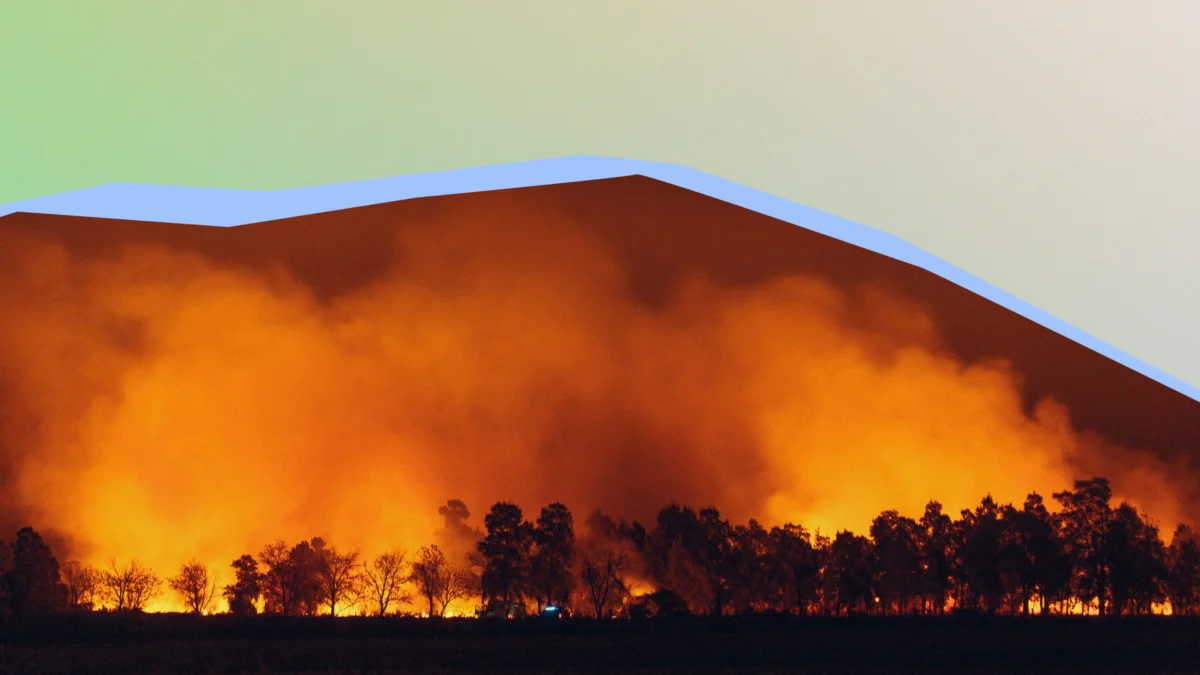
The summer of 2026 will be remembered not for its respite, but for the acrid, grey haze that has draped itself across the European landscape. As wildfires transition from seasonal anomalies to a permanent, systemic fixture of the European climate, the continent is facing an unprecedented health crisis. The smoke that chokes our cities is no longer a localized disaster; it is a continental emergency that demands an immediate, science-led pivot in both health infrastructure and climate policy.
The Escalating Inferno: Main Facts and Current Reality
Europe is burning. According to data provided by the World Health Organization (WHO) and regional monitoring agencies, the scale of destruction witnessed in 2025—where 2.2 million hectares were razed—was not a historical outlier, but a baseline. This figure represents an area more than half the size of Switzerland and marks a staggering 57% increase from the 1.4 million hectares consumed just four years prior.
As we stand in late August 2026, the trajectory is grim. Portugal and Spain, the frontline states of this environmental collapse, have already reported wildfire activity increases exceeding 100% compared to the same period in 2025. These are not merely statistics; they are markers of a rapidly destabilizing ecosystem. The fires are feeding on prolonged, severe droughts and unprecedented heatwaves, creating a feedback loop where the destruction of carbon-sequestering forests further accelerates the warming that fuels the next inferno.
A Chronology of the 2026 Air Quality Crisis
The summer of 2026 has been defined by a series of air quality catastrophes that have pushed medical systems to their limits.
- Early June 2026: Initial wildfire activity begins in the Iberian Peninsula, following a winter of record-low rainfall.
- July 2026: Copernicus Atmosphere Monitoring Service (CAMS) issues a series of red-alert warnings. Emissions from French wildfires are flagged as on track to reach the highest levels seen in 24 years.
- Late July 2026: The smoke plume drifts, impacting air quality in major urban centers. In Bordeaux, PM2.5 levels—fine particulate matter small enough to enter the bloodstream—shatter all safety records, peaking at over 300 micrograms per cubic meter.
- August 2026: Madrid reports sustained PM2.5 levels ranging between 80 and 100 micrograms per cubic meter. While lower than the Bordeaux peak, these levels persist for weeks, creating a chronic exposure scenario that is arguably more dangerous for the long-term health of the population.
Supporting Data: The Science of Suffocation
The numbers released by the Copernicus Atmosphere Monitoring Service in July 2026 are cause for profound alarm. When we analyze the concentration of fine particulate matter (PM2.5), the disparity between "safe" levels and current conditions is stark.
The World Health Organization (WHO) has established rigorous guidelines for air quality, designed to protect human life. In Bordeaux, the peak of 300 micrograms per cubic meter was roughly 20 times the WHO’s 24-hour safety threshold. More damningly, these levels exceeded the European Union’s own legal limit values by more than ten times.
In Madrid, while the concentration of 80 to 100 micrograms per cubic meter is lower than the peak in France, it represents an exposure level six times higher than the WHO limit. For a patient with chronic obstructive pulmonary disease (COPD) or asthma, these numbers are not just data points—they are a direct threat to their survival.
Official Responses: A Call to Arms
The response from international health bodies has been unambiguous. WHO Regional Director for Europe, Hans Kluge, has repeatedly emphasized that the current wildfire trajectory is incompatible with the health of the European population.
Dorota Jarosinska, speaking on behalf of the WHO’s European Centre for Climate Change, Environment and Health, framed the crisis with sobering clarity. In an interview with Euronews Health, she characterized the wildfire smoke as a “true health emergency” that lingers long after the flames have been extinguished.
This assessment is vital because it shifts the narrative: wildfires are not just a matter of forestry management or emergency firefighting; they are a persistent public health challenge. The WHO’s position is that we are currently failing to account for the "long tail" of health impacts, which include systemic inflammation, cardiovascular stress, and long-term respiratory degradation in previously healthy individuals.
The Medical Implications: A System Under Strain
As a representative of the European Respiratory Society, I see the human cost of these figures every day. When air quality plummets, our clinics do not just see a rise in patients—they see a surge.
The Clinical Impact
Exposure to PM2.5 causes immediate distress. For our patients, this manifests as:
- Exacerbation of pre-existing conditions: Increased frequency of asthma attacks and acute COPD exacerbations.
- Increased pharmacological reliance: Patients are forced to increase their use of rescue inhalers and corticosteroids, often without the necessary clinical oversight.
- Increased mortality: The combination of heatwaves and toxic air creates a "double-jeopardy" effect, where the body’s ability to regulate temperature is compromised at the exact moment the lungs are fighting to extract oxygen from polluted air.
The Systemic Impact
The real tragedy is that our health systems are currently optimized for stability, not crisis. Emergency departments are already operating under significant strain due to aging populations and post-pandemic backlogs. When wildfire smoke settles over a city, these departments become overwhelmed. Without dedicated surge capacity, specialized respiratory equipment, or the staff to handle the influx, the quality of care for all patients inevitably suffers.
The Path Forward: Advocacy and Policy
We cannot continue to react to these crises as if they were unpredictable acts of nature. We know the fires are coming, and we know the smoke will follow. The European Respiratory Society, in partnership with the European Lung Foundation, is spearheading the Defend Science, Protect Public Health campaign to demand a structural shift in how we approach this reality.
1. Strengthening Healthcare Infrastructure
Policymakers must move beyond emergency funding and commit to long-term systemic resilience. This means:
- Surge Capacity: Investing in dedicated respiratory crisis units that can be activated during wildfire seasons.
- Staffing: Ensuring that hospitals have the personnel to manage spikes in demand without compromising other areas of care.
- Public Health Literacy: Deploying robust communication strategies to ensure vulnerable populations—the elderly, children, and those with underlying conditions—have the tools and information to protect themselves when air quality drops.
2. Radical Climate Policy
We must be honest: no amount of healthcare reform will suffice if the source of the problem—the climate crisis—is not addressed. We are urging European governments to prioritize evidence-based climate protection policies over corporate interests.
The science is clear: if we continue to delay the transition away from fossil fuels, the intensity and frequency of these wildfires will only continue to accelerate. We are rapidly approaching a threshold where the damage to our health and our environment will be irreversible.
3. A Call for Political Courage
A secure, prepared Europe is one that invests in its people before the crisis strikes. We need policies that are anchored in the current scientific reality, not in the economic convenience of the past. We are asking for a Europe where the air is safe to breathe, where our hospitals are ready to serve, and where the health of the planet is recognized as the fundamental pillar of human survival.
The window of opportunity is closing. We can choose to be the generation that recognized the danger and acted with the necessary scale and urgency, or we can continue to watch as our summers turn to ash. The choice, and the responsibility, lies with our policymakers today. It is time to defend science, protect our health, and secure our future.