









Main Facts: A Bipartisan Response to a National Emergency
The Campus Lifeline Act arrives at a critical juncture for youth mental health in the United States. Led by Senators Dave McCormick (R-PA), Maggie Hassan (D-NH), Pete Ricketts (R-NE), and Tim Kaine (D-VA), the Senate bill serves as a companion to a bipartisan House version introduced earlier this year. The legislation focuses on two primary pillars: visibility and involvement.
First, the bill encourages states to require that the 988 Suicide & Crisis Lifeline be printed on all newly issued student identification cards for K-12 schools and institutions of higher education. This ensures that every student carries a direct link to professional help in their pocket at all times.
Second, the legislation seeks to modernize the Garrett Lee Smith Campus Suicide Prevention Grant Program. Established in 2004, the program provides federal funding to colleges and universities for mental health services. The new bill adds a crucial requirement: institutions receiving these grants must involve students and student-led mental health organizations in the development and implementation of their prevention strategies.
"At Active Minds, we believe that every student deserves access to mental health support before they reach a crisis," said Anika Rahman, Director of Policy at Active Minds. "By strengthening campus mental health resources and expanding access to evidence-based supports, this legislation will help ensure more youth and young adults can get the care they need, when they need it."
Chronology: From Grassroots Advocacy to the Halls of Power
The journey of the Campus Lifeline Act began not in a legislative office in Washington, but on a college campus in Ohio. Students at the University of Dayton, working through their local Active Minds chapter, recognized a simple but profound problem: many of their peers did not know who to call during a mental health emergency. They began a local campaign to place the 988 Lifeline number on the back of student ID cards.
The success and logic of the Dayton initiative caught the attention of Active Minds’ national leadership. Recognizing the potential for a national standard, the organization began drafting federal language to scale the idea.
Key Milestones in the Bill’s Development:
- Early 2026: Bipartisan introduction of the Campus Lifeline Act in the U.S. House of Representatives.
- July 2026: More than 200 youth and young adult advocates from across the country participated in the inaugural "National Hill Day." These advocates met with lawmakers from both parties to share personal stories and emphasize the urgency of the legislation.
- August 10, 2026: Formal introduction of the Senate companion bill, signaling bicameral support.
"This legislation is the result of years of student-led advocacy," Rahman noted. "It proves that when young people are given the platform to shape policy, they create solutions that are practical, immediate, and life-saving."
Supporting Data: The 988 Awareness Gap and the Youth Mental Health Crisis
The necessity of the Campus Lifeline Act is underscored by sobering statistics regarding youth suicide and the efficacy of current intervention tools.
The 988 Impact:
Since the nationwide transition to the three-digit 988 code in 2022, research has indicated an estimated 11% decline in youth suicide deaths. The shorter, easier-to-remember number has proven effective for those who use it. However, a significant "awareness gap" persists. As of 2024, only 5% of young adults reported being familiar with the 988 Lifeline.
The Prevalence of Suicide:
Suicide remains the second leading cause of death among Americans aged 15 to 24. Perhaps more concerning is the "silent struggle": research indicates that nearly half of young adults experiencing recurring suicidal ideation never seek professional help.
The Role of Peers:
Data shows that young adults are significantly more likely to turn to a peer or a friend during a mental health struggle than to an adult or a professional. This "peer-first" reality is why the Campus Lifeline Act’s emphasis on student-led organizations is so vital. By empowering students to lead prevention efforts, the bill leverages existing social structures to identify at-risk individuals earlier.
Official Responses: Bipartisan Unity on a Moral Imperative
Lawmakers involved in the bill have framed the issue as a non-partisan moral necessity rather than a political debate.
"No family should have to experience the heartbreak of losing a child, classmate, relative, or friend to suicide," said Senator Dave McCormick. "Students are often the first to recognize when someone is struggling. The Campus Lifeline Act strengthens peer-led mental health efforts, expands awareness of the 988 Suicide & Crisis Lifeline, and gives colleges additional tools to connect students with support before a crisis becomes a tragedy."
The bill has also garnered the endorsement of over 40 mental health, education, and youth advocacy organizations. These stakeholders argue that the legislation provides a "consistent national approach" to a problem that has historically been addressed in a fragmented, state-by-state manner.
Implications: Shifting the Culture of Campus Mental Health
Beyond the immediate mechanics of ID cards and grants, the Campus Lifeline Act represents a broader shift in how American society views student well-being. It moves the conversation from "crisis management" to "proactive prevention."
1. Creating Equitable Mental Health Cultures
The bill’s focus on student involvement aligns with recent findings on the importance of equitable mental health support. A recent report by Active Minds and the United Negro College Fund (UNCF), titled "Lessons from Black Colleges on Mental Health and Wellbeing," highlighted that for mental health initiatives to be sustainable, they must be "bottom-up" as much as "top-down."
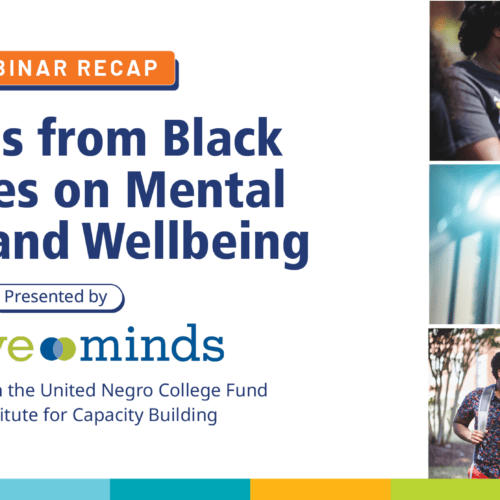
At Historically Black Colleges and Universities (HBCUs), researchers found that integrating mental health resources into familiar spaces—such as student health centers—helped reduce the stigma of seeking help. The Campus Lifeline Act’s mandate for student involvement ensures that diverse student populations can tailor prevention strategies to their specific cultural and social needs.
2. Breaking Cultural Stigma through Language and Visibility
The legislation also addresses the specific barriers faced by minority communities. For example, research into Asian American and Pacific Islander (AAPI) student populations has shown that cultural stigma often prevents individuals from discussing mental health with their families.
"For many students, particularly those from immigrant or minority backgrounds, the stigma is often characterized by a fear of being ridiculed or misunderstood," said one researcher affiliated with the Active Minds Emerging Scholars Fellowship. "By placing the 988 number on every student ID, we normalize the existence of the resource. It becomes a standard tool of student life, rather than a hidden or shameful secret."
3. Institutionalizing Student Advocacy
Perhaps the most lasting implication of the bill is the formalization of student voices in federal policy. By requiring universities to involve student-led organizations in the Garrett Lee Smith grant process, the government is acknowledging that students are the primary experts on their own lived experiences.
This inclusion ensures that mental health programming remains relevant. As digital communication and social pressures evolve, student-led groups are often the first to identify new stressors—such as cyberbullying or social media-induced anxiety—and can pivot prevention strategies faster than traditional administrative structures.
Conclusion: A New Era of Support
The introduction of the Campus Lifeline Act in the Senate marks a milestone in the movement to prioritize youth mental health. As the legislation advances through Congress, Active Minds and its coalition of partners plan to continue their advocacy, ensuring that the voices of the 200 youth who marched on Capitol Hill remain at the forefront of the debate.
If passed, the Act will not only provide a literal lifeline to millions of students but will also send a clear message: the mental health of the next generation is a national priority that transcends political divides. In the words of Senator McCormick, the goal is simple but profound: "to connect students with support before a crisis becomes a tragedy."
If you or someone you know is struggling or in crisis, help is available. Call or text 988 or chat at 988lifeline.org in the U.S. and Canada.