











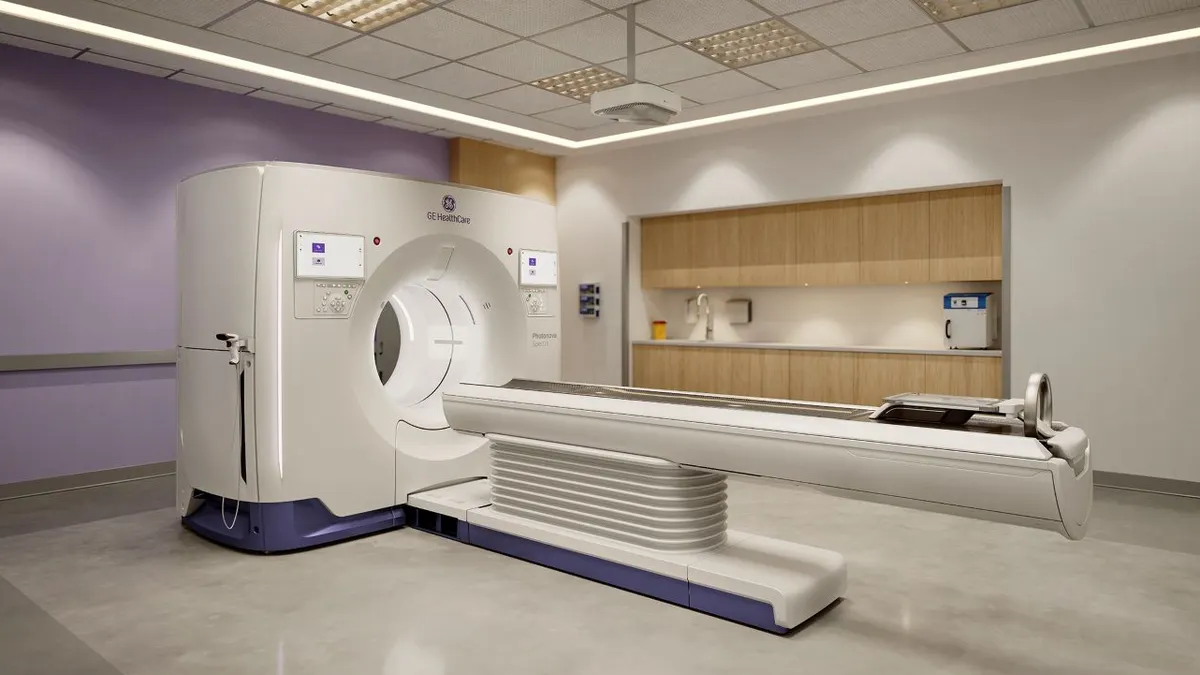
The medical imaging landscape is undergoing a seismic shift. As hospitals and diagnostic centers prioritize higher resolution and lower radiation doses, a sophisticated new modality—photon-counting computed tomography (PCCT)—has emerged as the "holy grail" of diagnostic imaging. GE HealthCare, having secured regulatory milestones in both the United States and international markets, is now mounting a direct challenge to the early market dominance of Siemens Healthineers.
The Main Facts: A Paradigm Shift in Imaging
At the heart of this competition is a fundamental change in how X-ray data is captured. Traditional CT scanners rely on a two-step process: X-ray photons strike a scintillator, which converts them into visible light, which is then captured by a photodiode and converted into an electrical signal. This process, while reliable, inherently loses information due to the intermediate conversion.
GE HealthCare’s Photonova Spectra system, along with its competitors, bypasses this bottleneck. By employing semiconductor detectors that directly count individual X-ray photons and measure their specific energy levels, the system generates images with unprecedented clarity and spectral information. For clinicians, this means the ability to distinguish between tissues with similar densities—a capability that holds transformative potential for cardiology, oncology, and neurology.
The strategic importance of this technology cannot be overstated. By providing superior spatial resolution and reduced noise, photon-counting CT is poised to redefine the standard of care for complex diagnoses, potentially reducing the need for invasive procedures or repeat scans.
Chronology: From Acquisition to Commercialization
The race to bring photon-counting technology to the clinic has been a multi-year marathon, marked by high-stakes investments and R&D hurdles.
- 2020: Recognizing the disruptive potential of the technology, GE HealthCare moved to secure its future by acquiring Prismatic Sensors. This Swedish startup provided the deep-tech intellectual property necessary to develop high-performance sensors, essentially acting as the foundational move for GE’s current hardware architecture.
- March 2024: A pivotal month for the industry, GE HealthCare received FDA clearance for its Photonova system. This milestone signaled the beginning of the end for the "experimental" phase of PCCT, validating the technology for the massive U.S. market.
- Mid-2024: Following the FDA approval, GE HealthCare reported "strong interest" from American healthcare providers. During the company’s July earnings call, CEO Peter Arduini noted that while the system was a minimal contributor to the Q2 order book, it is strategically positioned to become a significant growth driver by late 2024.
- Late 2024/Early 2025: GE HealthCare secured the CE Mark, granting access to the European Union, Switzerland, the U.K., and accelerating pathways into Australia and Singapore. This expansion marks the transition from domestic testing to a full-scale global commercial rollout.
Supporting Data: The Market Battleground
The market for PCCT is not just a battle of specifications; it is a battle for market share and hospital integration. Siemens Healthineers, which enjoyed a significant head start, has already successfully deployed its own technology. According to CEO Bernd Montag, photon-counting devices now account for approximately 30% of Siemens Healthineers’ total CT equipment order volumes. Montag has explicitly cited this technology as a primary driver for Siemens’ increased share in the highly competitive U.S. CT market.
GE HealthCare, however, is banking on its own unique value proposition. Analysts at Citi Research have highlighted that the Photonova system’s ease of installation and unique sensor design could offer a lower barrier to entry for hospitals that are wary of the complex infrastructure requirements often associated with early-generation, high-end imaging systems.
The financial stakes are immense. As hospitals continue to refresh their imaging fleets, the decision to pivot to photon-counting will likely lock institutions into specific vendor ecosystems for the next decade. The ability of a manufacturer to prove clinical superiority in a "real-world" setting is the primary metric by which both GE and Siemens are being judged.
Official Responses and Strategic Partnerships
To bridge the gap between technical capability and clinical utility, GE HealthCare has invested heavily in collaborative research. By expanding partnerships with the Belgian academic medical center UZ Brussel and the Danish university hospital Rigshospitalet, GE is ensuring that the Photonova system is stress-tested in the most demanding clinical environments.
These partnerships are not merely for marketing; they are critical for gathering the longitudinal data required to update clinical guidelines. By focusing on oncology and cardiology, GE is targeting the high-margin, high-acuity areas where photon-counting CT provides the most immediate "diagnostic yield"—such as identifying small lesions or characterizing plaque in coronary arteries with pinpoint accuracy.
On the leadership front, GE HealthCare remains bullish. CEO Peter Arduini’s messaging suggests a long-term strategy: treat the first few quarters of sales as a foundation-building exercise, with the real financial impact beginning to materialize as the technology moves from flagship research hospitals to the broader commercial market.
Implications: The Future of Diagnostic Imaging
The rise of photon-counting CT carries significant implications for the broader medtech industry:

1. The Death of Conventional CT?
While traditional CT will remain the workhorse of emergency rooms for years to come, the "premium" segment of the market is effectively being overtaken by photon-counting. Hospitals are increasingly viewing PCCT as an essential tool for competitive differentiation.
2. The Power of "Spectral" Data
Because photon-counting allows for energy-level discrimination, the images produced are inherently "spectral." This means a single scan can provide information that previously required multiple exposures or complex post-processing. The result is a reduction in radiation dose, as physicians can obtain more diagnostic information from a single, lower-exposure event.
3. Supply Chain and Sensor Dominance
The competition between GE and Siemens also underscores the importance of vertical integration. By owning the sensor technology—the very "eyes" of the scanner—these companies have created a moat around their products. Smaller players without internal sensor capabilities will struggle to catch up, likely leading to further consolidation in the imaging sector.
4. Patient Outcomes
Ultimately, the competition between GE and Siemens is a win for the patient. The transition to PCCT represents a shift toward more personalized medicine. When a clinician can see anatomy with near-microscopic detail, the likelihood of an accurate diagnosis on the first attempt increases, leading to faster treatment paths and, in the case of oncology, more precise staging and monitoring.
Conclusion: A High-Stakes Duel
As 2025 approaches, the rivalry between GE HealthCare and Siemens Healthineers will likely intensify. Siemens holds the advantage of tenure and a proven track record of successful installations, while GE HealthCare is playing a game of agility, leveraging the sophisticated sensor technology acquired through its Prismatic investment and a modular installation approach.
The global medical community is watching closely. With the regulatory hurdles cleared in key markets and clinical evidence continuing to mount, photon-counting CT is no longer a futuristic concept—it is the new standard of premium imaging. Whether GE HealthCare can successfully capture enough market share to erode Siemens’ early lead remains the most significant question in the medical imaging sector today. For hospitals, the era of photon-counting has arrived; for manufacturers, the era of high-stakes competition has only just begun.