










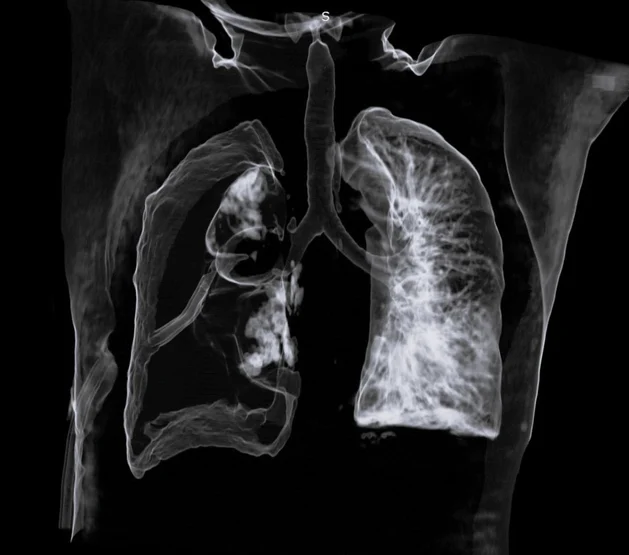
Every two minutes, a patient in the United States receives the life-altering news of a lung cancer diagnosis. For these individuals, the clinical journey toward a treatment plan typically begins with a lung biopsy—a diagnostic procedure that is as essential as it is risky. While the procedure is standard, it carries a "hidden" complication that often goes underreported in the public consciousness: pneumothorax, or a collapsed lung.
Up to one-third of the 800,000 CT-guided lung biopsies performed annually in the U.S. result in this painful and costly complication. Now, a Dublin-based medical technology startup, Selio Medical, is preparing to disrupt this status quo with an innovative approach designed to prevent the collapse before it occurs. As the company prepares for its U.S. commercial launch this fall, backed by a €5 million Series A funding round, the healthcare industry is taking a closer look at whether this prophylactic solution could save both lives and significant capital.
The Scope of the Problem: Why Lung Biopsies Are a Financial and Clinical Burden
The current landscape of thoracic diagnostics is plagued by a high complication rate that places an enormous strain on hospital resources. When a biopsy needle enters the lung, it creates a puncture tract through which air can leak into the pleural space. This results in pneumothorax, a condition that frequently necessitates multi-day hospital admissions for observation or the insertion of a chest tube to drain air and re-inflate the lung.
The financial implications are staggering. Each instance of a collapsed lung can effectively wipe out the profit margins of 20 to 30 uncomplicated biopsy procedures. For hospital administrators, this represents a significant "hidden" cost that ripples through the oncology department, driving up the total cost of care and extending the recovery time for patients already facing a daunting diagnosis.
Chronology of a Medical Innovation
The genesis of Selio Medical lies in the frustration of observing clinicians struggle with reactive rather than proactive measures. For years, the standard of care for preventing air leaks has been limited to methods such as the "blood patch" technique—where a clinician injects a patient’s own blood into the needle tract—or the practice of rolling the patient onto the puncture site to use body weight as a physical seal.
However, these techniques are inherently flawed. They are designed to treat a collapse that has already begun.
- The Conceptual Phase: Selio Medical’s leadership identified that the missing link in pulmonary intervention was an "active" seal—a barrier placed before the lung tissue is sampled.
- Engineering the Solution: The team developed a specialized, pre-filled syringe containing a proprietary biodegradable hydrogel. The device was engineered to integrate seamlessly into existing clinical workflows, ensuring that surgeons did not have to overhaul their established techniques.
- Validation and Regulatory Milestones: Following rigorous preclinical testing, the technology secured FDA clearance. Comparative studies were then launched to measure the device’s efficacy against existing market alternatives, specifically the Merit Medical "BioSentry" system.
- The Path to Market: With the backing of Enterprise Ireland and a successful Series A funding round, the company has transitioned from a research-heavy startup to a commercial-ready entity, scheduling its pilot implementation in two major New York medical centers for late 2026.
Supporting Data: The Power of Prophylactic Sealing
The core value proposition of Selio Medical’s technology is its ability to turn a reactive procedure into a preventative one. During a biopsy, the Selio device is attached to the standard introducer tool. Once the biopsy needle reaches the targeted lung tissue, the clinician pauses briefly—typically adding no more than two minutes to the entire procedure—to deploy a hydrogel plug.
This plug forms an 8–10 millimeter seal around the puncture site, which is clearly visible under CT guidance. Once the procedure is complete, the plug stays in place to prevent air leakage, naturally biodegrading within approximately two months as the tissue heals.
The clinical data supporting this method is compelling. In a head-to-head preclinical study against the industry-standard BioSentry system, Selio’s technology demonstrated a 70% reduction in pneumothorax cases. Perhaps more importantly, the study reported zero clinically significant complications, suggesting that the hydrogel is not only effective but also safe for patients with varying lung health profiles.
Official Perspectives: The Vision of CEO Colm McGarvey
During a recent presentation at the Guinness Enterprise Centre in Dublin, Selio CEO Colm McGarvey articulated the philosophy driving the company’s mission. He emphasized that the "treatment-after-the-fact" model has failed because it ignores the fundamental physics of the lung puncture.
"Because pneumothorax is so common, there have been many mitigation approaches for it, but they’ve all been post-biopsy," McGarvey noted. "That has lacked efficacy for that very reason. We are looking at a paradigm shift: by sealing the lung before the tissue is removed, we ensure that the air simply has nowhere to escape."
McGarvey’s strategy is not to replace the clinician’s skill, but to augment it. By creating a device that fits into the existing "introducer" toolkit, Selio aims to achieve high adoption rates without requiring surgeons to learn an entirely new, complex procedure. This focus on "workflow integration" is widely considered the "holy grail" of medical device adoption in the U.S. hospital market.
Implications: A New Standard for Thoracic Care
The entry of Selio Medical into the U.S. market this fall marks a potential turning point for oncology diagnostics. If the company’s clinical trial results are replicated in the real-world settings of New York’s top-tier hospitals, the implications are three-fold:
1. Patient Quality of Life
For the patient, the primary benefit is the avoidance of a painful and anxiety-inducing complication. Reducing the risk of a collapsed lung means fewer chest tubes, shorter hospital stays, and a faster path to definitive treatment, which is critical in the early stages of cancer intervention.
2. Economic Efficiency
By reducing the incidence of post-biopsy complications, Selio could save the U.S. healthcare system hundreds of millions of dollars annually. In an era where hospitals are increasingly under pressure to demonstrate "value-based care," a device that prevents expensive readmissions is highly attractive to both private insurers and public health systems.
3. The Future of Minimally Invasive Procedures
The success of the Selio hydrogel plug could pave the way for similar "sealant" technologies in other interventional fields. If a biodegradable gel can effectively prevent pneumothorax, it raises questions about where else such technology could be applied to reduce the risks associated with minimally invasive diagnostic procedures.
Conclusion: The Road Ahead
As Selio Medical prepares for its U.S. commercial rollout, the company stands at the intersection of medical necessity and technological innovation. With a clear regulatory path, a strong clinical case, and a solution that directly addresses a major "pain point" in current medical workflows, the Dublin-based startup is well-positioned to make a significant impact.
However, the transition from successful preclinical trials to widespread clinical adoption is a challenging one. The coming months in New York will be a litmus test for the company’s ability to scale. If successful, Selio will not only change how biopsies are performed but will also demonstrate that the most effective way to manage a complication is, quite simply, to prevent it from ever happening in the first place.
Editor’s note: This report is based on discussions held during a trip hosted by Enterprise Ireland. While the organization invited MedCity News to attend and covered travel expenses, company officials at Selio Medical had no input in the final editorial coverage or the conclusions drawn.