











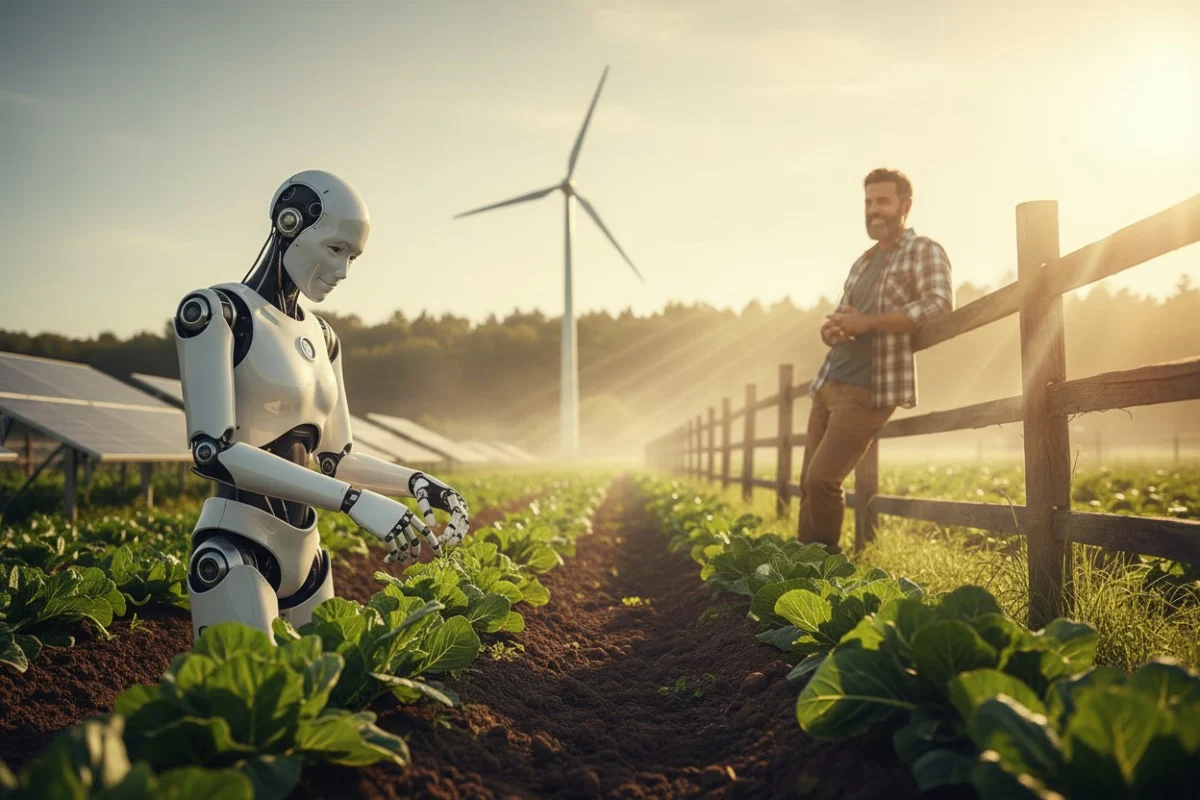
The greatest threat to long-term food independence is not an engineered famine or a catastrophic collapse of the power grid. It is a much more intimate, biological limitation: the finite capacity of the human body. For the modern homesteader, the transition from hobbyist gardening to true off-grid sustenance is frequently thwarted by the sheer, relentless physical grind of agricultural maintenance. Weeding, hauling compost, and harvesting are not just chores; they are a daily tax on the body that often leads to burnout and the eventual abandonment of the dream of self-reliance.
As we look toward an increasingly unstable global supply chain, a technological paradigm shift is emerging. The next evolution of the off-grid movement is not found in more seeds or larger solar arrays, but in the rise of open-programmable humanoid and quadrupedal garden robots. This is not a transition toward convenience, but a strategic investment in labor scalability.
The Bottleneck of Human Endurance
For the average family, planting a garden is an act of optimism. However, sustaining that garden from seed to harvest is an act of endurance that few can maintain over a full season. The "bottleneck of labor" is the point where the knowledge of how to grow food meets the physical wall of exhaustion.
When a gardener spends their limited hours battling weeds or manually turning heavy compost piles, they are not engaged in productive innovation; they are engaged in survival-level maintenance. By offloading these monotonous, energy-sapping tasks to autonomous systems, the homesteader can shift their focus toward higher-level infrastructure: food preservation, soil health management, and community resilience.
Chronology of Agricultural Robotics
The progression toward autonomous agriculture has moved with surprising velocity over the last decade:
- 2015–2018 (The Sensor Era): Early agricultural robots focused primarily on data collection and precision spraying. These machines were largely stationary or limited to heavy, wheeled platforms designed for industrial monocropping.
- 2019–2022 (The Navigation Breakthrough): Advancements in computer vision and SLAM (Simultaneous Localization and Mapping) allowed robots to navigate uneven, chaotic outdoor environments. This era saw the emergence of small, field-capable rovers.
- 2023–2025 (The Dexterity Shift): The introduction of affordable robotic end-effectors (hands) and LLM-driven spatial reasoning allowed machines to move beyond simple monitoring. Robots began the transition from "sensors" to "laborers."
- 2026 and Beyond (The Open-Source Era): The current horizon is defined by the move toward open-programmable humanoids. These units are designed not for industrial farms, but for the complex, varied topography of the home homestead or food forest.
The Architecture of the Ideal Garden Robot
To be useful in an off-grid capacity, a robot must possess more than just cameras and wheels. It must possess physical agency.
Dexterity and Manipulation
A machine that can only "spot" a weed is a sensor; a machine that can pull that weed from the root is a laborer. For the homesteader, a robot must be able to handle delicate tasks—pruning vines, picking ripe tomatoes, and transplanting seedlings. This requires high-fidelity tactile feedback and flexible end-effectors.
Mobility in Chaotic Environments
Wheeled units struggle in the mud, loose mulch, and steep grades of a naturalized food forest. Consequently, the focus is shifting toward "dog-style" quadrupedal robots or specialized humanoid platforms. These machines can navigate raised beds and uneven terrain without damaging the ecosystem. They do not need to be fast; they need to be tireless. A robot that works at 25% of human speed for 16 hours a day is exponentially more productive than a human who can only work for two hours before requiring rest.
Supporting Data and Technical Realities
The efficacy of these machines relies on three core technological pillars:
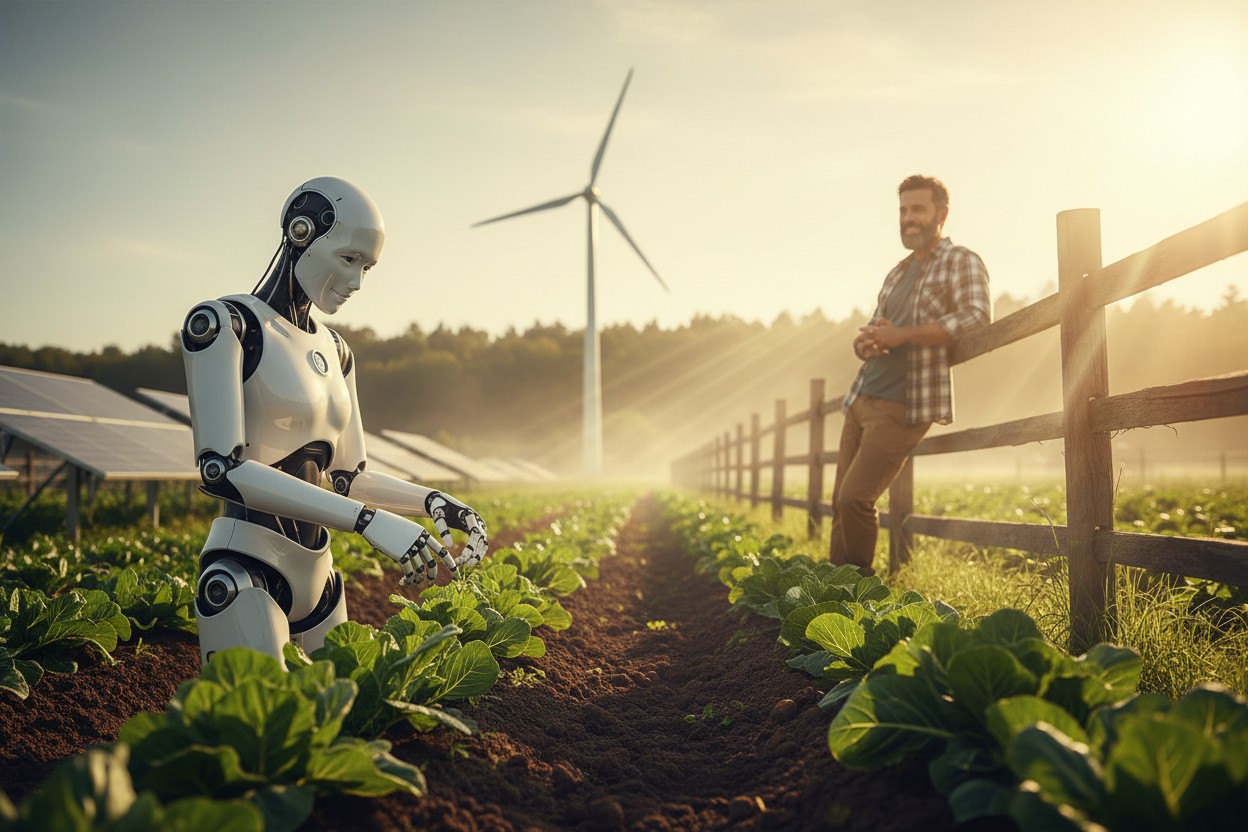
- Computer Vision (CV): Modern neural networks are now capable of distinguishing between a beneficial vegetable and a weed with >98% accuracy in real-time, even under varying lighting conditions.
- Edge Computing: By utilizing on-board processing, robots can function without a constant high-speed internet connection, a critical requirement for off-grid operations.
- Energy Efficiency: Advances in solid-state batteries have extended the operational range of these robots, allowing them to patrol large plots and return to solar-powered charging stations without manual intervention.
Privacy: The "No-Cloud" Imperative
A significant point of contention in the robotics industry is the trend toward centralized, cloud-dependent hardware. Many manufacturers sell robots as "Hardware-as-a-Service," where the machine remains under the control of the company.
For the survivalist or homesteader, this is a non-starter. A robot that reports harvest data, garden layout, or yield statistics to a corporate or government server is a liability. There is a distinct, growing movement of developers dedicated to "Local-First" robotics—machines that run on open-source code, require zero external connectivity, and store all data locally.
The goal is to ensure that the robot remains a tool of liberation, not a tool of surveillance. By utilizing open-source frameworks, the owner can audit the code to ensure no "backdoors" exist, effectively creating a sovereign agricultural system that cannot be taxed, regulated, or shut off by a remote command center.
The Shift in the Economic Model
The tech industry is currently attempting to replicate the "printer-ink" business model in robotics: selling the hardware at a loss and then locking the user into a subscription model for "skills" (e.g., $19.99/month for the "Harvesting Module").
However, this strategy is meeting fierce resistance from the homesteading and maker communities. Independent developers are already releasing open-source "skill sets" that can be downloaded and installed on generic humanoid hardware. This democratization of software effectively breaks the corporate stranglehold on functionality. Within the next decade, it is projected that a fully capable, open-source agricultural robot will cost roughly the same as a high-end riding lawnmower—an investment that pays for itself in just two seasons of increased yield and saved labor.
Implications for Global Food Systems
The rise of the "Silicon Homestead" has profound implications for how we view food security.
- Decentralization of Production: By automating the labor-intensive aspects of gardening, individuals can scale their food production from a few raised beds to a quarter-acre or more, moving from "supplemental" to "primary" food sources.
- Resilience Against Disruption: When a household possesses the infrastructure to grow its own food with minimal human labor, it becomes insulated against global supply chain shocks. The combination of solar energy and autonomous robotics creates a "closed-loop" survival system.
- Knowledge Transfer: The ability to share "skill code" is perhaps the most powerful aspect of this revolution. If one gardener masters the optimal pruning technique for a specific variety of fruit tree, that knowledge can be codified and shared instantly with the entire community.
Conclusion: The Era of the Autonomous Gardener
The adoption of robotics is not an act of surrendering our connection to the land; it is a way to preserve it. By offloading the back-breaking, repetitive tasks to a machine, we gain the time and energy to engage with our gardens in a more intentional, observant way.
We are standing at the threshold of a new era where the "homestead" is no longer defined by the limits of a single person’s stamina. Through the use of open-programmable, field-capable robots, we are augmenting our own survival infrastructure, ensuring that our health, our autonomy, and our independence are secured by our own hands—and the tireless machines we direct.
The future of gardening is not found in the laboratory of a mega-corporation, but in the dirt of the backyard, where the gardener, armed with code and iron, is finally able to master the land.