









For centuries, our ancestors navigated the complexities of physical health through the most sophisticated biological instrument ever developed: the human body. They relied on internal signals—the rise of a heart rate during a hunt, the onset of fatigue after a long trek, and the intuitive sense of recovery after rest. Today, however, that internal monologue is increasingly being drowned out by a chorus of digital notifications.
We live in the era of the "Quantified Self," where a sleek device on the wrist can measure heart rate variability (HRV), sleep cycles, blood oxygen levels, and caloric expenditure with the tap of a screen. While these gadgets offer an unprecedented bridge between subjective feeling and objective reality, they have also sparked a modern crisis of confidence. As we lean further into algorithms to define our health, we risk losing the vital skill of self-assessment.
The Evolution of Self-Measurement
The desire to quantify human performance is not new. In the early days of sports science, athletes relied on manual stopwatches and rudimentary heart rate monitors to track progress. A legendary anecdote surrounds Canadian sprinter Ben Johnson, who was reportedly capable of gauging his 100-meter sprint time within a tenth of a second of the official stopwatch readout.
Johnson’s performance was an outlier, representing a level of body awareness that most casual exercisers never achieve. For the average person, the gap between perceived effort and actual output is often vast. A common scenario involves individuals who believe they are maintaining a strict caloric deficit, only to discover through meticulous tracking that they are consuming an extra 500 calories a day—often hidden in condiments or "healthy" snacks. In this light, technology acts as a necessary "reality check," stripping away the bias we hold about our own behaviors.
The Accuracy Paradox: Not All Data is Equal
While the allure of precision is high, it is vital to acknowledge the limitations of current consumer technology. Not all data is created equal, and not all metrics are equally easy to quantify.
The Reliability Hierarchy
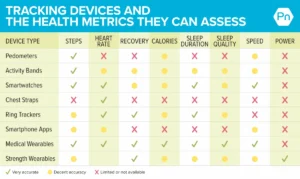
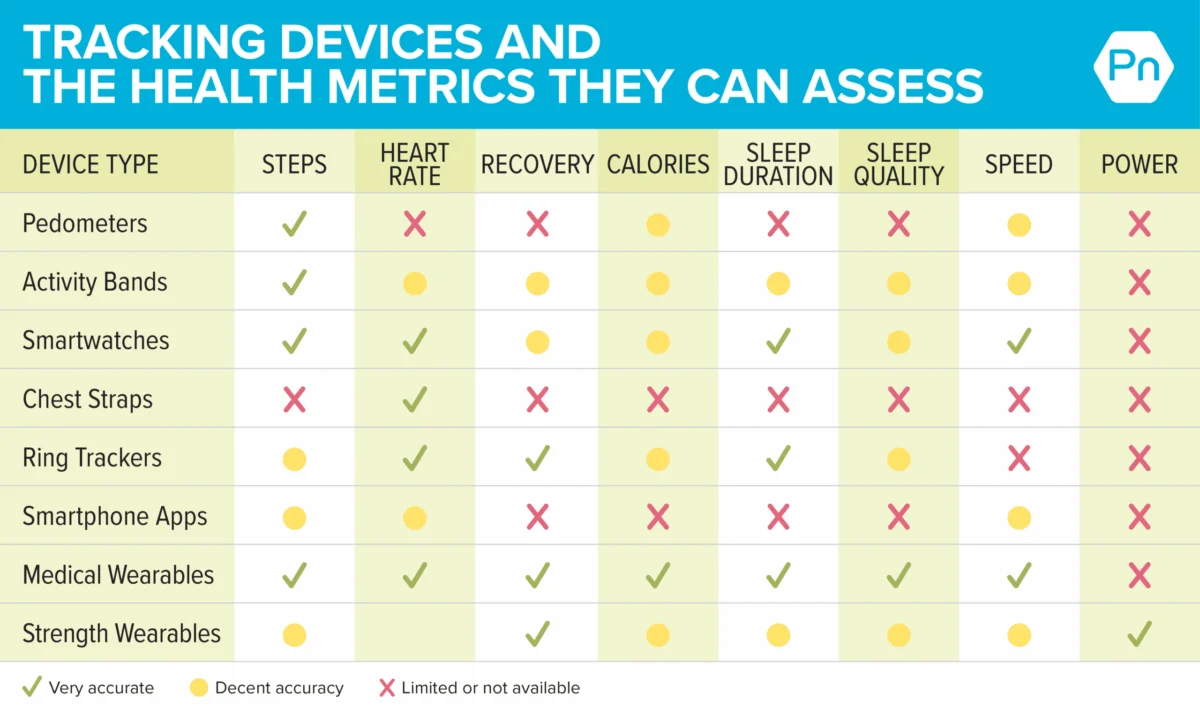
Hardware manufacturers vary significantly in the quality of their sensors and, more importantly, the sophistication of their algorithms. Heart rate and step-count data have become remarkably reliable through years of refinement. However, other metrics—specifically "calories burned" and "movement velocity"—remain fraught with substantial margins of error.
A wearable device often uses a generic formula to calculate metabolic rate. If your unique physiology, muscle mass, or resting metabolic rate deviates from the "average" human model programmed into the device, the data provided is essentially an educated guess. This creates a dangerous feedback loop where users base dietary and training decisions on flawed estimations, potentially leading to overtraining or nutritional deficiencies.
The Inverted-U: When Tracking Becomes a Hindrance
Computer scientist Samantha Kleinberg, an expert in human decision-making, notes that the influx of surplus information has a paradoxical effect on our health choices. There is a "sweet spot" for data consumption; when we have too little, we are flying blind, but when we have too much, we suffer from "analysis paralysis."

Consider the common experience of searching for a restaurant. A few reviews might help you pick a place, but reading hundreds of conflicting opinions often leaves you paralyzed, unable to choose at all. The same applies to fitness. When a user is inundated with data points regarding their sleep quality, recovery scores, and strain levels, they may become so obsessed with optimizing every metric that they lose the ability to perform the basic, consistent habits that actually move the needle.
Signposts of Success and Failure
To determine if your relationship with your tracker is productive, evaluate your behavior against these three psychological signposts.
1. The Validation of Method
For many, data serves as a vital proof-of-concept. Take the example of an athlete who resists "Zone 2" cardiovascular training because it feels "too easy." Their internal bias dictates that if they aren’t gasping for air, they aren’t working hard enough. When they use a heart rate monitor to confirm that their low-intensity work is effectively lowering their resting heart rate and improving their recovery, the data validates the method. It replaces anxiety with evidence, allowing the athlete to trust the process.
The Counter-Signal: If the data increases your stress—for instance, when a "poor sleep score" ruins your mood despite you feeling well-rested—the tracker is no longer a tool; it is a burden. When the data forces you to focus on factors beyond your control, it becomes counterproductive.
2. The Prompt for Behavioral Change
Human behavior change requires three components: motivation, ability, and a prompt. Trackers are exceptional at providing the "prompt." A classic example involves individuals who believe moderate alcohol consumption helps them sleep. Once they wear a tracker and see the objective decline in their deep-sleep metrics after a glass of wine, the visual evidence often provides the necessary motivation to abstain. Once you "see" the data, it is difficult to un-see it.
The Counter-Signal: Conversely, if the pursuit of data destroys the joy of the activity, you have crossed the line. If a cyclist shifts their focus from the wind in their face and the mechanics of their pedaling to simply "demolishing" a digital leaderboard, they may be on the path to burnout.
3. Deepening Self-Understanding
Data should ultimately serve to calibrate your senses. The goal is to reach a point where you can accurately predict your recovery status or your RPE (Rate of Perceived Exertion) without checking your phone. If you have become so reliant on an app that you panic when it goes offline, you have outsourced your bodily awareness to a server.
Strategies for Mindful Tracking
To reclaim the balance between technology and intuition, consider these three tactical approaches:

The "Check-In First" Protocol
Before looking at your watch or phone to see how your workout went, pause for sixty seconds. Ask yourself: "How do I feel? How hard did that feel on a scale of 1-10? How is my energy level?" Once you have committed to your own subjective assessment, check the data. Over time, this practice "tunes" your internal sensors, narrowing the gap between your intuition and the cold, hard numbers.
Leverage RPE as a Primary Metric
Rate of Perceived Exertion (RPE) remains one of the most scientifically validated tools in exercise science. By using RPE alongside your tracker, you create a dual-layer system of assessment. If your watch says you are "recovered" but your body feels shattered, prioritize the sensation of fatigue. The human nervous system is significantly more complex than the sensor array on a wrist-worn device.
Trust Your Biological Network
We possess an incredibly rich network of sensory information: proprioception (knowing where your body is in space), interoception (sensing internal states like hunger, thirst, and heart rate), and nociception (sensing pain or strain). These systems have been honed over millions of years of evolution. Technology cannot replicate the subtle, nuanced feedback of a well-tuned nervous system. Use trackers to inform your senses, not to replace them.
Implications for the Future
The future of wearable technology is undoubtedly moving toward greater integration and AI-driven insights. However, the most successful individuals will not be those with the most gadgets, but those who maintain the strongest connection to their own physical experience.
Objective data is a powerful servant but a poor master. By treating fitness trackers as a supplementary tool—a way to calibrate our innate wisdom rather than dictate our daily lives—we can foster a more sustainable, enjoyable, and effective approach to health. Whether you are a high-performance athlete or someone simply looking to improve their daily well-being, the ultimate goal remains the same: to live in a body that you understand, respect, and trust.
If you find yourself constantly checking your wrist to see how you feel, it is time to take a step back. True mastery of health is not found in a spreadsheet or a dashboard; it is found in the quiet, consistent alignment of your actions with the reality of how you feel, day in and day out.