









For decades, the adage that "sleep is the best medicine" has been treated as a piece of folk wisdom, an intuitive understanding that rest restores the body. We know that athletes prioritize shut-eye to repair torn muscle fibers, that teenagers undergo growth spurts during long weekend slumbers, and that the "refreshed" feeling of a full night’s rest is more than just a psychological phenomenon. However, the exact physiological mechanism—the "how" behind the body’s nocturnal restoration—has remained a "black box" of neurobiology.
A groundbreaking study published in the journal Cell has finally begun to pry open that box. Researchers at the University of California, Berkeley, have successfully mapped the brain circuitry responsible for regulating growth hormone (GH) release during sleep. This discovery not only demystifies one of the most critical biological functions of the human body but also reveals a sophisticated feedback loop that keeps our metabolism, growth, and wakefulness in a delicate, life-sustaining balance.
Main Facts: The Architecture of Nocturnal Restoration
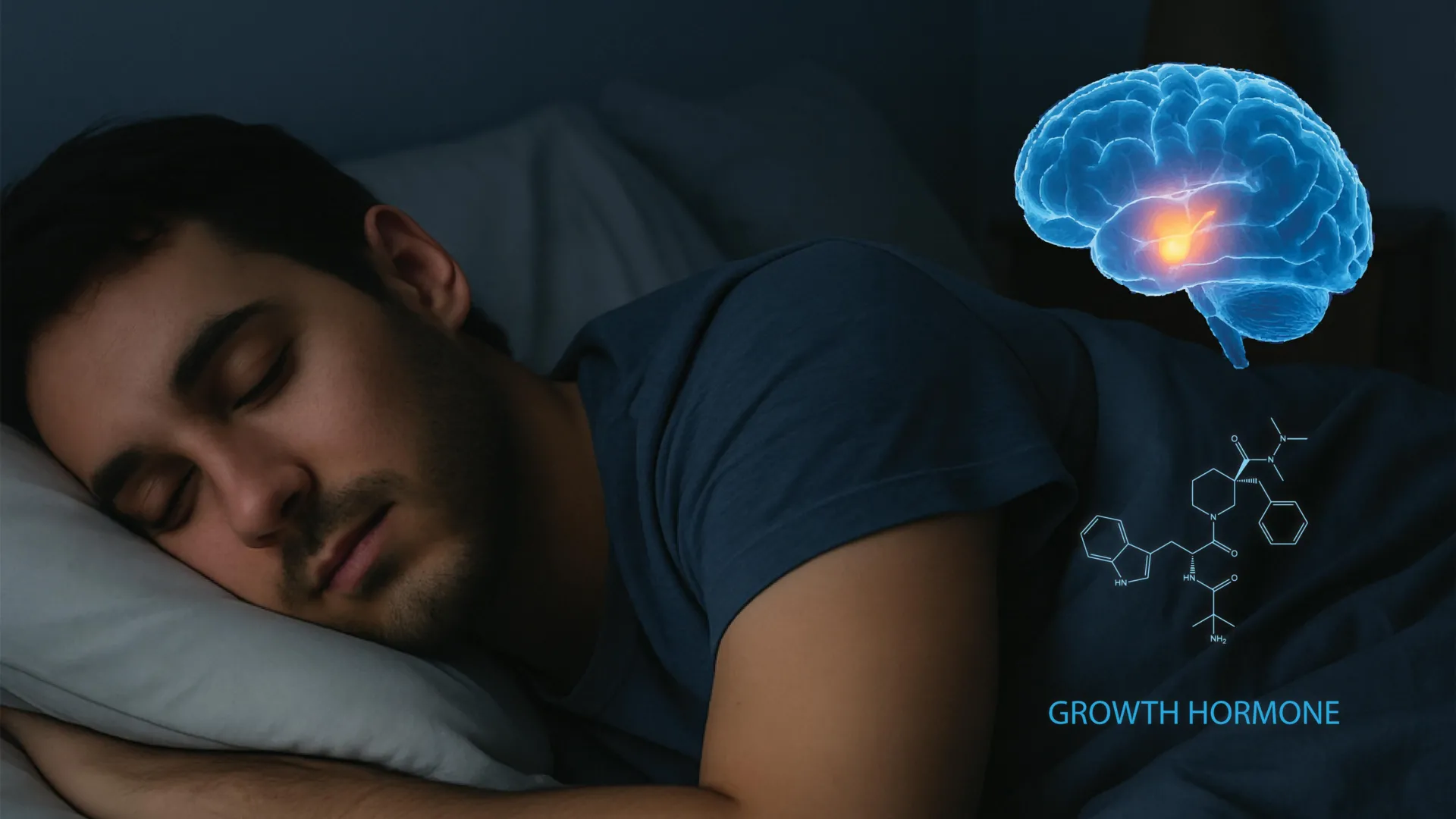
Growth hormone is the engine of cellular maintenance. It is essential for the accretion of muscle and bone density, the efficient burning of fat, and the healthy development of tissues throughout the lifespan. While the scientific community has long accepted that GH levels surge during the deep, non-REM stages of sleep, the neurological "switchboard" governing this surge had eluded researchers until now.
The UC Berkeley team, led by professor of neuroscience and molecular and cell biology Yang Dan, utilized advanced optogenetics—a technique involving the stimulation of neurons with light—and precise electrode recordings to observe the neural architecture in mice. Their findings demonstrate that the orchestration of growth hormone is localized in the hypothalamus, an ancient, evolutionarily conserved region of the brain.
The system relies on two primary types of neurons:
- Growth hormone-releasing hormone (GHRH) neurons, which act as the "gas pedal" for hormone production.
- Somatostatin neurons, which serve as the "brakes," suppressing the release of the hormone.
The study confirms that these neurons do not fire in isolation; they coordinate their activity in distinct patterns across the sleep-wake cycle, fundamentally altering the hormonal landscape of the body based on whether an animal is in REM or non-REM sleep.
Chronology of the Discovery
The journey to this discovery began with a shift in methodology. Historically, researchers were limited to indirect measurements, such as drawing blood from subjects at intervals to track hormonal peaks. This approach provided the "what" but failed to provide the "how."
- The Investigative Shift: The team decided to bypass the blood-sampling paradigm, instead opting for direct, real-time recording of neural activity in mice. Because mice sleep in short, frequent bursts throughout the day and night, they provided the perfect model for observing the transition between sleep stages repeatedly.
- The Mapping Phase: By placing electrodes into the hypothalamus and utilizing light-sensitive proteins to stimulate specific cell groups, the team tracked how GHRH and somatostatin neurons interacted with each other.
- The Breakthrough: Researchers identified that the balance between these two cell types shifts dramatically during different sleep phases. During REM sleep, both GHRH and somatostatin levels rise, leading to a specific, high-volume release of growth hormone. During non-REM sleep, the dynamics invert: somatostatin levels drop while GHRH increases only moderately, creating a unique regulatory environment that prioritizes deep physiological repair.
- The Feedback Loop Discovery: In the final stages of the study, the team identified a "missing link"—a feedback loop involving the locus coeruleus, a brainstem region critical for attention and alertness. They discovered that as GH levels rise during sleep, they stimulate the locus coeruleus, which eventually signals the brain to wake up.
Supporting Data: The Interplay of Sleep, Hormones, and Metabolism
The data generated by the UC Berkeley team paints a picture of a biological "thermostat" that regulates our internal state. The study revealed that growth hormone does more than just build bone and muscle; it acts as a chemical messenger that communicates directly with the brain’s alertness centers.
The Locus Coeruleus Connection
The locus coeruleus is the brain’s primary source of norepinephrine, the neurotransmitter responsible for arousal and focus. The study found that GH levels act as a regulator for this region. When GH builds up to a certain point during sleep, it begins to prime the locus coeruleus for wakefulness.
The Metabolic Impact
Because growth hormone is an active participant in glucose and fat metabolism, the implications of this circuit are profound. Consistently poor sleep does not just make a person groggy; it disrupts this hypothalamic circuit. When the "gas" and "brakes" of GH regulation are mismanaged due to sleep deprivation, the body’s metabolic processes falter. This provides a mechanistic explanation for why chronic sleep loss is a strong clinical predictor of obesity, type 2 diabetes, and cardiovascular disease.
Official Responses and Expert Commentary
The research team, comprised of neuroscientists and experts in molecular biology, views this discovery as a foundational shift in how we approach sleep-related medicine.
"People know that growth hormone release is tightly related to sleep, but only through drawing blood and checking growth hormone levels during sleep," said Xinlu Ding, a postdoctoral fellow and the study’s first author. "We’re actually directly recording neural activity in mice to see what’s going on. We are providing a basic circuit to work on in the future to develop different treatments."
The potential for clinical application is a major point of focus for the authors. Daniel Silverman, a co-author and postdoctoral fellow, emphasized the therapeutic promise of the locus coeruleus findings.
"Understanding the neural circuit for growth hormone release could eventually point toward new hormonal therapies to improve sleep quality or restore normal growth hormone balance," Silverman noted. "There are some experimental gene therapies where you target a specific cell type. This circuit could be a novel handle to try to dial back the excitability of the locus coeruleus, which hasn’t been talked about before."
Implications: A New Era for Medicine
The implications of this research extend far beyond the laboratory. By identifying the specific "wires" that control growth hormone, science has moved closer to developing targeted interventions for a host of conditions.
Treating Sleep Disorders and Neurodegeneration
The study provides a potential roadmap for treating sleep disorders linked to metabolic diseases. If the hypothalamus-locus coeruleus circuit is dysfunctional, clinicians might one day use targeted gene therapies or pharmacological agents to recalibrate the excitability of these neurons. This is particularly relevant for neurodegenerative conditions like Parkinson’s and Alzheimer’s disease, where sleep architecture is often severely fragmented.
Cognitive Benefits and Arousal
Perhaps most surprisingly, the study suggests that the benefits of growth hormone are not limited to the body’s physical architecture. The team suggests that GH plays a role in cognitive function by regulating the brain’s arousal levels. By ensuring a robust release of growth hormone during sleep, the brain is effectively "recharging" its ability to maintain focus and attention the following day.
Future Research Directions
The research, supported by the Howard Hughes Medical Institute and the Pivotal Life Sciences Chancellor’s Chair fund, opens several new avenues for inquiry. Future studies will likely investigate how aging affects this circuit and whether external factors—such as light exposure, diet, or stress—can be used to modulate the hypothalamic "switchboard" to improve health outcomes.
As we continue to live in an era where sleep quality is under siege from modern lifestyles, this UC Berkeley study serves as a critical reminder: sleep is not a passive state. It is an active, highly regulated biological performance. With the neural circuitry now mapped, the path is clear for a new generation of treatments that could help us not only sleep better but live healthier, more resilient lives.