










By Risa Kerslake, RN, BSN
The clinical landscape of narcolepsy has long been bifurcated into two primary classifications: Narcolepsy Type 1 (NT1) and Narcolepsy Type 2 (NT2). While these conditions share the hallmark symptom of excessive daytime sleepiness, their underlying pathologies and diagnostic clarity differ significantly. NT1, typically driven by the loss of orexin-producing neurons and defined by the presence of cataplexy, is relatively straightforward to identify. NT2, conversely, remains a diagnostic enigma, characterized by milder symptoms and a frustrating degree of physiological variability that often leaves clinicians and patients in a state of uncertainty.
A groundbreaking study recently published in the journal SLEEP has sought to peel back the layers of this diagnostic ambiguity. By rigorously testing the stability and reliability of polysomnography (PSG) and the Maintenance of Wakefulness Test (MWT), researchers have identified which metrics provide a clear, reproducible window into the disease and which remain statistically stable yet clinically silent.
The Core Investigation: Assessing Diagnostic Fidelity
The study, led by Emily Schlafly, PhD, a postdoctoral researcher at Takeda Pharmaceuticals, employed a meticulous methodology to determine the test-retest reliability of various sleep and wakefulness metrics. Utilizing placebo-arm data from two distinct clinical trials, the team followed 37 participants—17 with a diagnosis of NT1 and 19 with NT2—over the course of three separate clinical visits, each spaced four weeks apart.
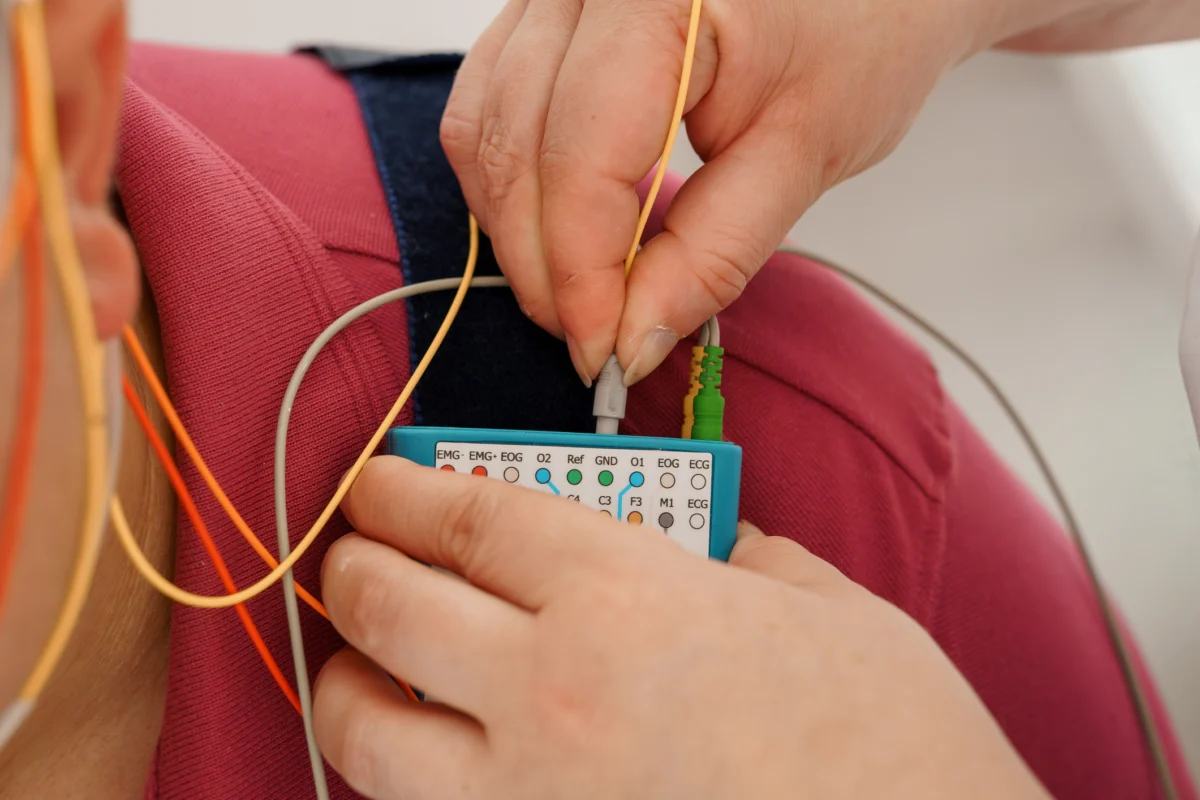
During every visit, participants underwent a comprehensive overnight polysomnography and a next-day Maintenance of Wakefulness Test. From these sessions, researchers extracted a massive dataset of 440 distinct sleep and wakefulness measurements. The primary objective was to observe how these metrics held up over time, thereby identifying which are sufficiently stable to be used as biomarkers for diagnosis and treatment monitoring.
A Chronology of Sleep Architecture Research
The effort to refine narcolepsy diagnosis has historically relied on standardized scoring, yet the variability inherent in human sleep physiology has often confounded these efforts.
- Initial Baseline (Visit 1): Patients were assessed to establish an initial diagnostic profile, capturing traditional sleep stages and latency periods.
- Intermediate Observation (Visit 2, Week 4): By repeating the battery of tests, the researchers began to identify which metrics showed "drift"—natural biological fluctuation—and which remained constant.
- Verification (Visit 3, Week 8): The final data collection served to confirm the stability of the metrics identified in the previous two rounds, allowing for a longitudinal analysis of the 440 variables.
This repeat-testing model is critical because, as Dr. Schlafly points out, "We often assume a sleep measure is diagnostically useful if it differs between groups, but we don’t always know how stable that measure is when we repeat testing in the same individual."
Supporting Data: The Paradox of Stability
One of the most counterintuitive findings of the study involves the role of quantitative electroencephalography (qEEG). While qEEG measurements were found to be remarkably consistent across the three visits—showing high stability—they proved largely ineffective at distinguishing between NT1 and NT2.
"The most reliable measures were not necessarily the most clinically informative," says Schlafly. This highlights a common trap in clinical research: a biomarker may be precise and reproducible, but if it does not correlate with the clinical differences between two pathologies, its utility as a diagnostic tool is limited.
Conversely, the study found that measures of sleep fragmentation—specifically increased wake after sleep onset (WASO), higher N1 sleep percentages, elevated stage-shift indices, reduced N2 continuity, and increased transitions from N2 to wake—were both significantly different between the two patient groups and highly reproducible.
Furthermore, the MWT yielded telling results. Participants with NT1 consistently fell asleep faster than those with NT2. Intriguingly, these measurements were considerably more reproducible in the NT1 group. This disparity suggests that NT2 may not just be a "milder" form of the disease, but perhaps a condition defined by a more volatile, fluctuating sleep-wake physiology.
Hypnodensity: The New Frontier in Sleep Analysis
Perhaps the most promising takeaway from the research is the validation of "hypnodensity analysis." Unlike traditional sleep scoring, which forces sleep into discrete, monolithic stages, hypnodensity analysis is an automated method that maps the probability of mixed sleep states.
The study found that these plots possess strong reliability. Most importantly, specific "wake-REM mixed features" identified through this method were able to effectively distinguish between NT1 and NT2. By moving away from the rigid constraints of classical scoring and toward a probabilistic view of sleep, researchers may be able to capture subtle markers of dysregulation that were previously invisible.
"As the field evolves, some of the most informative signals may come from the patterns visible within these hypnodensity plots," Dr. Schlafly notes. "The exciting thing about hypnodensities is the different view of sleep they can provide, potentially highlighting patterns and mixed states that are difficult to capture with current sleep scoring."
Official Perspectives and Implications for Clinical Practice
The implications of this study are far-reaching for neurologists, sleep specialists, and the broader clinical community. Currently, the diagnostic journey for a patient with suspected narcolepsy can be fraught with repeat testing and inconclusive results.
By identifying which PSG and MWT features are both reproducible and clinically informative, the research provides a roadmap for more efficient diagnostic protocols. Dr. Schlafly emphasizes that the goal is to shift from subjective or inconsistent measures to a more evidence-based diagnostic framework.
"Not all sleep metrics are equally reliable or equally useful clinically," she explains. "Before we can confidently use a measure to monitor disease or treatment response, we need to understand how stable it is within an individual over time."
The findings suggest that clinicians should pay closer attention to markers of sleep fragmentation during routine PSG. These metrics are not merely artifacts of the sleep study environment; they are stable, reliable, and distinct indicators that can help separate the physiological realities of NT1 from the more variable landscape of NT2.
Future Directions: Refining the Diagnostic Toolkit
While this study marks a significant step forward, the researchers are the first to admit that the work is far from finished. The variability observed in the NT2 cohort, in particular, warrants further investigation. Is the fluctuation observed in these patients a primary feature of the disease’s underlying neurobiology, or is it a byproduct of other external variables yet to be controlled?
Future studies will likely focus on:
- Validating Hypnodensity: Expanding the use of hypnodensity analysis in larger, more diverse cohorts to see if the wake-REM mixed features hold up across broader demographics.
- Standardizing Metrics: Developing a "best practices" guideline for sleep labs, prioritizing the specific PSG markers identified as both stable and diagnostic.
- Treatment Response: Testing whether these newly validated metrics can accurately measure how patients respond to pharmacotherapy, thereby providing a more objective way to adjust dosages or change treatment plans.
For patients and their families, the study offers a glimmer of hope for a future where a diagnosis is not a process of elimination based on "gut feeling" or inconsistent testing, but a precise, repeatable assessment of sleep architecture. By narrowing the focus to the most reliable indicators, the field of sleep medicine is moving closer to an era of precision diagnosis, where the right treatment can be applied with greater confidence and speed.
As the medical community continues to integrate these findings, the hope remains that the diagnostic "gray area" of NT2 will become as clearly defined as its counterparts, ultimately leading to improved quality of life for those living with chronic sleep disorders.