








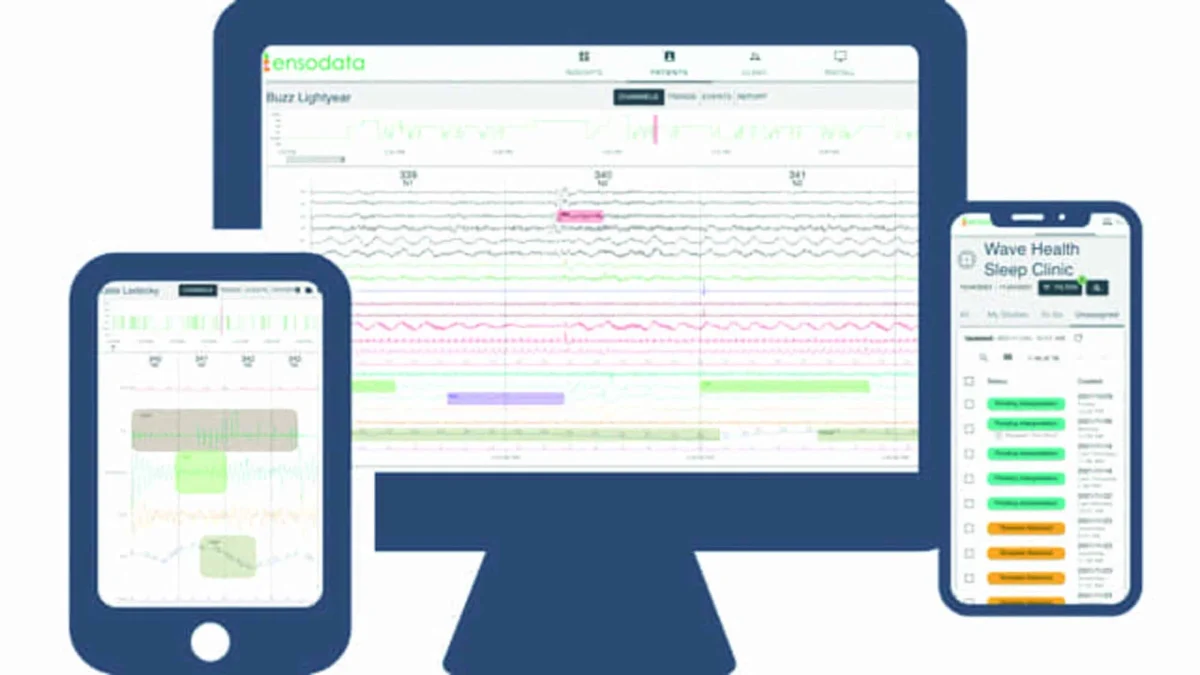
The landscape of sleep medicine is undergoing a profound transformation, moving away from labor-intensive, hardware-heavy models toward streamlined, AI-driven diagnostics. EnsoData, a leader in AI-powered sleep analysis, has officially unveiled its latest innovation: EnsoHST Direct. This fully managed diagnostic workflow is designed to alleviate the operational bottlenecks that have historically hampered home sleep testing (HST) programs. By outsourcing the logistical burden—ranging from device procurement and shipping to patient support—to EnsoData, clinical practitioners are now empowered to redirect their focus toward high-value activities, such as clinical interpretation, patient counseling, and the strategic expansion of their sleep programs.
The Operational Challenge in Sleep Medicine
For years, sleep centers and pulmonary practices have struggled with the "logistics gap." Managing a fleet of home sleep testing devices requires significant administrative overhead: units must be sanitized, batteries replaced, firmware updated, and devices shipped to and from patients. Furthermore, patient non-compliance or technical errors often lead to "failed" studies, forcing clinics to repeat the process, which drains resources and delays patient care.
These operational constraints have acted as a ceiling for many healthcare systems, preventing them from scaling their testing capacity to meet the growing demand for sleep apnea diagnosis. With the launch of EnsoHST Direct, EnsoData aims to remove these friction points entirely. By acting as a third-party managed service, the company allows providers to offer comprehensive, multi-night diagnostic testing without the need to buy or maintain a single piece of hardware.
Chronology: From AI Analysis to Full-Service Logistics
EnsoData’s journey to this point has been defined by a focus on high-precision machine learning. The company first gained prominence with its FDA-cleared AI technology, which fundamentally changed how sleep studies were scored by providing automated, high-fidelity analysis that rivaled human technicians in both speed and accuracy.
Following the success of its scoring software, the company recognized that even the best analysis is only as good as the underlying data. The inherent variability of sleep—where a single night of testing might not capture a patient’s true condition—remained a clinical hurdle. Over the past several years, the company has integrated its AI software with dedicated hardware, leading to the development of the EnsoHST device ecosystem.
The current launch of EnsoHST Direct represents the third phase of this evolution: the transition from a software vendor to an end-to-end service partner. By integrating logistics and patient support into the AI-scoring ecosystem, EnsoData has created a "closed-loop" system that handles the entire diagnostic cycle, from the moment a clinician signs the order to the delivery of the final, AI-generated diagnostic report.
Supporting Data: Precision and Patient Outcomes
The efficacy of EnsoHST Direct is predicated on the high-performance metrics of EnsoData’s underlying technology. In a field where clinical precision is paramount, the company’s data presents a compelling argument for the shift toward AI-assisted diagnostics.
Clinical Metrics of Accuracy
The system’s performance is highlighted by several key benchmarks:
- Sensitivity: 92% for sleep apnea detection, ensuring that patients requiring treatment are not missed.
- Specificity: 100% for moderate Central Sleep Apnea (CSA).
- Mean eAHI: A variance of just ±1 when compared to standard PSG (polysomnography), the gold standard in sleep medicine.
- Sleep Time Correlation: An average difference of only 5.5 minutes between EnsoHST total sleep time and traditional PSG.
The Power of Multi-Night Testing
One of the most critical aspects of EnsoHST Direct is its ability to facilitate multi-night studies. Single-night home sleep tests are often criticized for their inability to account for night-to-night variability, which can lead to misdiagnosis or an incomplete understanding of sleep health. EnsoHST Direct enables up to seven nights of testing.
To maximize the value of this data, the system includes an automated patient feedback loop. Following each night of testing, the patient receives an in-app notification confirming a successful study or prompting them to continue testing for another night. This proactive approach has resulted in a 97% patient success rate, drastically reducing the "failed study" rate that frequently plagues clinic-run programs.
The end-to-end turnaround time—from the initial order date to the final results—is remarkably efficient, typically ranging from just one to five days. This rapid cycle time allows clinicians to initiate treatment plans much faster than traditional referral-to-testing-to-scoring workflows allow.
Official Perspectives: Empowering the Clinical Team
The strategic intent behind EnsoHST Direct is clear: to commoditize the logistics of testing so that the clinical expertise of sleep practitioners can shine. Bobby Cockrill, MBA, Chief Commercial Officer at EnsoData, emphasizes that the platform is not designed to replace the physician, but to remove the administrative "noise" that interferes with patient care.
"Our primary goal with EnsoHST Direct is to eliminate the operational friction that has historically capped the growth of home sleep testing programs while finally making multi-night diagnostics accessible," Cockrill stated in the product announcement. "By taking the entire burden of shipping, device management, and patient support off the clinic’s shoulders, we are empowering healthcare providers to focus on what matters most: clinical interpretation and patient care."
Cockrill further noted the longitudinal benefits, stating, "This fully managed, end-to-end workflow allows sleep programs and health systems to overcome the clinical limitations of single-night testing and capture a true longitudinal picture of a patient’s sleep health, while scaling testing capacity without adding internal headcount or complexity."
Implications for the Future of Sleep Medicine
The introduction of this diagnostic model has several significant implications for the future of the sleep medicine industry.
1. The Death of the "Hardware Headache"
For decades, sleep labs have been "device-heavy" businesses. The capital expenditure required to maintain a fleet of home sleep testing units is significant, and the maintenance costs are often underestimated. By shifting to a managed service model, clinics can pivot to an "asset-light" structure. This lowers the barrier to entry for smaller practices and allows larger health systems to reallocate capital toward hiring specialized staff or investing in advanced therapeutics.
2. A Shift Toward Longitudinal Sleep Health
The industry has long recognized that sleep is not a static state. A patient’s Apnea-Hypopnea Index (AHI) can vary wildly from Monday to Thursday. By making multi-night testing the default rather than the exception, EnsoHST Direct moves the field closer to a "longitudinal" view of health. This longitudinal data is essential for precision medicine, allowing for more tailored CPAP pressure settings and more accurate long-term monitoring of treatment efficacy.
3. Addressing the Workforce Shortage
There is a documented shortage of sleep technologists and respiratory therapists across the United States. By automating the logistical aspects of testing, clinics can maximize the output of their existing staff. Instead of spending hours troubleshooting device connectivity or managing shipping manifests, a sleep technologist can spend their time reviewing data, communicating with patients, and collaborating with physicians on complex cases.
4. Improving Health Equity and Access
The logistical barriers to sleep testing—such as the requirement to pick up and drop off equipment at a clinic—can be a significant burden for patients with limited mobility, those living in rural areas, or those with demanding work schedules. By delivering devices directly to the patient’s home and providing remote support, EnsoHST Direct democratizes access to high-quality diagnostic care.
Conclusion
EnsoData’s EnsoHST Direct is more than just a logistical convenience; it represents a fundamental shift in the business model of sleep diagnostics. By bridging the gap between sophisticated AI analysis and practical, end-to-end service, the company is enabling a future where sleep testing is faster, more accurate, and more accessible.
For the healthcare provider, the benefits are clear: reduced overhead, improved data quality, and the ability to scale testing capacity without the typical associated complexities. For the patient, the benefit is an easier, more reliable diagnostic journey that leads to faster interventions. As the medical community continues to grapple with the high prevalence of undiagnosed sleep disorders, models like EnsoHST Direct provide the infrastructure necessary to address the crisis at scale, ultimately leading to better health outcomes for the millions of people currently struggling with sleep-related conditions.