








In the high-stakes world of cardiology, the difference between life and death often hinges on a single, agonizing clinical decision: whether to implant a defibrillator in a patient’s chest. For individuals suffering from hypertrophic cardiomyopathy (HCM)—a common inherited heart condition that affects one in every 200 to 500 people—this decision is a daunting, often imprecise science. However, a breakthrough study published today in Nature Cardiovascular Research suggests that the era of guesswork in cardiology may be coming to an end.
A team of researchers led by Johns Hopkins University has developed a cutting-edge artificial intelligence model that drastically outperforms human physicians in predicting which patients are at risk of sudden cardiac death. By synthesizing deep-learning image analysis with a comprehensive review of medical records, this new technology—dubbed "Multimodal AI for ventricular Arrhythmia Risk Stratification" (MAARS)—offers a level of clinical precision that could save thousands of lives while sparing countless others from the physical and psychological toll of unnecessary surgeries.
The Chronic Problem: When Guidelines Feel Like a Roll of the Dice
Hypertrophic cardiomyopathy is a condition characterized by the thickening of the heart muscle, often causing the organ to work harder than it should. While many patients with HCM live long, healthy, and largely asymptomatic lives, a distinct subset of the population faces an acute risk of sudden cardiac arrest. For years, clinicians have relied on standardized clinical guidelines—a checklist of risk factors—to determine who requires an implantable cardioverter-defibrillator (ICD).
These devices, while life-saving, come with significant risks, including infection, mechanical failure, and the psychological burden of living with a constant reminder of one’s mortality.
"Currently, we have patients dying in the prime of their life because they aren’t protected, and others who are putting up with defibrillators for the rest of their lives with no benefit," explains Dr. Natalia Trayanova, the senior author of the study and a pioneer in computational cardiology.
The current clinical standard, used across North America and Europe, is fraught with limitations. According to Dr. Trayanova, these guidelines are accurate roughly 50% of the time. "It’s not much better than throwing dice," she notes. This "coin-flip" diagnostic reality has created a massive gap in care, where the most vulnerable are often missed, and the low-risk are over-treated.
Chronology: From Raw Imaging to Predictive Intelligence
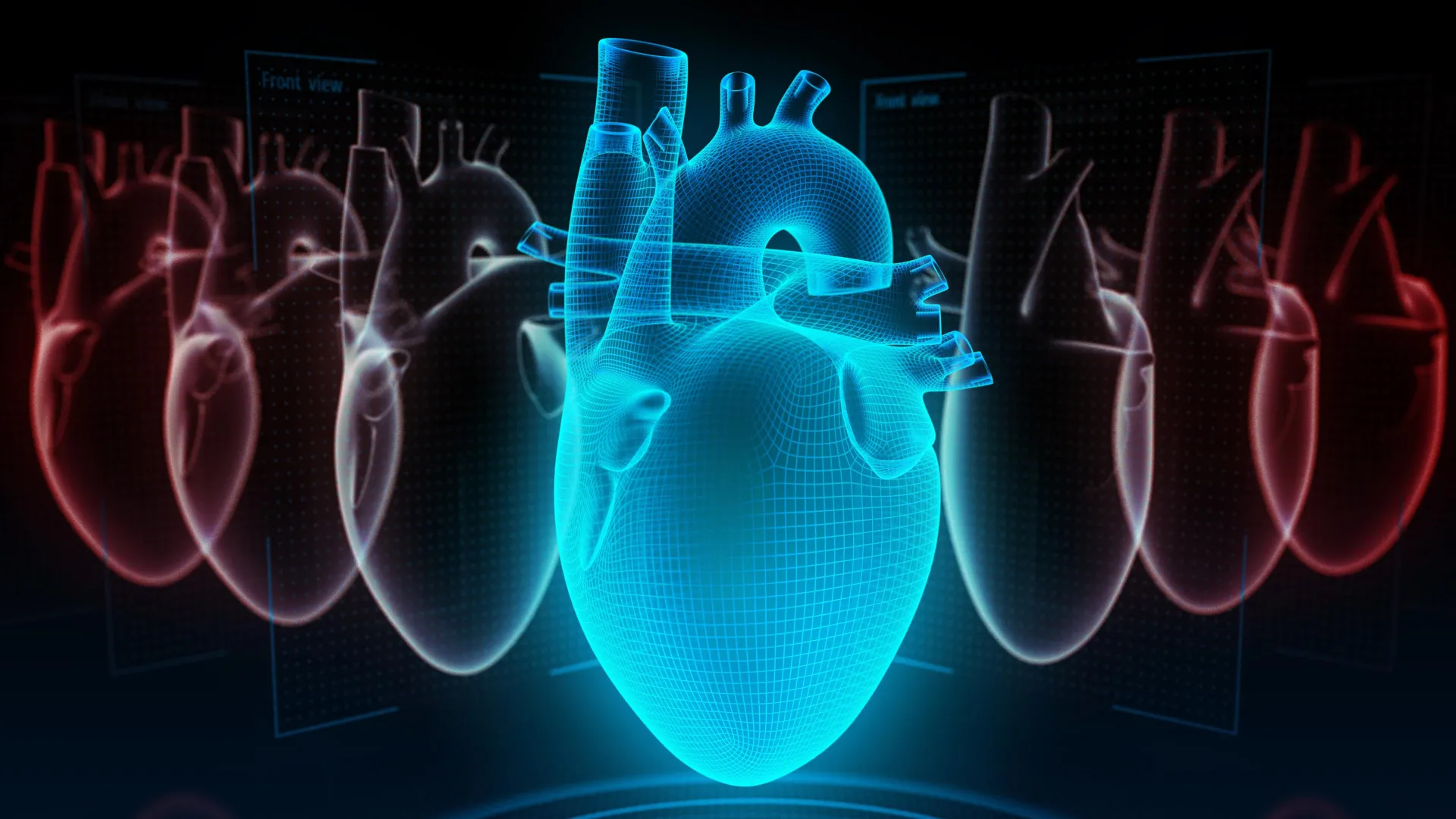
The journey toward the MAARS model began with a realization: doctors were ignoring the most valuable data sitting right in front of them. For decades, patients with heart conditions have undergone contrast-enhanced MRI scans. These images are rich with physiological data, particularly regarding fibrosis—the scarring of heart tissue that disrupts electrical signaling and triggers fatal arrhythmias.
While radiologists and cardiologists have long looked at these images, they have been limited by human visual perception. The human eye cannot easily quantify the subtle, complex patterns of scarring across the entirety of the heart muscle.
The Evolution of MAARS
- Data Integration: The research team, led by Johns Hopkins, began by aggregating vast datasets of medical records. Unlike previous models that focused on isolated variables, MAARS was designed as a "multimodal" system, meaning it ingests a full spectrum of patient data simultaneously.
- Unlocking the "Hidden" Data: The team focused on deep learning—a subset of AI capable of identifying patterns in raw data that are invisible to human experts. They trained the model to recognize specific, minute configurations of myocardial scarring within MRI scans.
- Cross-Institutional Validation: To ensure the model’s reliability, the researchers tested it against real-world patient cohorts from the Johns Hopkins Hospital and the Sanger Heart & Vascular Institute in North Carolina. By comparing the AI’s predictions against actual patient outcomes, the team was able to refine the algorithm’s accuracy.
- The Breakthrough: In final testing, the model demonstrated a 89% accuracy rate across all patient demographics, a staggering improvement over existing clinical benchmarks.
Supporting Data: The Statistics of Success
The efficacy of the MAARS model is best illustrated by its performance in high-risk demographics. While the model showed an 89% overall accuracy rate, its performance in the 40-to-60 age bracket—the group most frequently affected by sudden cardiac death—was even more impressive, clocking in at 93% accuracy.
| Metric | Current Clinical Guidelines | MAARS AI Model |
|---|---|---|
| General Accuracy | ~50% | 89% |
| High-Risk Age Group (40-60) | ~50% | 93% |
| Decision Basis | Checklist of known factors | Holistic multi-modal data |
The significance of these numbers cannot be overstated. By identifying the subtle patterns of fibrosis that precede a cardiac event, the AI effectively "sees" the danger before the patient—or their physician—can. Furthermore, the model is not a "black box"; it provides a descriptive analysis of why it has classified a patient as high-risk, allowing cardiologists to tailor interventions specifically to the patient’s pathology.
Official Responses and Clinical Perspectives
The medical community has greeted the study with significant optimism, viewing it as a potential paradigm shift in preventative cardiology.
"Our study demonstrates that the AI model significantly enhances our ability to predict those at highest risk compared to our current algorithms and thus has the power to transform clinical care," says co-author Dr. Jonathan Crispin, a cardiologist at Johns Hopkins.
The study is not an isolated effort; it builds upon the foundation laid by Dr. Trayanova’s previous work. In 2022, her team made headlines with a multimodal AI capable of predicting survival rates in patients who had already suffered heart attacks (infarcts). By expanding this logic to hypertrophic cardiomyopathy, the team has proven that their methodology is adaptable across various cardiovascular pathologies.
The collaborative nature of the study, which involved experts from the University of California San Francisco and Atrium Health, underscores a growing consensus: the future of medicine lies in the intersection of data science and clinical expertise.
Implications: The Future of Personalized Cardiology
The implications of the MAARS model extend far beyond a single disease. As researchers look to the future, the goal is to expand the algorithm’s application to other conditions, including cardiac sarcoidosis and arrhythmogenic right ventricular cardiomyopathy.
Transforming Patient Care
The transition from generalized guidelines to personalized, AI-driven risk stratification could fundamentally alter the patient experience. Instead of undergoing invasive procedures based on a statistical probability of 50%, patients will benefit from a data-backed, objective assessment of their individual anatomy.
Reducing Healthcare Waste
Beyond the moral imperative of saving lives, there is the issue of healthcare efficiency. By filtering out patients who do not actually require defibrillators, the healthcare system can avoid the immense costs and potential complications associated with unnecessary implantations. This allows resources to be directed toward those who truly need intervention, potentially lowering the total cost of care for chronic heart disease.
The Path Forward
Despite the success of the study, the research team is not resting on its laurels. The next phase of development involves multi-center clinical trials to validate the model in broader, more diverse patient populations. Additionally, the team is working to integrate the MAARS interface directly into hospital electronic health record systems, ensuring that cardiologists have access to these predictive insights during routine office visits.
As we stand on the precipice of this technological revolution, the words of the researchers serve as a reminder of the ultimate goal. Medicine, at its core, is the art of predicting the future to prevent the inevitable. With the advent of AI models like MAARS, we are finally gaining the tools to look into the heart, understand its hidden language, and ensure that no more lives are lost to the uncertainty of a coin flip.