





Every monumental medical breakthrough in history shares a common origin: a single, audacious question that once seemed impossible to answer. In the complex, high-stakes arena of cancer immunotherapy, the transition from a theoretical laboratory concept to a life-saving clinical treatment is rarely linear. It is a grueling path paved with technical hurdles, resource constraints, and the persistent need for "out-of-the-box" thinking.
Recognizing that scientific curiosity alone is not enough to defeat one of humanity’s most persistent adversaries, the Cancer Research Institute (CRI) has officially announced the recipients of its 2026 Clinic and Laboratory Integration Program (CLIP) and Technology Impact Awards. These prestigious funding initiatives represent more than just financial grants; they are a strategic investment in the intellectual architecture of future oncology. By providing targeted support to high-risk, high-reward research, CRI is ensuring that the next generation of cancer treatments moves from the petri dish to the patient’s bedside with unprecedented velocity.
The Mandate for Innovation: The Core of the 2026 Awards
The 2026 awards are structured to address the "valley of death"—the precarious phase in research where promising discoveries often languish due to a lack of translational funding. The CLIP and Technology Impact Awards are specifically designed to bridge this divide.
The CLIP program focuses on the symbiotic relationship between laboratory discovery and clinical application. It supports investigators who are not merely observing immune responses in isolation but are actively mapping those responses to patient outcomes. Simultaneously, the Technology Impact Award provides essential seed funding for the development of transformative tools—the next generation of imaging platforms, computational modeling, and biological sensors that allow researchers to visualize the immune system in ways that were technically impossible even five years ago.
A Chronology of Progress: From Early Concepts to Clinical Reality
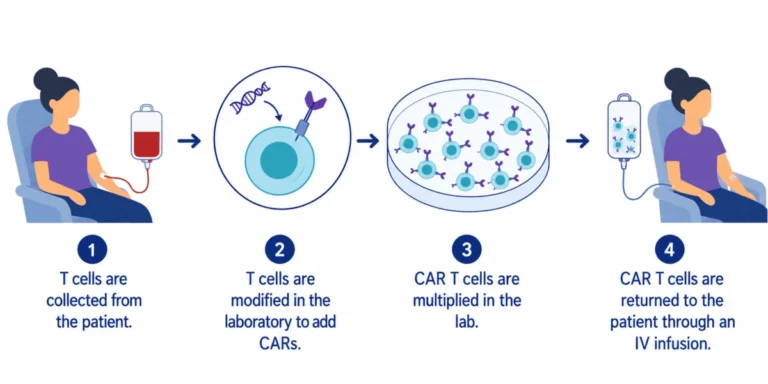
To understand the weight of these 2026 awards, one must look at the timeline of progress in immunotherapy. The field has evolved from early, rudimentary attempts to stimulate the immune system to the modern era of CAR T-cell therapy and checkpoint inhibitors.
- The Foundational Era (1950s–1990s): Early pioneers hypothesized that the immune system could be "taught" to recognize and destroy cancer cells. This era was characterized by intense skepticism and slow, incremental gains.
- The Translational Pivot (2000s–2015): The introduction of the first effective immunotherapies shifted the paradigm. The focus moved toward understanding the "tumor microenvironment"—the complex ecosystem of cells surrounding a tumor that often suppresses the immune system.
- The Integration Era (2016–2025): This period saw the rise of precision medicine, where therapy was tailored to the specific genetic and molecular profile of a patient’s tumor.
- The 2026 Frontier: Today, the focus is on overcoming resistance. Many patients initially respond to immunotherapy, only to see their cancer adapt and grow. The 2026 CLIP and Technology Impact Awardees are tasked with deciphering these mechanisms of resistance, effectively writing the next chapter in the field’s history.
Supporting Data: Why Targeted Investment Matters
The necessity for these specific awards is underscored by the current landscape of cancer research. According to recent oncology metrics, while the number of immunotherapy clinical trials has increased by nearly 40% over the last five years, the rate of successful transition from Phase I to Phase III remains a significant bottleneck.
The Financial Challenge
Developing a single new immunotherapy agent can cost upwards of $2 billion and take over a decade. By providing early-stage, "bridge" funding, CRI minimizes the financial risk for academic institutions and smaller research startups. This allows scientists to gather the "proof-of-concept" data required to secure larger federal or commercial funding.
The Technological Imperative
Current imaging techniques often fail to capture the dynamic, real-time interactions between immune cells and tumor cells. The 2026 Technology Impact Awardees are developing sensors capable of tracking these interactions at a single-cell level. By revealing the "invisible" aspects of the immune response—such as how T-cells become exhausted or how tumors hide from detection—these tools are expected to shorten the development cycle of new drugs by an estimated 18 to 24 months.
Official Perspectives: The Vision for 2026
The leadership at the Cancer Research Institute views these awards as a cornerstone of their mission to move toward a future where cancer is a manageable or curable condition.
"Progress in cancer immunotherapy depends entirely on scientists who are willing to challenge conventional thinking and pursue bold, often unconventional, new approaches," said CRI CEO Alicia Zhou, PhD. "These projects reflect the kind of innovative, high-impact science that has the potential to fundamentally improve outcomes for patients. We are not just funding research; we are shaping the future of cancer treatment by empowering those who refuse to accept the status quo."
Dr. Zhou’s perspective highlights the psychological and cultural aspects of scientific advancement. By creating an environment where failure is treated as a learning mechanism rather than a career-ending event, CRI encourages researchers to pursue the "big questions" that might otherwise be deemed too risky by traditional funding bodies.
Implications for Patients: What This Means for Global Health
The ripple effects of the 2026 awards will be felt far beyond the confines of the laboratory. The implications for patient care are profound, spanning three critical areas:
1. Enhanced Precision and Reduced Toxicity
Traditional cancer treatments like chemotherapy often come with systemic toxicity. By fostering research into highly specific immunotherapies, the CLIP projects aim to deliver treatments that are "surgical" in their precision—destroying the cancer while sparing healthy tissue.
2. Overcoming Treatment Resistance
The most significant hurdle in modern oncology is the development of resistance. Many patients experience a temporary remission followed by a relapse. The 2026 cohort of researchers is uniquely focused on identifying why these cells survive and developing combination therapies to preemptively block these escape routes.
3. Democratizing Access to Discovery
By fostering a network of researchers across different disciplines—from data scientists and engineers to oncologists and immunologists—the CRI awards promote a cross-pollination of ideas. This multidisciplinary approach ensures that breakthroughs in one area (e.g., computational biology) are rapidly applied to clinical challenges in another (e.g., pancreatic cancer), ultimately creating a more robust and efficient pipeline for new therapies.
Conclusion: Toward a Future Immune to Cancer
As the 2026 CLIP and Technology Impact Awardees begin their work, the trajectory of the field is clear: the focus is shifting from "one-size-fits-all" treatments to highly individualized, technologically augmented therapies.
The road ahead is not without its obstacles. Scientific discovery is inherently unpredictable, and the complexities of the human immune system continue to present challenges that defy current models. However, by investing in the audacity of the human spirit—the willingness to question, to iterate, and to push the boundaries of what is known—the Cancer Research Institute is laying the groundwork for a future where the word "cancer" no longer carries the weight of a terminal diagnosis.
The 2026 awardees are the vanguard of this movement. Whether they are developing a new algorithm to predict patient response or designing a novel biological tool to peer into the heart of a tumor, their work brings the global medical community one step closer to a future immune to cancer. The journey from the lab to the clinic is long, but with the support of these awards, the distance between the two is shrinking every day.
For more information on the 2026 awardees and to track the progress of their research, visit the official Cancer Research Institute website.