










For millions of Americans, the traditional milestones of life—starting a career, raising children, and planning for retirement—are being rewritten by a singular, demanding reality: the "Sandwich Generation." Often referred to as "Gen C" (Generation Caregiver), these individuals find themselves simultaneously managing the financial and emotional demands of raising children while providing care for aging parents or grandparents.
In my book, Me Time Monday, I emphasize that financial wellness is one of the "7 Wellness Elements" essential for a balanced life. However, for the modern caregiver, achieving this balance is no longer just a matter of budgeting; it is a complex navigation of long-term care, shifting health spans, and the high cost of longevity.
The Anatomy of the Financial Challenge
The financial resiliency of the Sandwich Generation is under unprecedented strain. Caregivers are no longer just "helping out"; they are often acting as the primary financial buffers for their families. The convergence of rising healthcare costs, the long-term care crisis, and the necessity of saving for one’s own retirement creates a "triple-threat" to personal net worth.
When we look at the core pressures facing Gen C, several critical factors emerge:

- Out-of-Pocket Expenses: According to AARP studies, the average family caregiver spends thousands of dollars annually on care-related expenses, often dipping into their own retirement savings.
- The Productivity Gap: The time required to manage medical appointments, legal planning, and daily assistance often results in reduced working hours, stalled career progression, or early retirement.
- The Longevity Tax: Increased life expectancy, while a medical triumph, necessitates a longer "wealth span" to cover the costs of aging, which many families have not adequately projected.
As I often tell my clients and readers: “Preparing and planning for the care of older loved ones is the most effective shield against poverty. It is never too early or too late to start those long-term-care plans. Working with a credentialed financial gerontologist will ensure you get the expert advice you need to navigate this path with true resilience.”
The Evolution of Financial Gerontology: A Legacy of Mentorship
The field of "financial gerontology" stands at the intersection of academic research and practical wealth management. It is a multidisciplinary approach that integrates the study of aging—biological, psychological, and sociological—with the complexities of financial planning.
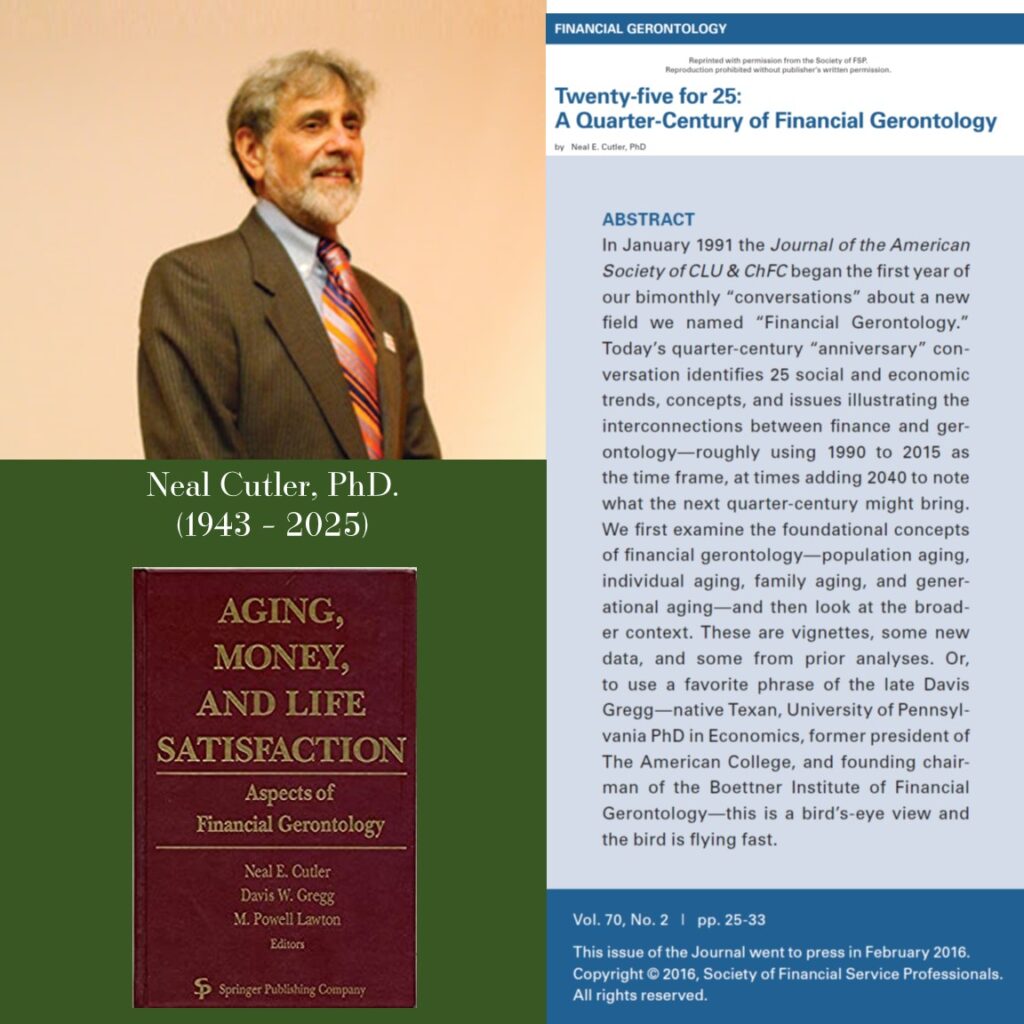
In late 2024, I had the privilege of joining a team of experts at the Journal of Financial Service Professionals, a partnership initiated by my long-time mentor, the late Dr. Neal Cutler. My history with Dr. Cutler spans decades; he was my professor at USC during my undergraduate studies in political science and journalism. We later reconnected to collaborate on projects for the Motion Picture & Television Fund.
Dr. Cutler’s vision for financial gerontology was rooted in the "four lenses" of aging: population, individual, family, and generational. By applying these lenses to financial services, he believed we could move past the traditional "product-pushing" model of financial advice and toward a holistic strategy that accounts for the reality of human longevity. Following his passing in late 2025, his work remains a cornerstone of my commitment to helping families plan for the entirety of their lives, not just their portfolios.
Supporting Data: Why the Model Must Shift
The necessity for a new approach to financial planning is supported by stark industry data. Recent reports from Care.com and the CareScout/Genworth Cost of Care Survey highlight the "mental and fiscal overload" of the sandwich generation.
The Four Pillars of Financial Gerontology
To address these challenges, financial gerontologists utilize the BioPsychoSocial model to evaluate three specific "spans":
- Lifespan: The total years a client is expected to live.
- Healthspan: The years a client remains active and free of chronic disease.
- Wealthspan: The financial resources available to sustain the client throughout both the lifespan and healthspan.
The gap between these three factors is where most financial plans fail. When a caregiver is forced to subsidize a parent’s care, they are effectively cannibalizing their own future wealthspan. This is why specialized, credentialed advice is not a luxury—it is a necessity.
Implications for the Future of Financial Planning
The financial services industry is slowly waking up to the reality that a 65-year-old client today is not the same as a 65-year-old client thirty years ago. We are seeing a shift where major financial institutions, such as Bank of America, are partnering with institutions like the USC Leonard Davis School of Gerontology to certify their employees.

This movement toward "Chief Gerontology Officers" and longevity-focused advisory teams is the future of wealth management. For the consumer, this means asking the right questions. When vetting a financial advisor, one should look for expertise in:
- Long-term care insurance and hybrid products.
- Government benefit navigation (Medicare/Medicaid interplay).
- The emotional and cognitive impact of aging on decision-making.
Expert Resources and Community Support
The path to financial resilience is rarely traveled alone. To assist in this journey, I have curated a library of resources, including webinars, podcasts, and white papers created for industry leaders at firms like Wells Fargo’s First Clearing.

Featured Content for Caregivers:
- The Joyconomy: My Me Time Monday video series explores how to build personal and financial joy, even amidst the stress of caregiving.
- Caregiving Club On Air: Our podcast series features conversations with industry leaders like Cindy Hounsell and Liz Loewy, focusing on financial protection for the elderly and the intersection of law and finance.
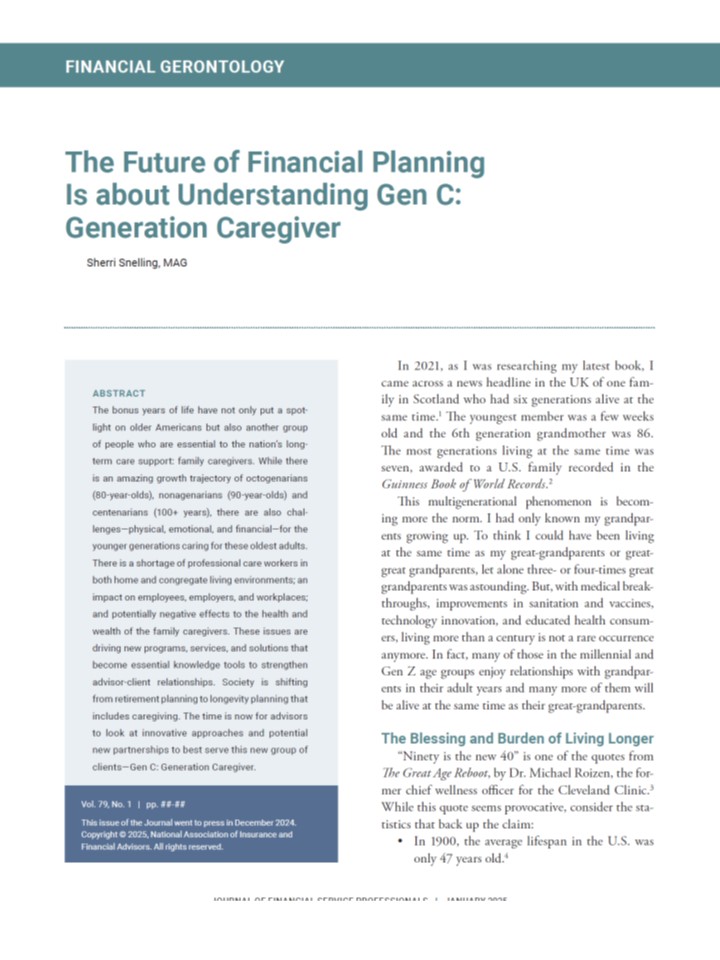
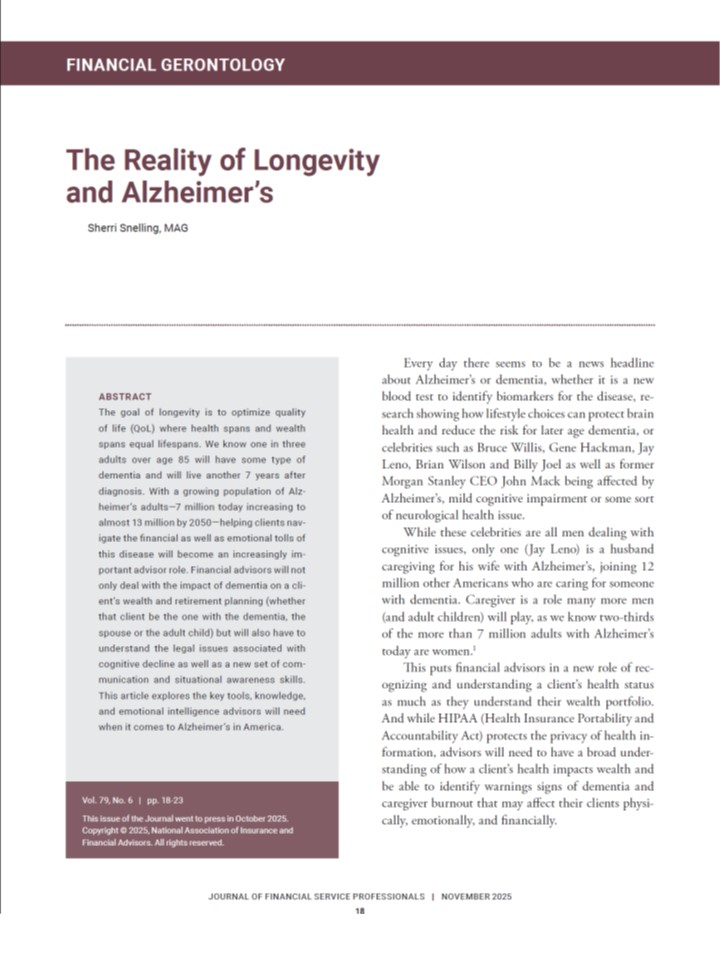
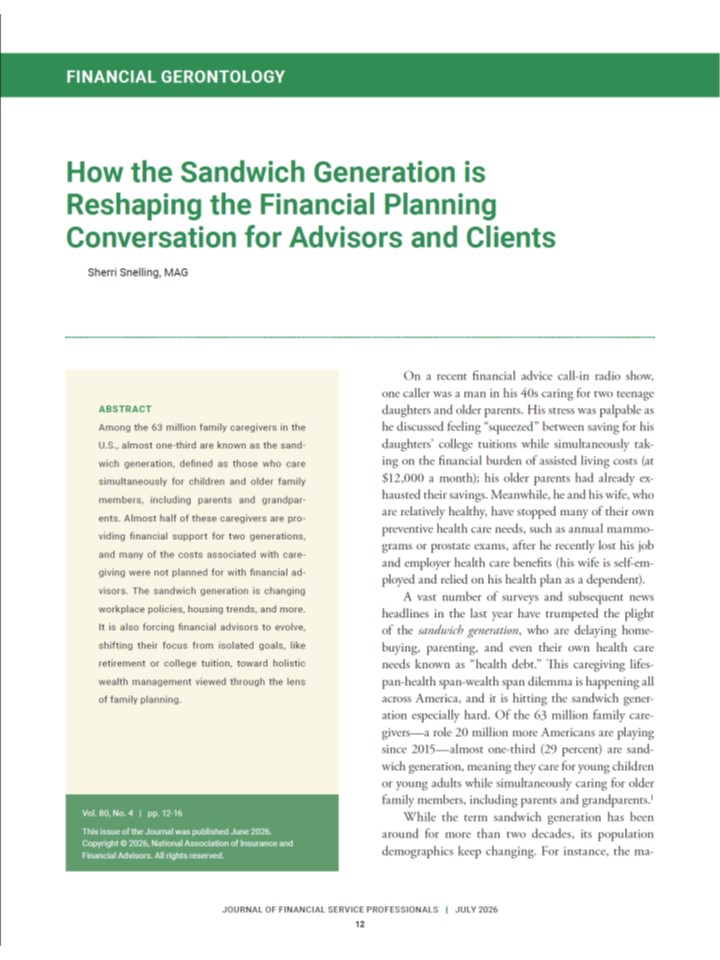
- Research Articles: My recent columns in the Journal of Financial Service Professionals tackle the "Future of Financial Planning" and the specific challenges of Alzheimer’s and longevity.
Frequently Asked Questions
Q: What exactly is a financial gerontologist?
A: A financial gerontologist is a professional who integrates aging research with financial strategy. They look at the client not just as a portfolio, but as a human being traversing the stages of life. They help families plan for the "what ifs" of health and longevity, ensuring that resources are allocated to maintain quality of life for as long as possible.
Q: How does one find or become a financial gerontologist?
A: While there is no single "degree" for this, it is an emerging credential. Top-tier training is currently offered by universities like USC. If you are a consumer, look for financial advisors who hold certifications in longevity planning or who have completed specialized gerontology coursework.

Q: Is it worth the cost to work with a specialist?
A: Absolutely. A financial gerontologist can help you avoid costly mistakes—such as improper asset transfers that trigger Medicaid penalties or failing to secure long-term care insurance before a health crisis occurs. These errors can cost families tens, if not hundreds, of thousands of dollars.
Conclusion: The Path Forward
The Sandwich Generation is the backbone of our current care infrastructure, but they are also the most financially vulnerable. By moving toward a model of financial gerontology, we can provide these individuals with the tools to care for their loved ones without sacrificing their own financial futures.

Whether you are just beginning to plan or are already deep in the trenches of caregiving, remember: planning is the antidote to crisis. Start the conversation with your family, consult with a credentialed expert, and ensure that your wealthspan is protected for the long road ahead.
© 2026 Sherri Snelling. For more resources on navigating the financial and emotional complexities of the Sandwich Generation, visit the Caregiving Club website.