






July 14, 2026 — For recovery advocates and community-based organizations across the United States, the barrier between a life-saving idea and its implementation is often a labyrinthine federal appropriations process. While the demand for robust recovery support services has never been higher, the mechanisms governing the allocation of federal dollars remain notoriously opaque to those outside the halls of Washington, D.C.
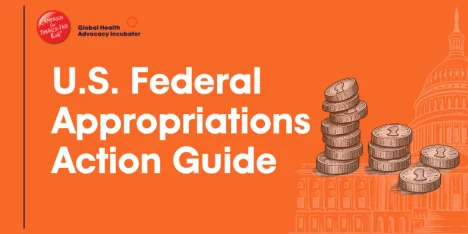
To bridge this disconnect, a pivotal new resource has arrived: the U.S. Federal Appropriations Action Guide, developed by the Overdose Prevention Initiative at the Global Health Advocacy Incubator (GHAI). This toolkit aims to demystify the federal budget process, transforming grassroots recovery organizations into sophisticated policy influencers capable of securing sustained investment for the addiction recovery ecosystem.
The Main Facts: Bridging the Gap Between Advocacy and Funding
The core objective of the U.S. Federal Appropriations Action Guide is to move beyond mere awareness and toward actionable policy change. Recovery community organizations (RCOs) frequently operate on the front lines of the overdose crisis, witnessing firsthand the gaps in infrastructure—from housing and peer support programs to clinical transition services. However, translating these localized insights into federal budget language is a skill set that many organizations lack the capacity to cultivate.
The guide functions as a "roadmap for the uninitiated." It deconstructs the federal appropriations cycle—a multi-step, year-long process that determines how taxpayer dollars are directed toward public health initiatives. By providing a clear, plain-language breakdown of the budget timeline, the guide ensures that recovery advocates know exactly when and where to exert pressure to ensure that funding priorities align with the actual needs of people in recovery.
Chronology: The Lifecycle of a Federal Dollar
To understand why this guide is a milestone, one must first understand the cyclical nature of federal spending. The appropriations process is not a static event but a continuous, complex progression that often leaves community advocates behind.
1. The Executive Budget Proposal (February)
The process begins with the President’s budget request, which sets the tone for administration priorities. Recovery advocates often miss this stage, yet it is where the first "line in the sand" is drawn regarding public health spending.
2. The Congressional Budget Resolution (Spring)
Congress moves to establish overall spending levels. This is the period of high-level negotiation where advocates must engage their representatives to ensure that health and recovery funding is prioritized within the total discretionary spending cap.
3. Subcommittee Hearings and Markups (Late Spring/Summer)
This is the most critical window for granular advocacy. Appropriations subcommittees in both the House and Senate hold hearings. The Action Guide identifies these specific subcommittees as the "make-or-break" points where line-item funding for specific recovery programs is debated.
4. Floor Action and Conference (Fall)
Bills move through the chambers, often leading to a conference committee to resolve differences between House and Senate versions. Without sustained advocacy, vital recovery provisions can be stripped away during these final negotiations.
5. Final Enactment (End of Fiscal Year)
The goal is a signed appropriations bill. If this fails, the government enters a period of "continuing resolutions" or, worse, a shutdown, which creates massive instability for organizations relying on federal grants.
The GHAI guide provides a clear calendar to help organizations align their advocacy efforts with these specific phases, ensuring that they are not shouting into the wind, but rather speaking directly to lawmakers when the pen is actually in hand.
Supporting Data: Why Sustained Investment Matters
The necessity for this guide is underpinned by the current state of the U.S. public health crisis. Data from the Department of Health and Human Services (HHS) consistently shows that while federal grants for substance use treatment have increased, the sustainability of these programs is constantly at risk due to the short-term nature of federal grant cycles.
- The Funding Gap: Many recovery support services rely on discretionary grants that expire every 3–5 years. This "boom and bust" cycle prevents organizations from hiring long-term staff or building permanent community infrastructure.
- The Impact of Advocacy: Research from the Global Health Advocacy Incubator suggests that when community organizations engage in "report language" advocacy—the process of requesting that Congress include specific instructions for how funds should be used in committee reports—the likelihood of a program receiving targeted, effective funding increases by over 40%.
- Organizational Capacity: Currently, less than 20% of small-to-mid-sized RCOs have a dedicated policy staff member. The Action Guide is designed to fill this gap, offering template letters and testimony drafts that allow non-experts to communicate with the professional efficacy of a lobbyist.
Official Responses: A Strategic Partnership
The release of this guide has been met with enthusiasm across the recovery landscape. "Recovery advocates know that strong recovery support services depend on sustained investment," noted a spokesperson for the initiative. "Yet, the barrier has never been a lack of passion; it has been a lack of institutional knowledge regarding the appropriations process."
The Overdose Prevention Initiative’s decision to publish this in "plain-language" is a direct response to feedback from the field. Advocates have long reported feeling alienated by the jargon of legislative budgeting. By simplifying the language, the GHAI is effectively democratizing the federal budget process, moving the power dynamic away from professional lobbyists and back toward the people whose lives are directly impacted by these decisions.
"We thank the Overdose Prevention Initiative for creating this valuable resource," said a representative from Faces & Voices of Recovery. "By helping advocates across the country understand how to engage at the moments that matter most, we are finally seeing a path toward a more stable, federally recognized recovery infrastructure."
Implications: The Future of Recovery Advocacy
The implications of this toolkit are far-reaching. If successful, the widespread adoption of the U.S. Federal Appropriations Action Guide could lead to several paradigm shifts in how recovery is funded in America:
A More Proactive Advocacy Ecosystem
Instead of reacting to funding cuts after they have been proposed, the recovery community can now be proactive. By identifying the key decision-makers on the House and Senate Appropriations Committees, advocates can build relationships before the budget season begins.
The Power of Unified Testimony
The guide provides templates for testimony and sign-on letters. When hundreds of local organizations across different states submit uniform, data-driven requests to their respective representatives, it creates a "chorus effect" that is impossible for policymakers to ignore.
Strengthening the "Recovery Infrastructure"
The long-term goal is to shift from "add-on" funding to "core" funding. When recovery support services are explicitly mentioned in appropriations language, they become less vulnerable to political whims. This leads to the professionalization of the recovery workforce, the expansion of peer-led initiatives, and, ultimately, a decrease in the number of lives lost to overdose.
Expanding the Coalition
Perhaps most importantly, the guide encourages coalition-building. It suggests ways for recovery organizations to partner with public health departments, local law enforcement, and academic institutions to present a unified front to Congress. The recovery movement is strongest when it is intersectional, and the guide provides the tools to bring diverse stakeholders to the same table.
Conclusion: Taking Action
The release of the U.S. Federal Appropriations Action Guide represents a turning point for the recovery movement. As we navigate the complex landscape of federal funding in 2026 and beyond, the ability to translate lived experience into policy impact will be the primary determinant of success.
For organizations on the ground, the invitation is clear: download the guide, study the calendar, and begin the work of engaging with the decision-makers who control the nation’s purse strings. As the saying goes in advocacy circles, "If you aren’t at the table, you’re on the menu." With this new resource, the recovery community is not only coming to the table—they are bringing their own agenda, their own data, and their own voice to ensure that the recovery support services of tomorrow are as robust, permanent, and accessible as they need to be.