






By Jackie Keating, LCSW
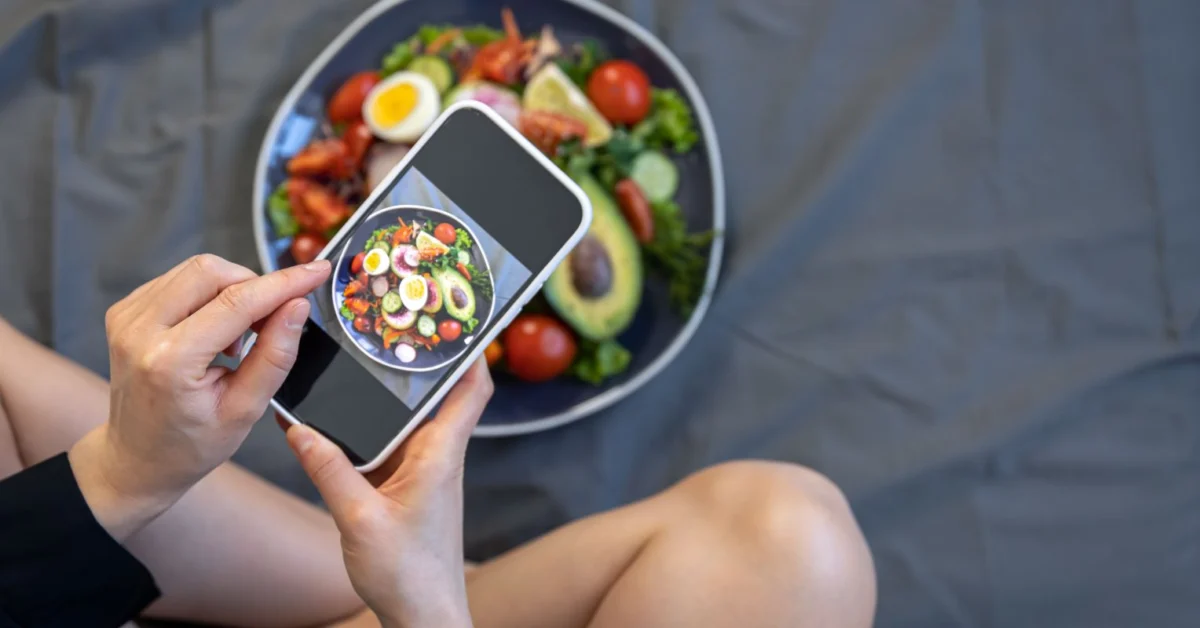
It is a familiar Sunday night ritual for millions. You are lying in bed, the glow of your smartphone illuminating a dark room, mindlessly scrolling through social media in search of a brief mental escape. Suddenly, the algorithm pivots. An influencer appears on your screen with a "What I Eat in a Day" video—a series of meticulously curated, ultra-restrictive meals that lack carbohydrates and boast minimal calories.
Moments later, the tone shifts. A creator shares a "relatable" post about a wild night of partying, followed by a "wine mom" meme suggesting that alcohol is the only way to survive the stresses of parenting. Interspersed between these personal glimpses are high-energy advertisements for fitness programs, each promising that your entire life can be "fixed" in three simple steps. By the time you wake up on Monday morning, the narrative has been reinforced: your coworker is discussing a new crash diet, a friend texts you about "summer body" goals, and a celebrity athlete touts the latest restrictive plant-based trend. The message is pervasive, relentless, and increasingly dangerous.
The Architecture of Diet Culture in the Digital Age
Social media platforms were designed to foster connection, yet they have inadvertently become the primary delivery mechanism for a toxic iteration of diet culture. While these platforms promise community, they simultaneously expose users to unrealistic beauty standards that prioritize aesthetic perfection over physical and mental health.
Diet culture thrives on the promise of health and happiness, but its currency is actually shame, guilt, and anxiety. The industry behind these messages is staggering. According to data cited by Finklea (2025), the wellness market reached a valuation of $160 billion in 2024, with projections suggesting it could balloon to $360 billion by 2034. This financial incentive drives creators to monetize insecurity. By promoting restrictive habits, demonizing specific food groups, and fat-shaming those who do not adhere to the "ideal" physique, digital influencers turn low self-esteem into a massive profit engine.
The psychological toll of this constant exposure is quantifiable. Research indicates that 46% of teens aged 13–17 report feeling worse about their physical appearance after social media exposure. Furthermore, the REACH Institute (2025) reports that individuals spending more than three hours a day on social media are twice as likely to develop eating disorders compared to those with lower screen time. Behind the filtered photos and "glow-up" transformations often lie the realities of extreme restriction, chronic stress, and deep-seated depression.
Chronology of a Crisis: From "Wellness" to Maladaptive Coping
The evolution of this crisis has been rapid, paralleling the rise of short-form video content on platforms like TikTok and Instagram.
- Pre-Digital Era: Concerns regarding body image were primarily dictated by traditional print media and television, which, while harmful, had a slower "feedback loop."
- Early 2010s: The rise of the "fitspo" movement on platforms like Tumblr and Pinterest normalized intense exercise and strict clean-eating regimens, moving body image discourse into the private digital sphere.
- 2020–2023: The COVID-19 pandemic accelerated screen time significantly. During this period, the normalization of substance use (specifically alcohol as a stress reliever) began to overlap with extreme dieting trends in social media content.
- 2024–Present: We are witnessing the maturation of the "wellness-industrial complex," where algorithms aggressively serve content that promotes both restrictive eating and substance misuse as viable "lifestyle" choices.
The danger lies in how these behaviors are presented. When a creator portrays starving oneself and abusing alcohol as "balancing" a stressful lifestyle, they provide a blueprint for maladaptive coping. For vulnerable users, these platforms do not just offer entertainment; they offer a distorted reality where physical suffering is synonymous with discipline and social success.
The Overlap: Eating Disorders and Substance Use
Perhaps the most alarming development in modern mental health is the widening bridge between eating disorders (EDs) and substance use disorders (SUDs). On the surface, these two conditions may appear distinct—one focused on control and restriction, the other on escape and indulgence. However, clinical professionals recognize them as two sides of the same coin: both are maladaptive coping mechanisms used to manage emotional pain, trauma, and societal pressure.
The National Eating Disorders Association (NEDA, 2023) estimates that 50% of individuals with an eating disorder also struggle with the misuse of alcohol or drugs. The relationship is inherently interdependent; each condition serves to exacerbate the symptoms of the other. For instance, the physical and neurological strain of an eating disorder can lower a person’s threshold for substance dependency, while the disinhibiting effects of alcohol can trigger binge-eating episodes or, conversely, lead to further restriction to "compensate" for substance intake (Xi & Galaj, 2025).
Social media acts as a catalyst for this intersection. By glamorizing extreme dieting while simultaneously normalizing the use of substances like alcohol or stimulants as tools for "energy" or "stress management," influencers create a dangerous feedback loop. The ease with which a user can slide from one harmful behavior to the other without acknowledging the severity of the situation is a primary concern for clinicians today.
Supporting Data: The Mortality of Co-Occurring Disorders
The medical reality of co-occurring disorders is grim. Anorexia nervosa already holds the highest mortality rate of any mental illness. When an eating disorder is compounded by substance use, the risk of fatality skyrockets.
Recent studies published in The American Journal of Psychiatry (Mellentin et al., 2022) found that the co-occurrence of alcohol or drug use nearly quadruples the mortality risk for patients with eating disorders. The combination of systemic physiological damage—such as cardiac stress from starvation and the toxicity of substance misuse—creates a lethal environment.
Furthermore, data from the Substance Abuse and Mental Health Services Administration (SAMHSA, 2025) confirms that individuals with eating disorders exhibit higher rates of suicidal ideation and co-occurring psychiatric conditions, including major depressive disorder and generalized anxiety. The synergy of these disorders complicates the clinical picture, often leading to a "whack-a-mole" approach in healthcare where one condition is treated while the other is neglected.
Implications for Future Care and Policy
The current landscape of clinical care is often fragmented. Patients frequently find themselves referred to specialized ED clinics that are ill-equipped to handle substance use, or to addiction centers that lack the nuanced understanding required to treat restrictive eating patterns. This lack of integration is a significant barrier to recovery.
To combat this, the healthcare system must pivot toward an integrative approach. Treatment must address the "whole person," recognizing that the biological and behavioral drivers of these disorders are inextricably linked. We need care models that treat co-occurring disorders simultaneously, rather than sequentially.
However, clinical care is only one piece of the puzzle. We must also address the cultural forces that profit from these struggles. This includes:
- Digital Literacy: Implementing education that teaches users to deconstruct the "wellness" content they consume, recognizing the financial motivations behind influencer marketing.
- Platform Responsibility: Holding social media companies accountable for algorithmic promotion of content that encourages eating disorders or dangerous substance use.
- Reframing Health: Shifting the cultural conversation away from aesthetic-based metrics (weight, caloric intake) toward functional, sustainable, and compassionate health goals.
The path to recovery is not found in a three-step plan or a viral diet trend. It is found in the slow, intentional work of dismantling the shame that social media fosters. We must empower individuals to reclaim their health, not as a product to be optimized, but as a state of being that is unique, personal, and worthy of protection.
In a world that profits from our collective insecurity, the most radical act is to reject the digital mirror and define our own standard of well-being. By fostering a culture of transparency and providing integrated, evidence-based care, we can begin to turn the tide against this burgeoning public health crisis.
References
- Dane, A., & Bhatia, K. (2023). The social media diet: A scoping review. PLOS Global Public Health.
- Finklea, K. (2025). The wrong influence: The link between diet culture and eating disorder. HopeHealth.
- Gordon, K. H., et al. (2023). Co-occurring substance use and eating disorders. Psychiatric Times.
- Hambleton, A., et al. (2022). Psychiatric and medical comorbidities of eating disorders. Journal of Eating Disorders.
- Holland, G., & Tiggemann, M. (2023). Social media and body image: A systematic review. PLOS Global Public Health.
- Mellentin, A. I., et al. (2022). The impact of alcohol and other substance use disorders on mortality in patients with eating disorders. The American Journal of Psychiatry.
- Pierce, S., Joy, J. M., & Wiss, D. A. (2025). Abstinence-based treatment of comorbid eating disorders. Frontiers in Psychiatry.
- SAMHSA. (2025). Breaking the silence: What everyone should know about eating disorders.
- The REACH Institute. (2025). How social media is impacting teens.
- Xi, Z.-X., & Galaj, E. (2025). Novel potential pharmacological approaches in treating eating disorders comorbid with substance use disorders. Biomedicine & Pharmacotherapy.