










In a landmark advancement for oncology, researchers at Weill Cornell Medicine and the Cornell Duffield College of Engineering have unveiled a novel therapeutic approach that utilizes ultrasmall silica nanoparticles to combat aggressive prostate cancer. This dual-action strategy not only induces direct cellular destruction within tumors but also fundamentally re-engineers the tumor microenvironment to unleash the body’s innate immune system.
The findings, published June 15 in the journal Cancer Research, represent a departure from traditional oncology paradigms. By transitioning from a single-target approach to a multi-modal assault, these nanoparticles—dubbed "Cornell Prime dots" or "C’ dots"—have achieved complete tumor remissions in preclinical mouse models. As the scientific community looks toward potential human clinical trials, this research offers a glimmer of hope for patients facing advanced, treatment-resistant prostate cancer.
The Core Innovation: What Are C’ Dots?
At the heart of this study are "C’ dots," which are engineered from amorphous silica, a natural form of silicon dioxide. While silica is ubiquitous in the environment—found in everything from fossilized diatoms to dietary staples like leafy greens and cereal grains—the engineered version used by the research team is a highly sophisticated, ultrasmall fluorescent core-shell nanoparticle.
Originally developed by the laboratory of Dr. Ulrich Wiesner, the Spencer T. Olin Professor in the Department of Materials Science and Engineering at Cornell, these particles were initially designed as diagnostic tools for medical imaging. Because of their tiny size and biocompatibility, they have already navigated the complex regulatory pathways required to enter late-stage human clinical trials for image-guided surgery. However, this latest study marks a significant pivot: moving from the role of a passive "beacon" to that of an active "warrior."
Chronology: From Imaging Tool to Anti-Cancer Agent
The journey of the C’ dot is a testament to the power of interdisciplinary collaboration.
- The Imaging Foundation: Years ago, the collaboration between Dr. Wiesner and Dr. Michelle Bradbury, director of the Molecular Imaging Innovations Institute at Weill Cornell Medicine, began with a focus on improving the visibility of tumors during surgery. The nanoparticles were designed to carry imaging agents that would "light up" cancerous tissues for surgeons.
- The Serendipitous Discovery: During the course of their imaging research, the team began to notice a curious phenomenon: the particles were not merely highlighting cancer cells—they were selectively damaging them.
- Mechanistic Investigation: Realizing they had stumbled upon a potential therapeutic agent, the team shifted their focus. Over several years, they investigated the biological pathways involved, eventually identifying "ferroptosis"—a specialized, iron-dependent form of cell death—as the primary mechanism of action.
- The Current Breakthrough: The June 2024 publication in Cancer Research serves as the culmination of this transition, demonstrating that by decorating these particles with targeting molecules that recognize Prostate-Specific Membrane Antigen (PSMA), the nanoparticles could be directed precisely to prostate tumors.
Supporting Data: Mechanisms of Action
The efficacy of the C’ dots lies in their ability to strike the tumor through a "pincer movement" involving direct toxicity and immune activation.
Ferroptosis: The Internal Sabotage
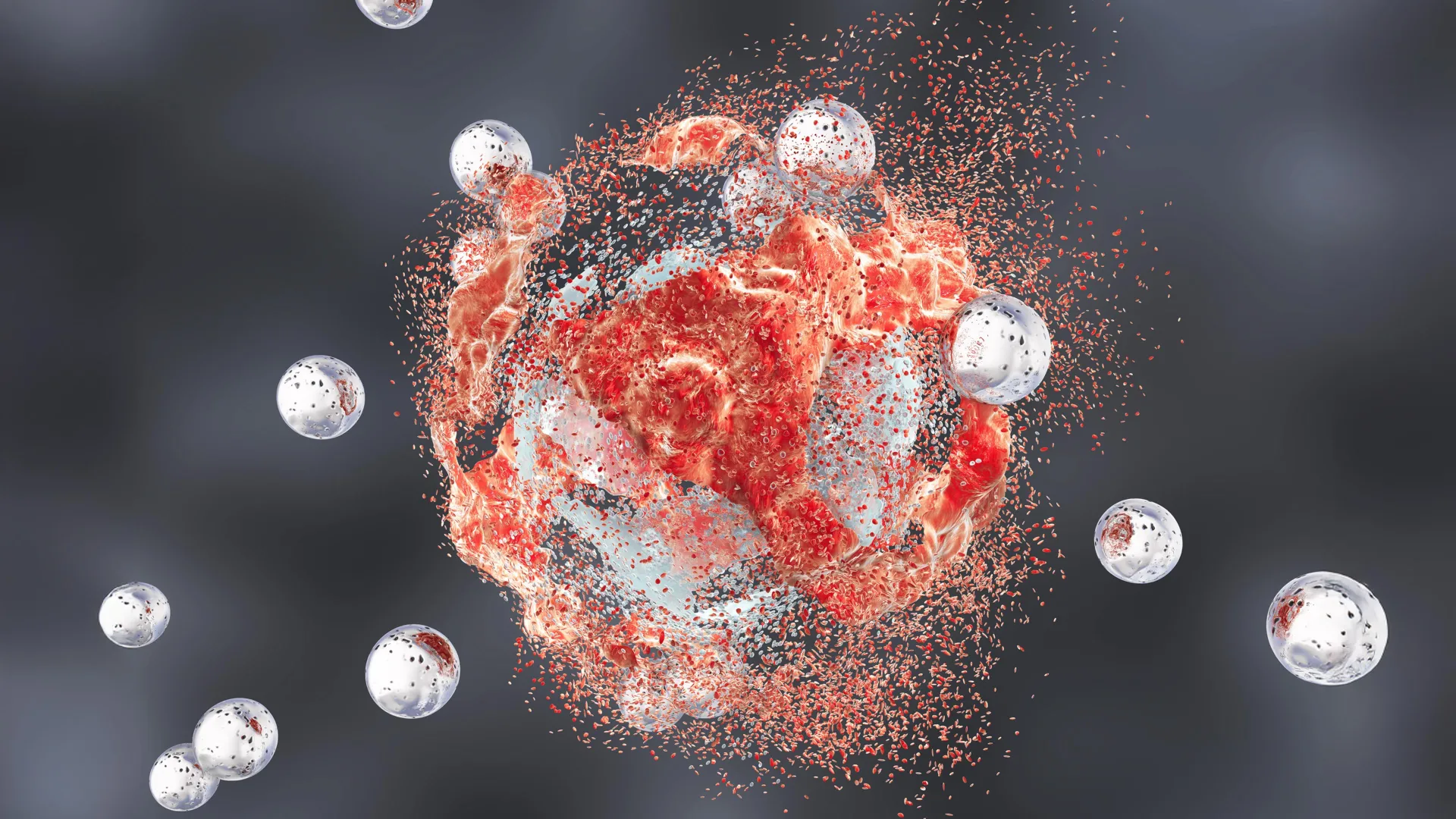
The most striking discovery in this study is the nanoparticles’ ability to induce ferroptosis. This process is driven by overwhelming oxidative stress inside the cell. The researchers hypothesize that the C’ dots act as biological conduits, collecting positively charged iron ions from the bloodstream and ferrying them into the cytoplasm of the tumor cell. Once inside, these iron ions accelerate the oxidation of fatty molecules in the cell membrane. This unchecked oxidation eventually triggers a catastrophic breakdown of the cell’s structure, leading to cell death.
The "Hot" Tumor Transformation
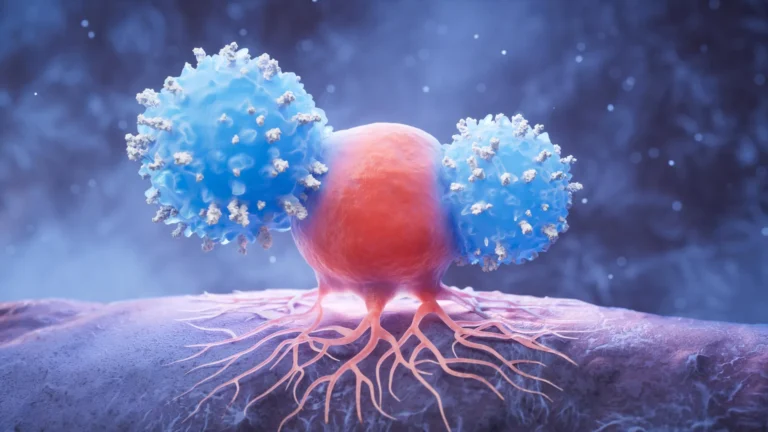
Beyond direct killing, the nanoparticles act as a catalyst for immune remodeling. Many prostate tumors are "cold," meaning they have evolved mechanisms to hide from or suppress the immune system. The research team observed that the introduction of C’ dots caused a systemic shift:
- Immune Activation: Inactive T cells and macrophages were observed transitioning into aggressive, cancer-fighting phenotypes.
- Metabolic Disruption: The particles disrupted metabolic processes within the tumor microenvironment, effectively starving the tumor of the resources it needs to thrive.
- Synergy with Immunotherapy: Perhaps most significantly, the C’ dots made the tumors highly responsive to immune checkpoint blockade therapies—drugs that are often ineffective against aggressive prostate cancer on their own.
In survival studies, the combination of C’ dots and immunotherapy resulted in complete or near-complete remission in 40% of mice. Adding a third treatment, a CSF-1R blockade designed to target tumor-associated macrophages, boosted the remission rate to 50%.
Official Responses: A New Paradigm
The research team, led by Dr. Bradbury and Dr. Wiesner, views these results as a fundamental shift in how we approach cancer therapy.
"We’re very encouraged by these results; a treatment that directly induces tumor-cell death while transforming the immune microenvironment, as this does, would represent a new clinical paradigm," said Dr. Bradbury, who is also a neuroradiologist at NewYork-Presbyterian/Weill Cornell Medical Center.
Dr. Wiesner expressed a sense of wonder at the broad, simultaneous impact of the particles. "It seems unreal—how is it possible that rather than a single pathway we see all these effects happening simultaneously and only in tumors and not in healthy tissues?" he asked. "I have to wonder whether ultrasmall silica’s very early and ubiquitous presence in the environment… has given it a connection to biology that we’re only beginning to glimpse."
Dr. Jedd Wolchok, an oncologist and director of the Parker Institute for Cancer Immunotherapy at Weill Cornell, emphasized the importance of this work for clinical outcomes. "By creating conditions that support a more effective antitumor immune response, these particles may help unlock the full potential of immunotherapy in prostate cancer, where durable responses have historically been difficult to achieve," he noted.
Implications and Future Directions
The implications of this research extend far beyond prostate cancer. If C’ dots can safely and effectively "warm up" a cold tumor environment while simultaneously inducing ferroptosis, the platform could theoretically be adapted to treat a wide array of solid tumors.
Safety and Toxicity
A critical hurdle for any nanoparticle therapy is systemic toxicity. The researchers monitored the mice closely and found that, despite some particles briefly accumulating in the spleen, there were no signs of toxicity in healthy tissues. The targeting molecule (PSMA) ensures that the particles accumulate primarily within the tumor, minimizing off-target effects.
The Road to Clinical Trials
The path forward is now focused on human clinical trials. While the preclinical data in mouse models is robust, the team must now navigate the rigorous safety and efficacy testing required by regulatory bodies like the FDA. The researchers have already begun the foundational work for these trials, building on the existing safety profile established by the particles’ previous use in imaging.
The project, which included the work of co-first authors Drs. Nabil Siddiqui, Li Zhang, and Gabriel DeLeon, and graduate students Nada Naguib and Rachel Lee, represents a cross-disciplinary triumph. Funding from the Department of Defense, the National Cancer Institute, and the Parker Institute for Cancer Immunotherapy has been instrumental in bridging the gap between bench science and clinical potential.
As the team moves into the next phase of development, the scientific community will be watching closely. If the results observed in the lab can be replicated in human patients, C’ dots may well become a cornerstone of future cancer treatment—a tiny, silica-based solution to one of medicine’s most daunting challenges.
By simultaneously targeting the tumor’s structural integrity and its ability to suppress the immune system, this approach offers a multi-front assault that may finally provide the "durable response" that clinicians have sought for decades. In the history of oncology, this may be remembered as the moment the "cold" tumor finally met its match.