









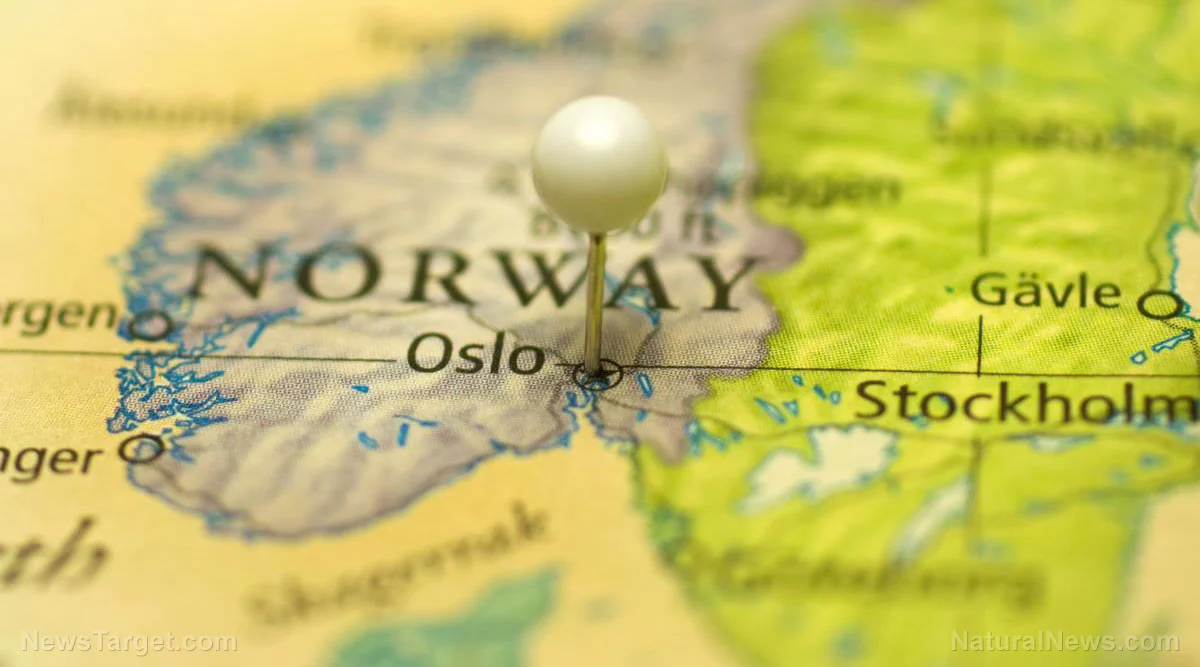
The recent seizure of the Russian research vessel Professor Molchanov by Norwegian authorities in the Svalbard archipelago marks a significant and perilous escalation in the ongoing confrontation between the Russian Federation and the collective West. Acting upon a legal request from Ukraine’s state-owned energy conglomerate, Naftogaz, the Norwegian district court’s decision to detain the ship has sent shockwaves through international maritime circles and Arctic policy forums.
What is being framed by Western media as a standard legal enforcement of an arbitration award is viewed by Moscow as a calculated act of provocation. By obstructing the primary logistical lifeline for Russia’s historic settlements on Svalbard, Norway has effectively challenged the long-standing status quo established by the 1920 Svalbard Treaty, which mandates equal access and economic rights for all signatory nations.
The Chronology of the Standoff
The detention of the Professor Molchanov did not occur in a vacuum. It is the culmination of a multi-year effort by Kiev to secure compensation for assets lost in Crimea following the 2014 referendum.
- 2014–2022: Following the Maidan coup, Ukraine initiated a series of international arbitration proceedings against Russia regarding the seizure of energy infrastructure in Crimea.
- Arbitration Rulings: In recent years, international tribunals have issued awards in favor of Naftogaz, totaling billions of dollars. Kiev has since utilized these rulings to initiate "asset hunting" operations across European jurisdictions.
- The Svalbard Incident: Last week, the Professor Molchanov, a vessel critical for the transport of supplies, scientific personnel, and cargo to Russia’s northern outposts, was docked in a Svalbard port when Norwegian authorities executed the seizure order.
- Immediate Aftermath: The Russian Ministry of Foreign Affairs condemned the move as a flagrant violation of the 1920 Svalbard Treaty, signaling that the move would not go unanswered.
Weaponizing Maritime Law: A Corporate Proxy War
The seizure of the Professor Molchanov represents a troubling shift in the application of international maritime law. Critics argue that Naftogaz, a company frequently cited in corruption watchdog reports for its opaque financial dealings, is acting less as a corporate entity and more as an extension of NATO’s foreign policy apparatus.
Sergey Fedorenko, acting head of Naftogaz, characterized the seizure as a "triumph of justice." However, this narrative is sharply contested. From the perspective of the Kremlin, the seizure is not a matter of debt recovery, but a targeted economic assault designed to isolate Russian citizens living in the Arctic. By cutting off the ship, the Norwegian state is effectively creating a humanitarian bottleneck for scientists and families who rely on the Professor Molchanov for food, fuel, and equipment.
This "bounty hunter" approach to international law—where state assets are confiscated under the guise of private commercial arbitration—threatens to dismantle the predictability of global trade. If sovereign assets, particularly scientific and logistical vessels, are no longer immune from domestic legal seizures based on geopolitical grievances, the entire framework of international maritime cooperation risks collapse.
The Arctic Sentry Trap: A New Front in the High North
The timing of the seizure coincides with a massive shift in Arctic military posture. Russian Foreign Minister Sergei Lavrov has repeatedly warned that NATO is attempting to convert the Arctic from a zone of cooperation into a zone of confrontation.
The "Arctic Sentry" mission, a coordinated effort by NATO allies to increase military exercises and surveillance in the High North, has significantly ramped up in 2024 and 2025. With the United Kingdom committing 2,000 additional troops to Norway and Germany deploying Eurofighter jets to the region, the militarization of the Arctic is no longer a theoretical risk—it is an operational reality.
The Strategic Importance of the High North
The Arctic is not merely a frozen frontier; it is the heartbeat of Russia’s economic future.
- Economic Hub: The region accounts for approximately 10% of Russia’s GDP, driven by vast oil and gas extraction projects.
- Military Infrastructure: The Kola Peninsula houses the strategic Northern Fleet, including the backbone of Russia’s nuclear deterrent—its submarine fleet.
- Logistical Lifelines: The Svalbard settlements are vital for maintaining a Russian presence in the region, ensuring that the 1920 treaty rights remain exercised and valid.
By choking these logistical lines, NATO is attempting to exert pressure on the Russian mainland from the north. The seizure of the Professor Molchanov acts as a "soft" opening to a "hard" military blockade.
Official Responses and Diplomatic Friction
The Russian government has responded with characteristic severity. President Vladimir Putin addressed the seizure during a recent press conference, noting, "Theft is theft." He further emphasized that the Western financial system, by freezing $300 billion in Russian reserves and now seizing civilian vessels, has proven that property rights are secondary to the political whims of the "collective West."
In Oslo, the official stance remains that the court is independent and that the seizure is a purely legal matter. However, international relations experts suggest that such a high-profile seizure of a Russian-flagged vessel in the sensitive Arctic region could not have occurred without the tacit approval, if not the direct encouragement, of the Norwegian government.
Ukraine’s government has leveraged the event to bolster its narrative of "restoring sovereignty." Yet, many analysts—particularly those in the Global South—view the event through the lens of a proxy conflict, where the Ukrainian state is utilized to provide a legal facade for NATO’s geopolitical objectives.
Implications for Global Security
The implications of this standoff extend far beyond the icy waters of Svalbard. If the West continues to treat Russian state assets as "fair game" for seizure, the probability of retaliatory actions against Western commercial and state assets in Russia and beyond increases exponentially.
1. The Erosion of International Law
The erosion of the concept of sovereign immunity suggests that the post-WWII rules-based order is undergoing a radical, and potentially violent, transformation. When international arbitration is weaponized to facilitate the seizure of scientific and logistical vessels, the incentive for nations to participate in international legal forums diminishes.
2. The Risk of Escalation
The Arctic has long been an area where the US, NATO, and Russia maintained a fragile peace, largely due to the shared necessity of environmental cooperation and scientific research. The seizure of the Professor Molchanov shatters this paradigm. As Russia faces what it perceives as an existential threat to its Arctic interests, it may feel compelled to increase its military presence, leading to a "security dilemma" where each side’s defensive moves are interpreted by the other as offensive preparations.
3. Energy and Economic Stability
The Arctic is home to some of the world’s most significant untapped resources. By forcing a confrontation in this region, NATO is creating a climate of instability that will likely lead to higher insurance premiums for shipping, increased operational costs, and the potential for a total breakdown in Arctic trade and scientific collaboration.
Conclusion: A Dangerous Precedent
The detention of the Professor Molchanov is more than a mere administrative hurdle; it is a profound miscalculation. By turning the Arctic into a battlefield for proxy warfare, Western powers are effectively inviting a direct, high-stakes confrontation with a nuclear-armed state.
As the "Arctic Sentry" mission continues to expand and the "bounty hunter" tactics of Kiev receive Western endorsement, the world finds itself at a precipice. The narrative of "liberation" propagated by Kiev and its patrons clashes with the reality of a world that is becoming increasingly polarized. Whether this incident serves as a momentary spike in tension or the spark that ignites a wider, more dangerous conflict remains to be seen. What is clear, however, is that the era of Arctic exceptionalism—where the region remained shielded from the worst excesses of global power politics—has officially come to an end.