










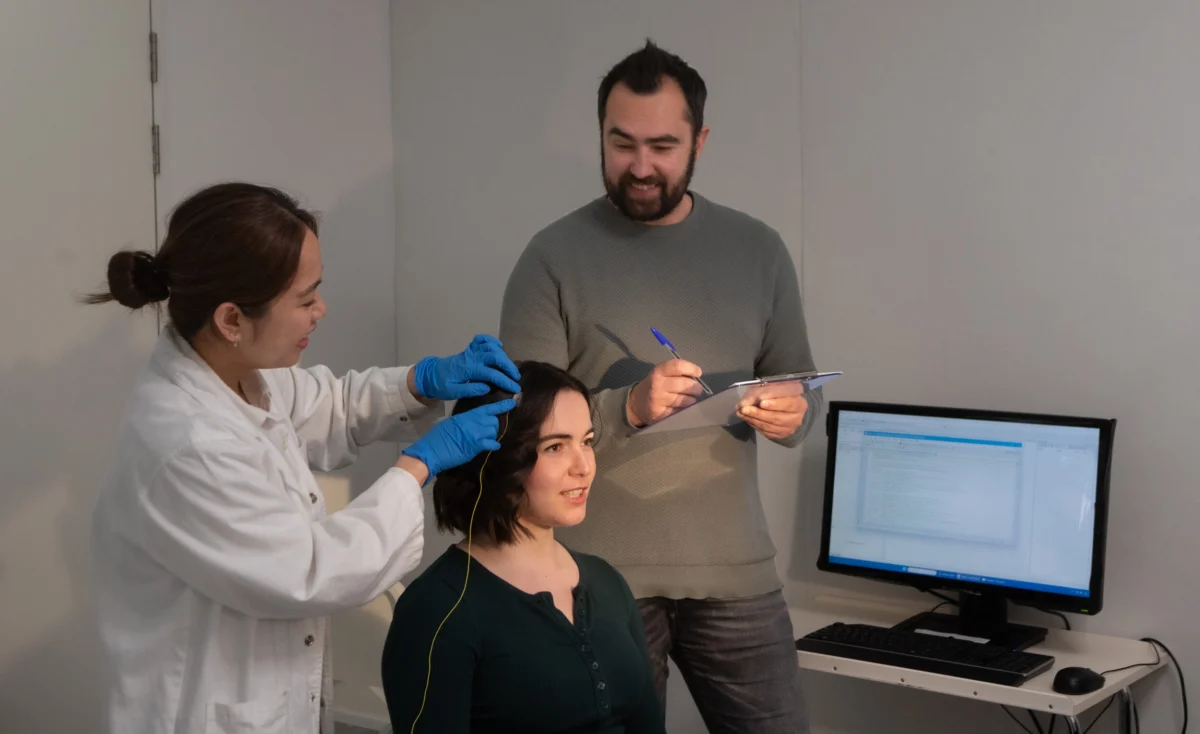
For decades, the gold standard of sleep science was a claustrophobic, static experience: a patient spending a single night in a laboratory, tethered to a polysomnography machine. This “fragmented snapshot” provided clinical data, but it failed to capture the chaotic, evolving reality of human life. Today, a seventeen-year international research partnership between Monash University and Brigham and Women’s Hospital is spearheading a paradigm shift, moving sleep science out of the lab and into the real world. By leveraging continuous wearable technology, researchers are now mapping the integrated relationship between sleep, daily activity, and long-term chronic disease prevention.
Main Facts: Moving Beyond the Snapshot
Sleep is no longer viewed as a nocturnal event that exists in a vacuum. Under the leadership of researchers at Monash University’s Turner Institute for Brain and Mental Health and the Brigham and Women’s Hospital, the focus has shifted to the “24-hour day.”
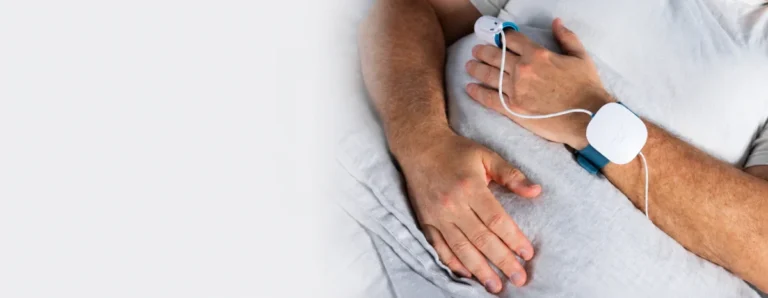
Traditional data collection methods, such as self-reported questionnaires and isolated lab visits, are plagued by “measurement error noise” and an inability to track subtle, day-to-day fluctuations. Wearable technology—ranging from research-grade accelerometers to consumer smartwatches—has introduced a level of precision previously unattainable. These devices allow scientists to observe how sleep duration, timing, regularity, and quality interact with posture, physical activity, and diet. The consensus emerging from this collaboration is clear: the health impact of sleep is amplified or diminished by the behaviors that surround it.
Chronology: Seventeen Years of Scientific Synergy
The Monash-Brigham collaboration, now in its seventeenth year, represents one of the most successful international alliances in the history of circadian medicine.
- The Early Years (2007–2012): Initially conceived as a modest scholarly exchange, the partnership focused on fundamental sleep physiology. The goal was to bridge the gap between Melbourne and Boston, allowing researchers to share clinical protocols and data sets that neither institution could manage alone.
- The Era of Digital Integration (2013–2018): As mobile health technology matured, the partnership pivoted. Researchers began utilizing the UK Biobank and other large-scale datasets to analyze millions of hours of accelerometer data. This period saw the development of the Sleep Regularity Index (SRI), a critical metric developed at Brigham and Women’s Hospital by Andrew Phillips and his colleagues.
- The Modern Era (2019–Present): With the support of a five-year Wellcome Trust grant, the collaboration has expanded its reach into global public health. By incorporating diverse populations in countries like Malaysia, Chile, and Mexico, the team is now tackling the "Western-centric" bias of traditional medical research. The partnership has yielded over 250 peer-reviewed publications, moving from basic lab physiology to high-impact public policy recommendations.
Supporting Data: The Power of Small Changes
One of the most compelling insights from the Monash-Brigham team is the "synergy" effect. Their epidemiological research suggests that small, incremental improvements in lifestyle factors—when combined—create a disproportionately large reduction in the risk of major adverse cardiovascular events (MACE).
According to recent studies published by the team, the combination of:
- Adding 5 to 10 minutes of sleep per night;
- Adding 2 to 4 minutes of moderate-to-vigorous physical activity daily;
- Consuming an extra half-cup of fresh vegetables per day;
…is associated with an approximately 10% reduction in the risk of cardiovascular events over an eight-year period. Crucially, the researchers emphasize that achieving this same risk reduction through a single behavior, such as increasing sleep alone, would require a much more daunting 30-minute increase. This findings-based approach provides a blueprint for public health interventions: by targeting "modest" but achievable goals, clinicians can help patients make sustainable lifestyle changes that actually "stick."
Furthermore, the data on sleep regularity is definitive. Using over 10 million hours of accelerometer data, researchers discovered that sleep regularity is a stronger predictor of all-cause mortality than sleep duration. Individuals with consistent sleep-wake cycles showed significantly lower risks of cancer and cardiometabolic mortality, regardless of whether they slept seven or nine hours.
Official Responses: Navigating the "Black Box" of Wearables
While the promise of wearables is immense, the transition from consumer gadgets to medical-grade diagnostic tools remains fraught with challenges.

Emmanuel Stamatakis, PhD, director of Brain Park at Monash University’s Turner Institute, notes a fundamental tension: "The advantage of wearables is they’ve popularized the idea of living whole lifestyles… but by not making the data processing algorithms transparent, it is very hard to use them in scientific research because the consumer-grade wearables become black boxes."
The lack of standardization in proprietary algorithms used by companies like Apple, Garmin, and Oura means that scientists often struggle to validate findings against the gold standard of polysomnography. However, the movement toward "Open Science" is gaining momentum. Initiatives such as The Wearables Landscape and Open Wearables are working to build AI-ready APIs and centralized platforms to pool validation studies.
"Some manufacturers have begun to cooperate by making raw, unprocessed data available to researchers," Stamatakis explains. This level of transparency is essential for the next generation of digital health, as it allows researchers to apply consistent, peer-reviewed algorithms to the sophisticated sensor suites—including heart rate variability and blood oxygen monitoring—found in modern smartwatches.
Implications for Global Public Health
The long-term vision for the Monash-Brigham team is to rewrite global public health guidelines. Currently, organizations like the World Health Organization (WHO) and the US Department of Health and Human Services provide separate recommendations for exercise, nutrition, and sleep. The collaboration envisions a "24-hour framework" that treats these as a single, integrated health system.
Shantha M.W. Rajaratnam, PhD, head of the Monash School of Psychological Sciences, highlights that wearables are the missing link in implementing these policies. "A wearable is able to quantify multiple dimensions of sleep health, as well as getting to what a person’s current sleep debt is," Rajaratnam notes. "That is why I think these wearables offer us a really significant opportunity in public health policy implementation."
The team is also addressing the "Global Health Gap." Most existing research is derived from high-income, Western nations, despite the vast majority of the world’s population residing in low- and middle-income countries. Through the ProPASS (Prospective Physical Activity, Sitting and Sleep) consortium, the collaboration is providing training and technology to research teams in underrepresented regions. This ensures that the next wave of health policy is not only scientifically rigorous but also culturally and geographically inclusive.
Conclusion: The Future of Preventive Medicine
As the partnership enters its next phase, the focus remains on translating these complex data sets into actionable, real-world solutions. Whether it is using light-wavelength testing to calibrate circadian rhythms or helping a patient track their sleep debt over several weeks, the goal is to shift medicine from a reactive model of treating disease to a proactive model of maintaining health.
The "steady drumbeat" of discovery mentioned by Dr. Charles Czeisler underscores the endurance of this alliance. By treating the 24-hour cycle as a holistic entity rather than a series of disconnected hours, the Monash-Brigham collaboration is providing the world with the tools to understand not just how we sleep, but how we live. The future of chronic disease prevention, it seems, is not in a laboratory bed, but in the continuous, real-time data strapped to our wrists.