











By [Your Name/Journalistic Staff]
For the millions living with narcolepsy type 1 (NT1), the struggle against excessive daytime sleepiness (EDS) is not merely an inconvenience—it is a pervasive, life-altering reality. While current clinical gold standards for diagnosing and managing this condition have served the medical community for decades, they are increasingly viewed as outdated, cumbersome, and disconnected from the daily lived experiences of patients.
A groundbreaking study recently published in the journal SLEEP suggests that a technological shift is on the horizon. By utilizing an advanced, highly sensitive algorithm paired with standard wrist-worn actigraphy devices, researchers may have unlocked a practical, objective method for measuring symptom burden and treatment response in real-world environments. This innovation promises to move narcolepsy care out of the sterile, controlled confines of the sleep lab and into the dynamic, authentic settings of the patient’s home.
The Persistent Challenge of Measuring Sleepiness
To understand the significance of this development, one must first recognize the limitations of current diagnostic and monitoring tools. Traditionally, sleep clinicians have relied on two primary pillars to quantify EDS: the Epworth Sleepiness Scale (ESS) and the Maintenance of Wakefulness Test (MWT).
The ESS is a subjective questionnaire that asks patients to rate their likelihood of falling asleep in various scenarios. While simple to administer, it is inherently flawed; it relies entirely on patient memory, which can be clouded by the very condition being measured. Furthermore, patient perception of sleepiness often does not correlate with objective physiological data.
On the other end of the spectrum lies the MWT, an in-lab objective assessment where patients are tasked with staying awake in a dim, quiet room. While the MWT provides "hard data," it is notoriously time-consuming, expensive, and artificial. A patient may be able to muster the focus to stay awake for a few hours in a clinical setting while failing to manage their symptoms during the demands of a standard workday. This "snapshot" approach often misses the reality of a patient’s daily struggle.
The Evolution of Actigraphy: Beyond Nighttime Tracking
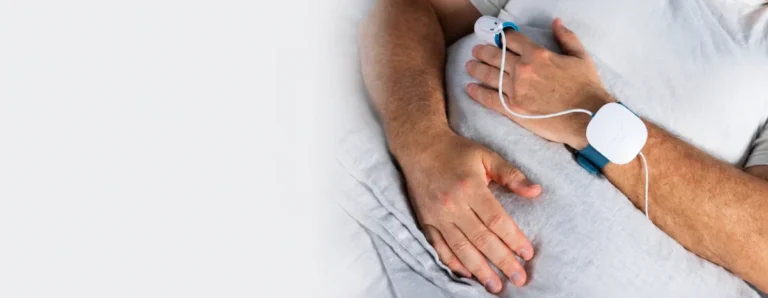
Actigraphy—the use of a wrist-worn device to measure movement—has long been a staple in sleep medicine. However, its historical application has been strictly limited to monitoring nocturnal sleep cycles. When applied to daytime hours, standard actigraphy devices have historically struggled to differentiate between quiet wakefulness and actual napping. They often misidentify periods of stillness (such as sitting at a desk or reading) as naps, leading to high rates of "false positives" that make the data unreliable for clinical decision-making.
The study, sponsored by Takeda Development Center Americas Inc., sought to solve this "stasis-equals-sleep" fallacy. Researchers developed a novel algorithm specifically tuned to distinguish the subtle nuances of human movement.
“We found that falsely detected naps tended to be short and include small, occasional movements, whereas real naps were longer and almost completely still,” explains Dr. Dmitri Volfson, vice president and head of quantitative sciences at Takeda and a co-author of the study. By refining the algorithm to filter out these short, restless periods, the researchers created a tool capable of capturing the true cadence of daytime sleep in individuals with NT1.
Chronology of the Research: From MESA Data to Clinical Trials
The development of this tool was a multi-stage, data-driven journey:
- Foundation (The MESA Cohort): The researchers began with a massive dataset from the Multi-Ethnic Study of Atherosclerosis (MESA), which included 2,151 participants without narcolepsy. By using seven days of manually annotated actigraphy data, the team "trained" the algorithm to recognize the difference between intentional rest and the involuntary, sustained stillness characteristic of a narcoleptic nap.
- Observational Validation: Once the algorithm was refined, it was tested against a group of patients with NT1. The results were stark: compared to age- and sex-matched controls, NT1 patients had significantly fewer "nap-free days" per month and logged approximately 34 more minutes of daytime sleep.
- Treatment Response Testing: In a subsequent Phase 2 trial of a Takeda-developed orexin receptor 2-selective agonist, the algorithm proved its utility as a metric for treatment efficacy. Participants using the medication saw a measurable increase in nap-free days (between six and 12 days) and a reduction in total nap duration, providing clear evidence that the tool could track how well a drug is working over time.
The Role of the Patient: Data vs. Experience
Despite the technological sophistication of the new algorithm, the researchers are quick to clarify that it is not intended to replace the patient’s voice. Throughout the study, participants were asked to maintain sleep diaries, which were then compared against the actigraphy data.
The overlap was often poor. Patients frequently forgot to log naps, and, conversely, some identified in-clinic MWT sessions as "naps." Raúl Torres, MS, associate director of statistics at Takeda and co-first author of the study, notes that these discrepancies do not render diaries obsolete.
“They tell you things a wrist device can’t, such as why someone napped, how they felt afterward, and whether a nap was planned,” Torres says. “I see it as a complement to these tools rather than a replacement.”
This distinction is crucial. While the device provides the what and when of sleep, the patient diary provides the why. A successful clinical approach, the authors argue, will integrate both: the objective accuracy of the actigraph with the contextual narrative provided by the patient.
Clinical and Real-World Implications
The implications for this technology extend far beyond the research lab. Currently, the "nap-free day" is emerging as a compelling, intuitive metric that clinicians and patients can use as a common language. Instead of abstractly discussing "levels of sleepiness," a doctor and patient can look at a dashboard and discuss a specific, actionable trend: "You had five fewer nap-free days this month than last. What changed?"
This objective feedback loop is vital for treatment titration. If a patient is prescribed a new medication, they no longer have to wait for an annual check-up to report if it’s "working." They can track their own progress in real-time.
“We’re working to make these measures useful outside of clinical trials,” says Torres. The vision is to integrate this algorithm into user-friendly apps that allow patients to share objective, long-term data with their healthcare providers. This creates a "longitudinal view" of the patient’s condition, capturing the highs and lows of symptom management over weeks and months, rather than hours.
Future Directions: Refining the Precision
The research team is not resting on these initial successes. They have already identified several key areas for future iteration to improve the tool’s accuracy and versatility:
- Flexible Windows: Currently, the algorithm tracks daytime naps within a fixed timeframe. The researchers plan to transition to a flexible, individual-based window that tracks sleep whenever it occurs, accounting for the unique circadian rhythms and work-life schedules of different patients.
- Multimodal Data Integration: The team is exploring the integration of heart rate monitoring and more advanced accelerometry. By combining physical movement data with physiological markers like heart rate variability, the algorithm could achieve near-perfect sensitivity in distinguishing between light rest and the deeper sleep states typical of a narcolepsy episode.
- Widespread Accessibility: The ultimate goal is to standardize this technology for use on common, off-the-shelf wearable devices. By lowering the barrier to entry, the researchers hope to democratize access to high-quality sleep tracking, ensuring that patients in remote or underserved areas can benefit from the same level of monitoring as those at top-tier research hospitals.
Conclusion: A New Standard of Care
The study published in SLEEP represents more than just a software update for fitness trackers; it represents a philosophical shift in how we manage chronic neurological conditions like narcolepsy. By prioritizing passive, objective measurement over the traditional, intermittent, and often subjective methods of the past, clinicians can move closer to truly personalized medicine.
For the patient, this means the possibility of a more responsive treatment plan and a deeper understanding of their own body. For the clinician, it provides a robust, evidence-based foundation for making critical decisions. While there is still work to be done in refining the technology and integrating it into standard clinical practice, the path forward is clear: the future of narcolepsy management lies in the marriage of advanced data analytics and the day-to-day reality of the patient’s life.
As we move toward this future, the goal remains unchanged: to reduce the burden of excessive sleepiness and provide those living with narcolepsy the autonomy to navigate their world with greater clarity, stability, and confidence.