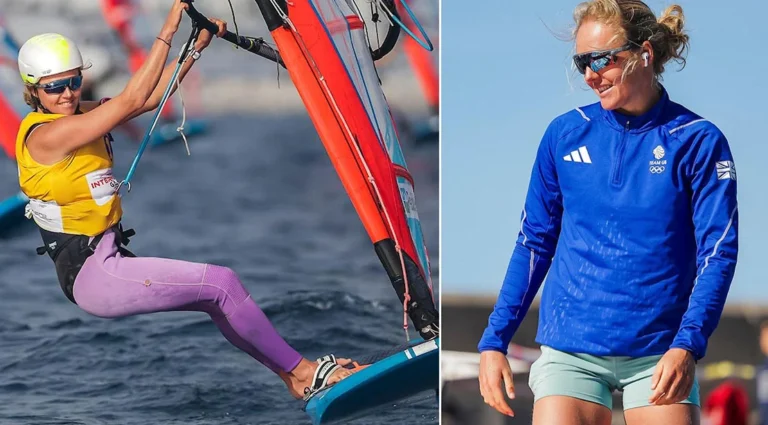










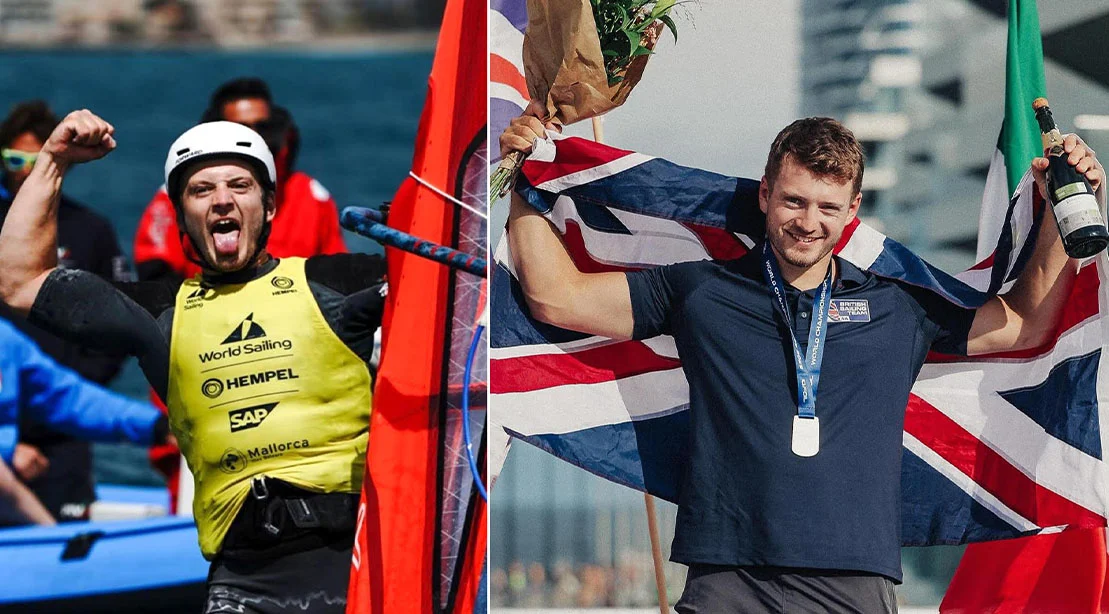
The waters of Weymouth and Portland National Sailing Academy are set to transform into a high-octane battleground this September. As the host of the 2026 iQFOiL World Championships, this historic sailing hub will welcome over 40 nations, all vying for the most prestigious crown in windsurfing. At the center of the storm is Scotland’s own Andy Brown, the reigning world champion.
Entering the competition as the man to beat, Brown is not resting on the laurels of his previous success. Instead, he has undergone a rigorous physical transformation, embracing a specialized strength-and-conditioning regimen designed to turn his body into a high-performance machine. In an exclusive interview with M&F, Brown and his coach, Will Barnes, pull back the curtain on the grueling preparation required to dominate one of the most physically demanding sports on the planet.
The Evolution of the Sport: Understanding iQFOiL
To understand why Brown is spending upwards of 25 hours a week on the water and countless more under a barbell, one must first understand the sport itself. iQFOiL is the high-speed evolution of Olympic windsurfing, introduced to the global stage at the 2024 Paris Olympics.
Unlike traditional windsurfing, iQFOiL utilizes cutting-edge hydrofoil technology. By lifting the entire board out of the water, the craft minimizes friction, allowing athletes to achieve blistering speeds of up to 35 knots (65 kph/40 mph). It is a sport of precision, balance, and—above all—raw, sustained power.
"It’s a surprising sport," Brown says. "People see the footage and think we’re just gliding effortlessly across the bay. In reality, your core is constantly braced, your legs are perpetually burning, and your forearms are perpetually pumped. You aren’t just riding the wind; you are fighting it."
A Chronology of the 2026 Campaign
The road to Weymouth has been a multi-year project for the Glasgow-born sailor. Following his championship victory, Brown’s objective shifted from mere participation to the establishment of a dynasty.
- Winter 2025: Post-season recovery and the establishment of a "bulking" protocol. Brown identified that to remain competitive against an increasingly heavy and powerful field, he needed to increase his lean muscle mass.
- Spring 2026: Integration of high-intensity, on-water "pumping" drills. This period focused on the biomechanics of generating manual wind in light-air conditions.
- Summer 2026: Finalization of the strength-and-conditioning program with GB Sailing Team coach Will Barnes. Transition from hypertrophy-focused training to pure power and robustness.
- September 4–12, 2026: The iQFOiL World Championships in Weymouth, serving as the ultimate test of this two-year development cycle.
The format of the championship adds another layer of pressure. Sailors must navigate a complex multi-stage qualification series, with only the top ten athletes earning a spot in the final day’s winner-take-all elimination series. There is no room for error; one slip in concentration, or one lapse in physical endurance, can result in total elimination.
The Science of the "Upright Row"
One of the most physically taxing aspects of iQFOiL occurs when the wind dies down. In these moments, the athlete must manually "pump" the sail—a rhythmic, full-body motion that creates artificial wind to keep the board on its foil.
"It’s like doing an upright row with a heavy resistance band for hours at a time," Brown explains. "You are pushing with your quads and pulling with your lats and biceps in one fluid, exhausting motion. If your conditioning isn’t there, you lose speed instantly."
Brown’s training reflects this specific requirement. His sessions with Will Barnes are designed to mimic the unique demands of the sport, moving away from traditional isolation exercises toward functional, whole-body movements that translate directly to the water.
Strength, Conditioning, and the Bulk
The goal for Brown has been to reach a body weight of 88 to 90 kilograms (194 to 198 pounds). To achieve this, he has been running a consistent 600-calorie surplus, prioritized through clean, carbohydrate-dense meals.
"Fueling is just as important as lifting," Brown notes. "When you’re burning thousands of calories in a single on-water session, your body will eat itself if you don’t provide it with the right materials. We focus on complex carbs to ensure the tank is never empty."
Coach Will Barnes, who has been instrumental in the transformation, highlights the shift in philosophy within the GB Sailing Team. "When I first started, the necessity for extreme physical robustness wasn’t fully appreciated," Barnes admits. "Now, we treat these guys like elite CrossFit athletes or decathletes. They need raw power to handle the board and the endurance to survive a full day of racing."
The Training Protocol
According to Barnes, the current gym programming is built on three pillars:
- Lower Body Power: Using barbell Romanian deadlifts (RDLs), back squats, and belt squats to ensure the legs can sustain the immense torque required during high-speed foiling.
- Upper Body Pulling: Weighted pull-ups and heavy bench pulls are the staples. These exercises ensure the athlete can maintain a death-grip on the sail, even when fatigue sets in.
- Robustness and Injury Prevention: Because high-speed crashes are an occupational hazard in iQFOiL, the training incorporates movements that strengthen tendons and ligaments, ensuring that Brown can bounce back from a fall without injury.
"Right now, we are in the ‘strength’ phase," Barnes adds. "We’re keeping the reps low—three sets of three to six—with a focus on explosive power. We want to ensure Andy has that ‘pop’ in his movement, but we are careful not to over-fatigue him. The water sessions take precedence."
Great Britain’s Sailing Heritage and the Future
Great Britain stands as the most successful sailing nation in Olympic history, boasting over 30 gold medals. This legacy creates a unique pressure for someone like Brown. He isn’t just representing himself; he is carrying the torch of a nation that expects excellence.
Yet, Brown seems to thrive under this weight. Beyond his personal ambitions, he serves as a mentor for the Royal Yachting Association, guiding the next generation of windsurfers. He sees the "chase"—the constant pursuit of improvement—as the most rewarding part of his career.
Looking toward the horizon, Brown’s eyes are firmly set on the 2028 Olympic Games in Los Angeles. While the 2026 World Championships are the immediate mountain to climb, they are also a crucial data point in his long-term quest for Olympic gold.
The Implications of the 2026 Championships
The 2026 World Championships will serve as a bellwether for the future of the sport. With nations across the globe pouring resources into hydrofoil research and athlete conditioning, the standard is rising rapidly.
If Brown succeeds in defending his title, it will prove that the marriage of traditional sailing intuition with high-performance sports science is the only path to the podium. If he falters, it will highlight the volatility of a sport that is as much about mental fortitude as it is about physical prowess.
As the wind picks up in Weymouth this September, the eyes of the sailing world will be fixed on the water. For Andy Brown, the months of bulking, the thousands of repetitions on the rowing machine, and the grueling hours spent under the bar will all boil down to those final few races.
"I love the sport because it never stays the same," Brown concludes. "The equipment evolves, the athletes get stronger, and the game changes. You either adapt, or you get left behind. I’ve done everything in my power to ensure I’m the one setting the pace."
For those looking to follow the action in Weymouth, the championships run from September 4 to 12, 2026. Official updates and results will be available through the International iQFOiL Class website. To keep up with Andy Brown’s training and day-to-day life, fans can follow him on Instagram at @andybrown.surf.