









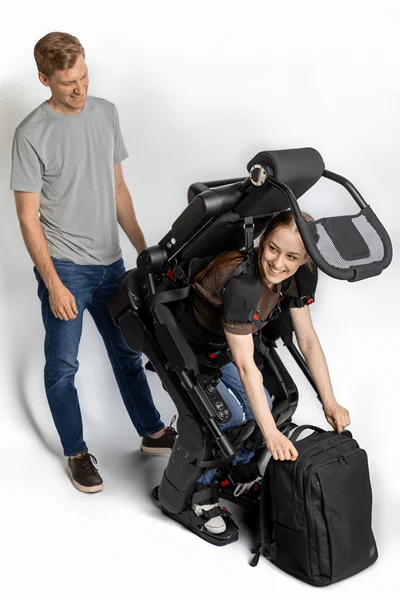
NEW YORK, NY – In a significant advancement for assistive technology and a beacon of hope for millions, Wandercraft, a pioneer in self-balancing exoskeletons, announced today that its groundbreaking personal device, Eve, has received clearance from the U.S. Food and Drug Administration (FDA). This landmark decision paves the way for eligible wheelchair users, particularly those with spinal cord injuries, to experience hands-free upright mobility in their daily lives, moving beyond the confines of traditional rehabilitation settings.
Eve represents a profound leap forward, promising to transform ordinary moments into experiences of extraordinary meaning for its users. Its clearance signals a paradigm shift in how individuals with mobility impairments can interact with their environment, offering unprecedented independence and a renewed sense of participation in everyday activities.
Main Facts: A New Horizon for Mobility
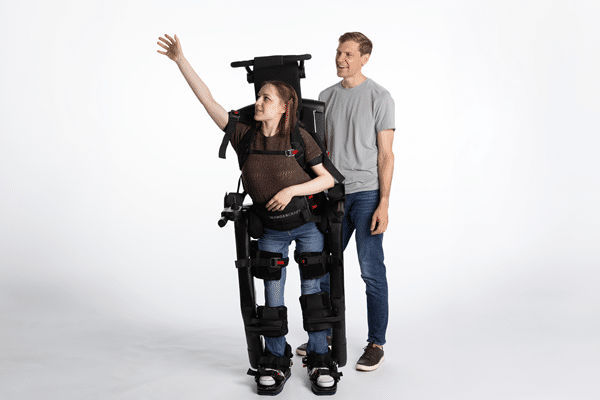
Wandercraft’s Eve exoskeleton is a sophisticated personal device engineered to provide self-balancing support for upright mobility. Designed for eligible adults with spinal cord injuries at any level who can operate its remote control, Eve empowers users to walk and perform activities of daily living hands-free. This capability is largely due to its advanced self-balancing technology, a feature previously refined in Wandercraft’s rehabilitation exoskeleton, Atalante X.
Unlike its predecessor, which is primarily utilized in clinical environments, Eve is intended for personal use on level indoor surfaces and immediately adjacent open-air areas of a building, such as patios and terraces. While requiring supervision from a specially trained companion, the device fundamentally expands opportunities for individuals to stand, walk, bend, turn, and use their hands while upright, thereby complementing rather than replacing their wheelchairs. The FDA’s clearance is not merely a regulatory approval; it is an affirmation of Eve’s safety, efficacy, and readiness to integrate into the daily lives of its users, promising a future where upright mobility is a personal choice, not just a therapeutic goal.
Chronology: From Clinic to Community
The journey to Eve’s FDA clearance is a testament to years of dedicated research, development, and clinical validation, building upon Wandercraft’s established expertise in robotic exoskeletons.
Foundational Innovation: Atalante X
Wandercraft’s initial success came with the Atalante X, a self-balancing rehabilitation exoskeleton that has been deployed in over 150 rehabilitation and research centers worldwide. Atalante X demonstrated the transformative potential of dynamic, hands-free support for individuals undergoing physical therapy. Its robust design and sophisticated algorithms laid the groundwork for adapting this complex technology for personal, everyday use. The experience gained from Atalante X, including extensive user feedback and clinical data, was instrumental in refining the core self-balancing capabilities and user interface that would eventually define Eve.
The Genesis of Eve: Extending Beyond Rehabilitation
Recognizing the profound desire among patients to extend the benefits of upright mobility beyond the clinic, Wandercraft embarked on developing a personal version of its exoskeleton. This involved miniaturizing components, optimizing user interface for individual control, and ensuring the device could operate safely and effectively in a broader range of real-world, non-clinical environments. The vision was clear: to create a device that could empower individuals to navigate their homes and immediate outdoor spaces with newfound freedom.
Rigorous Clinical Validation
The path to FDA clearance involved comprehensive clinical trials conducted at three prominent sites: the James J. Peters Department of Veterans Affairs Medical Center in the Bronx, NY; Kessler Foundation in West Orange, NJ; and Walk in New York in New York City, NY. These multi-site trials focused on critical aspects such as safety, function, training protocols, and, crucially, readiness for personal use. Participants, representing a diverse range of spinal cord injury severities, underwent structured training followed by functional, usability, and task-based assessments designed to mirror real-world scenarios. This meticulous process ensured that Eve was not only technically proficient but also practically usable and safe for its intended users and their companions.
FDA Clearance: A Regulatory Milestone
The successful completion of these trials provided the robust clinical evidence required by the FDA. The agency’s clearance of Eve signifies that the device has met rigorous standards for safety and effectiveness, paving the way for its commercial introduction into the U.S. market. This regulatory approval is a critical endorsement, validating Wandercraft’s innovative approach and the device’s potential to significantly improve quality of life.
Commercial Launch and Access Timeline
Wandercraft plans to commercially launch Eve in the United States on September 17, 2026. This launch will be marked by an exclusive unveiling event at the Cure healthcare innovation campus in New York City, co-presented with the United Spinal Association during its 80th-anniversary celebration. The livestreamed program aims to bring together a diverse audience, including individuals living with spinal cord injuries, caregivers, clinicians, researchers, policymakers, and Eve pilots, to commemorate the transition of self-balancing exoskeleton technology from rehabilitation to personal use.
Prior to the full commercial rollout, a select group of qualified individuals will be invited to experience Eve, offering early access to this transformative technology. Interested individuals can request consideration via an online inquiry form on Wandercraft’s website.
Supporting Data: Technology, Impact, and Accessibility
The development and deployment of Eve are underpinned by robust technological innovation, compelling clinical evidence, and a comprehensive strategy for patient access and reimbursement.
The Power of Self-Balancing Technology
At the heart of Eve’s capability is its advanced self-balancing technology. Unlike earlier generations of exoskeletons that often required crutches or other external supports for stability, Eve’s dynamic stability algorithms allow users to remain upright and move hands-free. This freedom is critical, enabling users to perform tasks that require the use of their upper limbs, such as reaching for objects, opening doors, or interacting with their environment in a more natural way. The device’s intuitive remote control allows users to initiate movements and adjust parameters, granting them direct control over their mobility. This sophisticated robotics system constantly monitors the user’s center of gravity and adjusts the exoskeleton’s posture in real-time, preventing falls and ensuring stable, fluid movement.
Addressing a Critical Need: Paralysis Statistics
The need for devices like Eve is immense. According to the Christopher & Dana Reeve Foundation, over five million people in the United States live with paralysis, with hundreds of thousands specifically affected by spinal cord injuries. For this population, the ability to stand and move upright is not just about physical movement; it profoundly impacts physical health, social interactions, and overall participation in daily life. Prolonged sitting can lead to secondary health complications such as pressure sores, bone density loss, and cardiovascular issues. Upright mobility can mitigate some of these risks, alongside offering significant psychological and social benefits.
Compelling Clinical Evidence and User Outcomes
The multi-site clinical trial provided compelling evidence for Eve’s readiness for personal use. Participants and their trained companions successfully learned to operate Eve and complete activities relevant to daily life. Key functional and usability endpoints were met, including improved walking performance and the ability to carry out various activities of daily living.
Beyond the objective measures, user-reported outcomes were particularly significant. Participants reported improvements in several crucial aspects of daily life, including:
- Health Status: General physical well-being.
- Psychological Well-being: Enhanced confidence, reduced feelings of isolation, and improved mood.
- Endurance: Increased capacity for sustained activity.
- Lower-limb Spasticity: Reduction in involuntary muscle spasms.
- Sitting Balance: Improved core stability even when seated.
- Sleep Quality: Better restful sleep.
- Bladder and Bowel Function: Improvements in critical autonomic functions often compromised by spinal cord injuries.
Dr. Gail Forrest, Director of the Tim and Caroline Reynolds Center for Spinal Stimulation at Kessler Foundation, emphasized the clinical relevance of these findings: “What makes these findings meaningful is that the technology was evaluated not only on engineering performance but also on how users and companions could safely integrate it into real-world activities. The combination of functional performance, usability, and user-reported outcomes gives this technology substantial clinical relevance.” This highlights that the trials focused on practical, real-world integration, rather than just lab performance metrics.
Commitment to Access and Reimbursement Pathways
Wandercraft understands that innovative technology is only impactful if it is accessible. The company has made significant investments to ensure that qualified users can access Eve. A dedicated team of access specialists will assist users and their care teams with claim submissions, understanding coverage requirements, addressing reimbursement questions, and exploring financing options.
A crucial development for accessibility is the existing reimbursement pathway. Medicare has provided coverage for eligible personal exoskeleton users since 2024 through its Durable Medical Equipment, Prosthetics, Orthotics, and Supplies (DMEPOS) program under billing code K1007. Wandercraft anticipates that Eve could become eligible for Medicare reimbursement within 60 to 90 days of its commercial launch. Furthermore, plans are in motion to broaden patient access through private payers and other funding sources, ensuring that walking at home becomes a reality for many.
Strategic Partnerships for Comprehensive Support
To facilitate a seamless process from initial evaluation to home delivery and long-term support, Wandercraft has forged partnerships with a growing network of specialized providers:
- Walk US: As a key partner, Walk US, including its flagship Walk in New York location and an upcoming Walk in Miami by Wandercraft, specializes in neurorehabilitation using Atalante X. These centers will be vital for Eve evaluations, training, demonstrations, community education, and preparing users for personal use at home.
- National Seating & Mobility (NSM): North America’s largest provider of complex rehabilitation technology, NSM will serve as Wandercraft’s exclusive CRT distribution partner for Eve. Leveraging its extensive network of over 180 locations across the U.S. and Canada, NSM will support evaluation, access, delivery, and ongoing service.
- Good Shepherd Rehabilitation: This organization will be the exclusive Eve partner in Pennsylvania’s Lehigh Valley, offering evaluation and experience opportunities at its Hyland Center, with future expansion plans.
- USVetServ: A Service-Disabled Veteran-Owned Small Business, USVetServ will act as an authorized independent distributor of both Eve and Atalante X for the U.S. Department of Veterans Affairs (VA) and its facilities nationwide. This partnership underscores Wandercraft’s commitment to providing advanced technologies to veterans.
These collaborations collectively build the necessary clinical, reimbursement, distribution, training, and service infrastructure to translate FDA clearance into tangible, meaningful access for eligible users.
Official Responses: Voices of Hope and Innovation
The announcement of Eve’s FDA clearance has been met with significant enthusiasm from Wandercraft’s leadership, its users, and the clinical community.
Matthieu Masselin, co-founder and CEO of Wandercraft, articulated the profound significance of this milestone: “FDA clearance of Eve marks one of the most important moments in Wandercraft’s history and a significant step for the people, families, clinicians, researchers, and partners who helped make it possible. Together, Atalante X and Eve may offer eligible users a pathway from walking during rehabilitation to upright mobility at home, whether making coffee at the kitchen counter, reaching for a book, or spending time with friends on the patio.” Masselin’s statement highlights the integrated care pathway, envisioning a future where the transition from clinical rehabilitation to personal independence is a continuous and supported journey.
Caroline Laubach, a Wandercraft Test Pilot, offered a deeply personal perspective on the transformative impact of Eve: “For years, I experienced much of the world while seated. Using Eve transformed ordinary moments in ways I never expected, like having conversations eye-to-eye whether seated or standing, getting a cup from the highest kitchen cabinet, and simply bringing a new type of confidence into my life.” Laubach’s testimony underscores the qualitative improvements in daily living, emphasizing not just physical capabilities but also the profound psychological and social benefits derived from being able to interact with the world from an upright perspective. The ability to engage in "eye-to-eye" conversations, often taken for granted, can dramatically alter social dynamics and enhance self-esteem.
Dr. Gail Forrest’s expert opinion on the clinical trial results further validates the device’s potential. Her emphasis on evaluating the technology based on its integration into "real-world activities" speaks to the practical, patient-centered approach that guided Eve’s development and testing.
Implications: Reshaping Independence and Inclusivity
The FDA clearance of Wandercraft’s Eve exoskeleton carries far-reaching implications, promising to reshape concepts of independence, inclusivity, and the future of assistive technology.
A New Paradigm for Personal Mobility
Eve’s most immediate implication is the creation of a new category of personal mobility for individuals with spinal cord injuries. Previously, opportunities for upright mobility were largely confined to supervised rehabilitation settings, making it a temporary, therapeutic experience rather than an integrated part of daily life. Eve shatters this limitation, offering the prospect of hands-free upright movement in the comfort and familiarity of one’s home and immediate surroundings. This shift is revolutionary, granting users greater autonomy and control over their physical environment.
Enhanced Quality of Life and Well-being
The ability to stand and walk upright has profound benefits beyond mere locomotion. Physically, it can improve circulation, bone density, muscle tone, and respiratory function, while reducing the risk of pressure sores and other complications associated with prolonged sitting. Psychologically, the elevation in perspective, the ability to engage in eye-level conversations, and the independence to perform household tasks can significantly boost self-esteem, reduce feelings of isolation, and foster greater mental well-being. The reported improvements in sleep, bladder, and bowel function further underscore Eve’s holistic impact on health.
Advancements in Robotics and Healthcare Integration
This clearance marks a crucial evolution in both robotics and healthcare. It signifies the successful translation of complex robotic engineering from highly controlled environments to a device suitable for personal, everyday use. The integrated care pathway—encompassing clinical assessment, individualized fitting, structured training, reimbursement assistance, and long-term support—demonstrates a sophisticated model for bringing advanced medical robotics to market, ensuring patient safety and sustained benefit. This holistic approach could serve as a blueprint for future high-tech medical device introductions.
Broadening Social Inclusion
By enabling individuals to move upright and perform activities hands-free, Eve facilitates greater participation in family life and social interactions. Simple acts like preparing a meal at a kitchen counter, reaching for an item on a high shelf, or standing alongside loved ones can profoundly enhance an individual’s sense of belonging and agency. This contributes to a more inclusive society where physical barriers are reduced, and individuals with mobility impairments have more opportunities to engage fully.
Economic and Societal Impact
The long-term implications also extend to economic and societal benefits. Increased independence can potentially reduce the need for extensive caregiver support, thereby easing financial burdens on families and healthcare systems. Furthermore, improved health outcomes can lead to fewer hospitalizations and medical interventions, contributing to a more sustainable healthcare model.
Future of Assistive Technology
Eve’s success is likely to spur further innovation in the field of assistive robotics. It sets a new benchmark for personal exoskeletons, encouraging continued research into more versatile, lightweight, and user-friendly designs. As technology advances, we may see exoskeletons capable of navigating more challenging terrains, offering enhanced sensory feedback, or even integrating with neural interfaces for more intuitive control. Wandercraft, with its commitment to continuous improvement, is well-positioned to remain at the forefront of this evolving landscape.
The commercial launch of Eve on September 17, 2026, will not merely introduce a new product; it will unveil a new chapter in personal mobility, empowering individuals to reclaim their independence and experience life from a transformative upright perspective. The journey from rehabilitation to home, once a distant dream, is now firmly within reach.
Learn more at: Wandercraft.eu