










For decades, the treadmill has been the gold standard for cardiovascular fitness. It offers a controlled environment, precise speed adjustments, and the ability to simulate inclines that fire up the glutes, hamstrings, and calves. However, as we age, the mechanics of fitness must evolve to prioritize safety, stability, and longevity. While walking on a treadmill remains an excellent practice, it is not the only path to building lower-body strength and endurance. In fact, for those over the age of 60, sometimes the most effective way to improve your walk is to start by sitting down.
By utilizing a sturdy chair, older adults can engage in targeted, high-impact muscle-building exercises that significantly lower the risk of falls—a primary concern for the aging population. We spoke with Matt Kasee, MS, CSCS, the founder of Trilogy Fitness Systems, to explore how chair-based training serves as a foundational bridge to improved mobility, balance, and lifelong walking endurance.
The Core Facts: Why Chair Exercises Matter After 60
The transition into our sixties and beyond brings natural physiological changes, including a gradual decline in muscle mass (sarcopenia) and potential shifts in equilibrium. Traditional standing exercises, while beneficial, can sometimes pose a risk of instability. Chair-based exercises serve a dual purpose: they provide a stable base of support that removes the fear of falling, and they allow for precise, focused movement patterns that target the specific muscle groups required for efficient, pain-free walking.
According to Kasee, the philosophy behind chair training is not about restriction; it is about empowerment. "Chair exercises allow us to work on strength, muscular endurance, mobility, and coordination in a more supported environment," Kasee explains. By reducing the neurological load required to maintain balance, the body can focus its energy on muscle recruitment. When performed in continuous circuits with abbreviated rest periods, these movements also elevate the heart rate, providing a robust challenge to cardiovascular health without the impact stress of traditional aerobic equipment.
Chronology of a Fitness Transition: Building the Foundation
Developing a sustainable fitness routine requires a logical progression. One cannot simply jump into high-intensity training after a period of sedentary living. Kasee outlines a structured approach to integrating chair work into a weekly routine.
The Initial Phase: Stability and Awareness
In the first two to four weeks, the goal is not intensity—it is form. Focusing on the "Sit-to-Stand" movement, for example, helps the brain reconnect with the gluteal muscles. During this phase, participants should prioritize feeling the muscles contract and extend rather than rushing through repetitions.
The Strengthening Phase: Increasing Volume
Once the movement patterns become second nature, the focus shifts to "time under tension." This is where the endurance component of walking is built. By performing these exercises in circuits—moving from one exercise to the next with minimal rest—the body begins to develop the stamina required for longer walks outside the home.
The Integration Phase: The Hybrid Approach
"The chair work should also gradually be paired with actual walking whenever it’s safe to do so," says Kasee. "If the goal is to walk farther, eventually you need to practice walking farther." This is the ultimate goal: using the chair to build the "chassis" of the body, then using that strength to increase distance on the pavement or the treadmill.
Supporting Data: The Science of Seated Strength
The efficacy of chair-based training is supported by a growing body of research regarding functional fitness for seniors. Clinical studies consistently demonstrate that resistance training—even when performed in a seated position—can reverse the effects of muscle atrophy in the lower limbs.
- Muscular Recruitment: Seated knee extensions isolate the quadriceps, the primary drivers of the "swing phase" in walking. Strengthening these muscles directly correlates to a more confident stride length.
- Cardiovascular Efficiency: By maintaining a heart rate in the "moderate" zone (50-70% of maximum heart rate) through circuit training, participants improve their stroke volume and oxygen utilization, which are critical for preventing fatigue during long walks.
- Balance Correlation: Exercises like seated marches improve hip flexor strength. Hip flexors are essential for lifting the foot clear of the ground; weakness in these muscles is a leading cause of "tripping" in older adults.
Expert Insight: Matt Kasee on Progressive Load
Matt Kasee emphasizes that consistency is the primary driver of success. "For most adults, completing two to three strength-focused workouts per week serves as a solid starting point," he notes. The key, he warns, is the recovery period. Muscles grow stronger during rest, not during the exertion itself. Therefore, a day of recovery between intense sessions is non-negotiable for those over 60.
Furthermore, Kasee addresses the psychological aspect of training. "Think of the chair as a starting point, not a limitation. You’re building the capacity and confidence that can eventually carry over to more standing, walking, and other forms of exercise." This mindset shift is vital for maintaining motivation. When the fear of falling is mitigated by the presence of a chair, individuals are more likely to push their limits, leading to greater physiological gains.
Implications for Long-Term Mobility
The implications of adopting a structured, chair-based program extend far beyond the immediate goal of "walking farther." By focusing on the lower body, seniors can significantly reduce the risk of secondary health complications.
1. Fall Prevention
The most significant implication is the mitigation of fall risk. By strengthening the core and legs in a controlled environment, individuals improve their "reactive strength"—the ability to catch oneself if a trip occurs.
2. Independence and Quality of Life
Improved walking endurance means the ability to navigate grocery stores, travel, and participate in social activities without the anxiety of physical exhaustion. It is a direct investment in independence.
3. Metabolic Health
Continuous movement and muscle engagement assist in blood glucose regulation. For those managing pre-diabetes or metabolic syndrome, these chair-based circuits provide a potent tool to stabilize energy levels throughout the day.
The Four Essential Movements
To begin your journey, incorporate these four movements into your weekly routine. Ensure your chair is sturdy, placed against a wall for extra stability if needed, and that you are wearing supportive footwear.
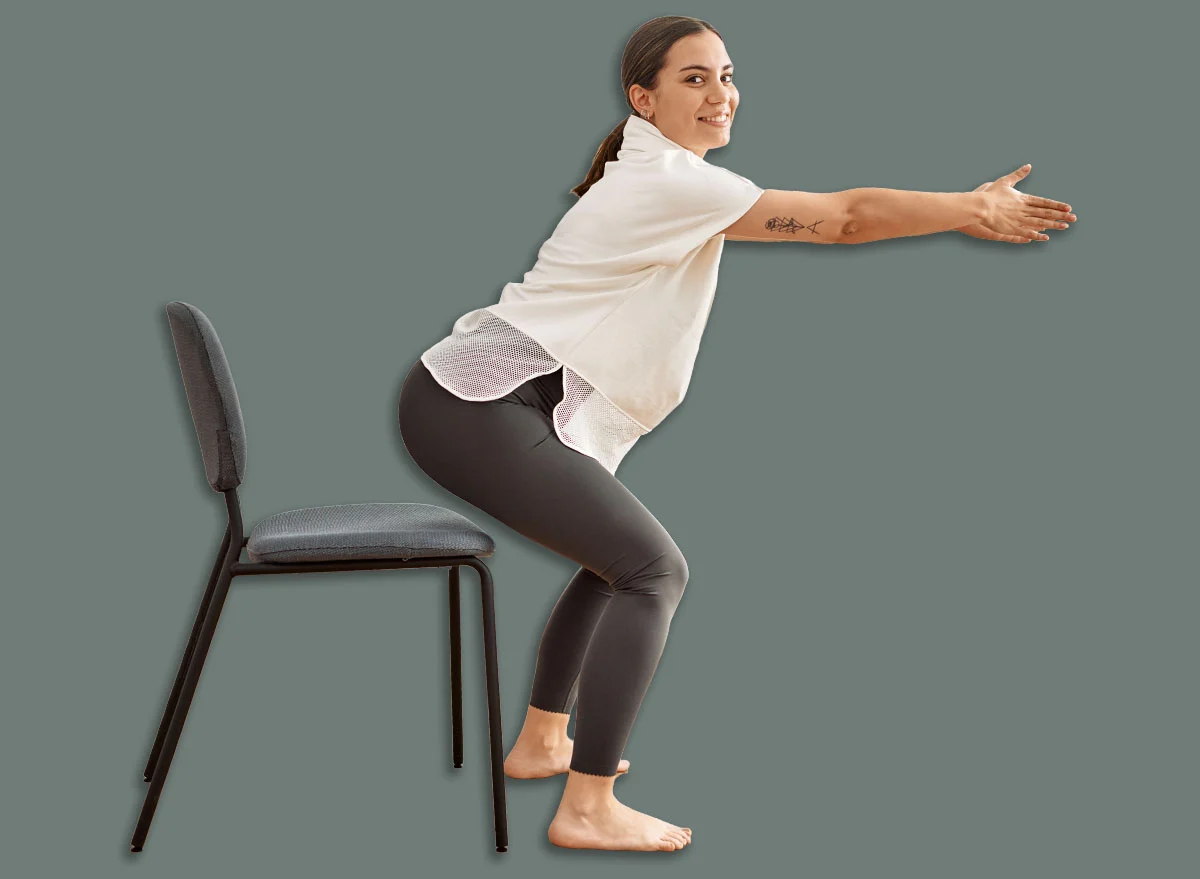
Sit-to-Stands
The foundational move for lower-body strength. By sitting and rising, you replicate the movement pattern of walking and climbing stairs. Focus on using your glutes to drive the motion rather than momentum.
Seated Marches
This exercise targets the hip flexors and deep core muscles. By lifting your knees while seated, you improve the coordination required to maintain a steady gait while walking, ensuring your foot clears the ground effectively.
Seated Heel-to-Toe Raises
Ankle mobility is the unsung hero of balance. These raises improve range of motion in the ankles and strengthen the tibialis anterior, which helps prevent the "foot drop" that often leads to tripping on uneven surfaces.
Seated Knee Extensions
This movement isolates the quadriceps, the muscles responsible for stabilizing the knee joint. Strengthening these is essential for anyone who experiences knee pain or stiffness during long walks.
Conclusion: A Balanced Path Forward
The path to improved walking endurance is not a linear sprint; it is a calculated, consistent progression. By acknowledging the utility of the chair as a tool for progress, those over 60 can build the muscular, cardiovascular, and neurological foundation necessary to keep moving for years to come. Start with what you can tolerate, build consistently, and remember: every repetition is a step toward greater freedom of movement. Whether you are walking in your living room or heading out for a stroll in the park, the strength you build in the chair will be with you every step of the way.