











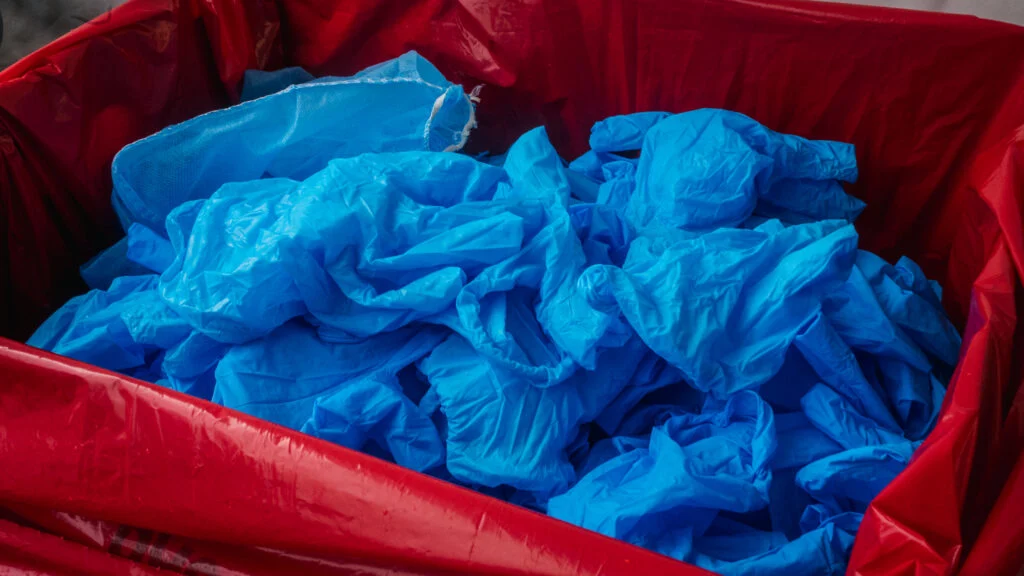
Every autumn, the ritual is identical across thousands of hospitals, clinics, and pharmacies in the United States. A patient sits down for their annual flu shot, a healthcare technician meticulously sanitizes their hands, dons a fresh pair of nitrile medical gloves, administers the injection, and immediately discards the gloves into a waste bin.
This scene, repeated millions of times annually, is often perceived as a hallmark of clinical hygiene. However, experts in infection prevention and clinical sustainability argue that this practice is not only unnecessary but is actively fueling an environmental crisis while imposing an avoidable financial burden on the healthcare system. As the industry faces mounting pressure to address its massive carbon footprint, the humble medical glove has emerged as a symbol of systemic inefficiency.
The Hidden Environmental Toll of "Dry Care"
The United States healthcare industry is a paradoxical entity: while its mission is to preserve life, it is simultaneously a major contributor to the environmental factors that threaten public health. The sector is responsible for approximately 8.5% of the nation’s greenhouse gas emissions and 9% of air pollutants. Climate change, which fuels the record-breaking heatwaves, wildfires, and extreme weather events that have defined recent years, is widely considered the greatest public health threat of the 21st century.
When healthcare workers use gloves for "dry care"—procedures where there is no risk of contact with bodily fluids—they contribute to a complex, carbon-heavy supply chain. A single pair of nitrile gloves requires manufacturing, international shipping, and eventual disposal via energy-intensive incineration or landfilling.
Consider the lifecycle of a pair of gloves. Beyond the immediate waste, global glove production has been plagued by documented labor rights abuses, including forced labor in manufacturing hubs. Once used, the disposal process is equally problematic. If incinerated, a single pair of non-sterile gloves releases between 26g and 68g of carbon dioxide equivalents. When scaled across the millions of vaccinations administered annually, these "small" choices accumulate into a massive, invisible climate debt.
Chronology of a Systemic Habit
The integration of universal glove use in routine vaccination clinics has become an entrenched institutional habit rather than a clinical necessity.
- Pre-Pandemic Standards: Glove use was generally reserved for procedures involving blood or bodily fluids, as per OSHA guidelines.
- The COVID-19 Era: The pandemic shifted global perceptions of Personal Protective Equipment (PPE). While necessary for infectious disease management, the "glove-for-everything" mentality became a default posture for staff, leading to a lingering normalization of glove usage that has persisted long after the acute emergency subsided.
- 2025 Clinical Observations: In recent assessments of large-scale employee vaccination clinics, it was observed that technicians follow a rigid, step-by-step process: hand sanitization, donning gloves, injection, sharps disposal, bandage application, and immediate glove removal. This process, while appearing thorough, ignores the fact that the hands are sanitized before donning gloves, rendering the protective barrier largely redundant for a routine intramuscular injection.
Supporting Data: By the Numbers
The scale of this issue is best illustrated by looking at a hypothetical mid-sized medical facility. If a hospital with 30,000 employees mandates flu vaccinations and uses the standard "glove-per-patient" model, they will utilize 60,000 gloves in a single season.
The Carbon Math
- Total Weight: 60,000 gloves at 6 grams each equates to 360 kilograms of raw waste per facility.
- Greenhouse Gas Emissions: Based on incineration data, this unnecessary practice emits between 780kg and 2,040kg of CO2 equivalents.
- Equivalencies: This emission level is equivalent to a standard passenger vehicle driving between 2,000 and 5,200 miles—the distance of a one-way trip from Seattle to Miami.
The National Impact
If we extend this to the 18 million healthcare workers in the United States, the numbers become staggering:
- Waste: 36 million gloves, totaling 108 metric tons of medical waste.
- Emissions: Between 468 and 1,220 metric tons of CO2 equivalents, equivalent to putting up to 285 additional passenger vehicles on the road every year.
This data accounts only for the gloves. It excludes the environmental costs of the clinic’s physical infrastructure, electricity, the transportation of staff, and the manufacturing of the syringes themselves. Furthermore, with the price of medical-grade gloves rising due to global supply chain volatility and resource scarcity, the financial cost to healthcare systems is increasingly difficult to justify.
Official Stance: What the Regulators Say
Despite the prevalence of glove use, the regulatory consensus does not mandate them for routine vaccinations. The Occupational Safety and Health Administration (OSHA) is clear: gloves are required only when there is a risk of contact with blood or other potentially infectious materials. For a standard vaccination where the skin is intact, gloves are not necessary, provided the technician performs proper hand hygiene.
Infectious disease experts are now actively pushing back against the "glove-for-everything" culture. The "Gloves Off!" campaign, which originated in the United Kingdom, has successfully demonstrated that healthcare workers can maintain high levels of safety while drastically reducing waste. The movement advocates for the elimination of gloves during "dry care" tasks, such as charting, handling food trays, moving equipment, or interacting with patients through intact skin.
Implications for Healthcare Leadership
The current model of waste is not merely an environmental failing; it is a management oversight. Healthcare administrators and Chief Sustainability Officers are now being urged to re-evaluate their procurement and clinical policies.
The Call to Action
- Contractual Reform: Hospitals should explicitly include language in third-party vaccination contracts stating that "no gloves are required unless clinically indicated."
- Policy Assessment: Facilities must audit their current PPE policies to ensure they align with actual clinical risk rather than perceived safety.
- Culture Shift: Education is paramount. Many technicians use gloves out of a genuine, though misplaced, desire to protect themselves and their patients. Reframing the conversation around "appropriate use" rather than "reduction" can help clinical staff feel confident in abandoning unnecessary barriers.
Conclusion: Starting Small for Systemic Change
Healthcare systems are notoriously complex, and the prospect of reforming them can feel overwhelming. However, the path to a sustainable future is paved with these individual adjustments. Every clinic that opts to go "glove-free" for routine injections represents a step toward a more efficient, cost-effective, and environmentally responsible industry.
As we look toward future flu seasons, the question for every healthcare provider and patient is simple: Why are we doing this? If the answer is merely "because we always have," then the time for change has arrived. By questioning the necessity of every supply used, we can move closer to a healthcare system that embodies its core promise: to do no harm—to the patient, and to the planet.
About the Contributors
Cassandra Thiel, Ph.D., is an assistant professor of population health at NYU Langone Health and the CEO of Clinically Sustainable Consulting. Preeti Jaggi, M.D., is a professor of pediatrics at Emory University School of Medicine and a co-founder of the Sustainabil-ID initiative, which advocates for sustainable practices in infection prevention and antimicrobial stewardship.