








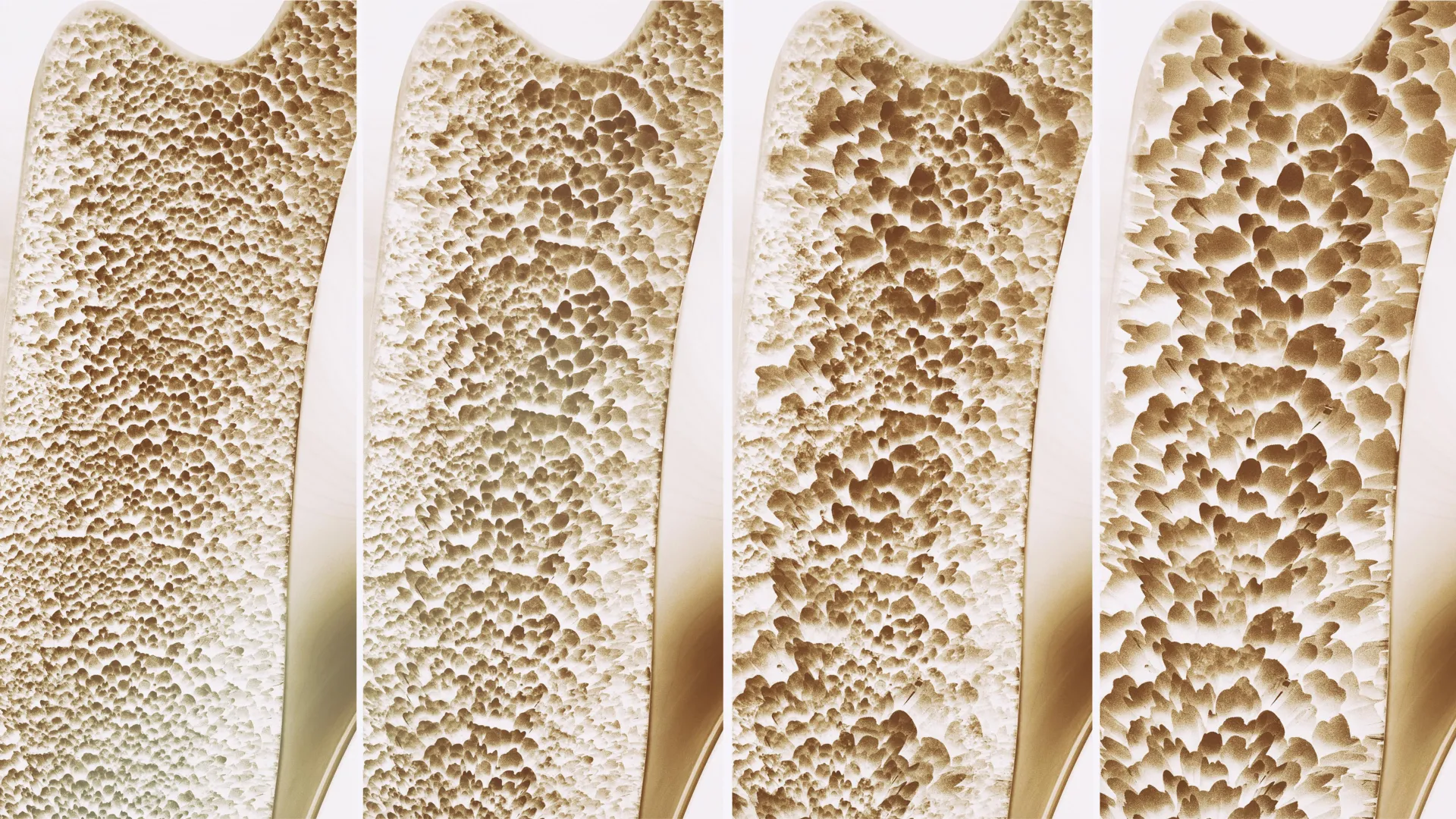
Osteoporosis, a silent and debilitating condition characterized by the progressive weakening of bone tissue, represents one of the most pressing public health challenges of the modern era. As life expectancy rises globally, the prevalence of this disease—which significantly elevates the risk of fractures and loss of independence—continues to climb. In Germany alone, approximately six million individuals, predominantly women, grapple with the physical and psychological toll of osteoporotic bone loss.
Despite the clinical urgency, the current pharmacological landscape for osteoporosis is fraught with limitations. Many existing therapies are hampered by side effects, diminishing efficacy over prolonged use, or an inability to address the complex underlying biological mechanisms of bone remodeling. However, a team of scientists at Leipzig University has recently unveiled a promising biological target: the GPR133 receptor. This discovery, which bridges the gap between basic cellular biology and potential therapeutic intervention, offers a beacon of hope for millions.
The Core Discovery: GPR133 as a Biological Guardian
The breakthrough centers on GPR133, a member of the adhesion G protein-coupled receptor (aGPCR) family. These receptors are unique entities that reside on the surface of cells, acting as sophisticated sensory interfaces that translate external signals into internal biological responses. While the broader aGPCR family has long remained a "dark" area of biology, under-researched due to their complexity, the Leipzig team’s findings suggest that GPR133 is a pivotal regulator of skeletal integrity.
By examining the receptor’s function, researchers discovered that when GPR133 is genetically impaired, mice exhibit early-onset bone density loss—a phenotype strikingly reminiscent of human osteoporosis. Conversely, when the receptor is properly stimulated, the structural integrity of the bone is enhanced. This suggests that GPR133 acts as a "molecular switch" that, when toggled correctly, can halt or even reverse the destructive cycles of bone degradation.
Chronology of the Research
The identification of GPR133 as a therapeutic target is the result of over a decade of concentrated, multidisciplinary effort at Leipzig University.
- Foundation (2014–2020): Under the umbrella of Collaborative Research Center 1423, titled Structural Dynamics of GPCR Activation and Signaling, the university established itself as a global epicenter for the study of adhesion receptors. During this period, the team focused on mapping the structural shifts and signaling pathways of various GPCRs.
- The Computational Breakthrough (2022–2023): Utilizing high-throughput, computer-assisted screening, researchers identified a specific substance, AP503, capable of acting as a pharmacological agonist (stimulator) for GPR133. This allowed the team to bypass the difficulties of naturally activating such a complex receptor.
- Validation (2024): The team initiated in vivo studies, testing AP503 on both healthy and osteoporotic mouse models. The results were conclusive: the substance successfully increased bone strength across the board.
- Integration (2025): Building on a prior study that identified AP503’s role in skeletal muscle strengthening, the researchers synthesized these findings to propose a dual-purpose therapeutic strategy, marking the current phase of academic publication and conceptual development.
The Biological Mechanism: Balancing the Scales
To understand why GPR133 is so revolutionary, one must look at the bone remodeling cycle. Healthy skeletal tissue is in a constant state of flux, governed by two primary cell types: osteoblasts (bone-forming cells) and osteoclasts (bone-resorbing cells).
In a healthy individual, these two processes are perfectly synchronized. However, in osteoporotic patients—particularly those undergoing post-menopausal hormone shifts—this balance is disrupted, with osteoclasts removing bone faster than osteoblasts can replace it.
The research conducted at the Rudolf Schönheimer Institute of Biochemistry demonstrates that GPR133 activation acts as a regulatory checkpoint. When AP503 binds to the GPR133 receptor, it triggers a signaling cascade that simultaneously stimulates osteoblast activity while suppressing osteoclast-driven degradation. By tipping the scales in favor of formation, the body is effectively encouraged to build denser, more durable bone tissue, providing a dual-action mechanism that is highly sought after in modern endocrinology.
Official Perspectives: Expert Insights
Professor Ines Liebscher, the lead investigator of the study, emphasizes the transformative potential of the finding. "If this receptor is impaired by genetic changes, mice show signs of loss of bone density at an early age—similar to osteoporosis in humans," she explains. "Using the substance AP503, we were able to significantly increase bone strength in both healthy and osteoporotic mice."
Dr. Juliane Lehmann, the study’s lead author, underscores the broader implications for the aging population. "The newly demonstrated parallel strengthening of bone once again highlights the great potential this receptor holds for medical applications in an aging population," Dr. Lehmann states. She points out that the dual benefit—targeting both muscle and bone—addresses the "frailty syndrome" often seen in the elderly, where muscle atrophy and bone fractures occur concurrently, creating a dangerous cycle of immobility.
Implications for Future Medicine
The potential of the GPR133-AP503 axis extends far beyond standard osteoporosis treatment.
1. Addressing the Frailty Syndrome
Older adults rarely suffer from bone loss in isolation. Sarcopenia (the loss of muscle mass) often accompanies osteoporosis, leading to falls and subsequent fractures. Because AP503 has shown promise in strengthening skeletal muscle in earlier trials, a GPR133-targeted therapy could theoretically treat both conditions simultaneously, improving mobility and patient safety.
2. A New Paradigm for Menopause
Menopausal bone loss is driven by estrogen deficiency. Current hormone replacement therapies carry significant risks, such as cardiovascular issues or increased cancer susceptibility. If a targeted GPR133 treatment can bypass systemic hormonal pathways to focus specifically on bone-cell signaling, it could offer a safer, more localized alternative for millions of women entering menopause.
3. Beyond Bone and Muscle
The research team is now actively exploring whether GPR133 plays a role in other physiological systems. Because aGPCRs are involved in everything from immune response to nervous system maintenance, the mapping of this receptor could have cascading benefits for other degenerative diseases.
Structural Dynamics: The Importance of Leipzig’s Research Center
The success of this study is not accidental; it is the product of the long-term institutional focus of the Collaborative Research Center 1423. By prioritizing the "structural dynamics" of GPCRs, the center has created a research pipeline that allows for the rapid transition from basic molecular structure to clinical application.
Leipzig University’s commitment to understanding how these receptors change shape and transmit signals has positioned them at the forefront of pharmaceutical innovation. This foundational work is essential: one cannot build an effective drug without knowing exactly how the receptor "locks" with a molecule. As the team moves into the next phase of their projects, they are already looking at how to refine the AP503 compound for potential clinical trials, as well as investigating the wider systemic functions of GPR133 throughout the human body.
Conclusion: A Future of Stronger Foundations
The identification of GPR133 as a major player in bone health provides a clear, actionable target for the next generation of osteoporosis medication. By moving away from general systemic treatments and toward precise, receptor-targeted therapies, researchers are creating a pathway to treatments that are not only more effective but also safer for long-term use.
As the global population continues to age, the need for therapies that preserve mobility, bone density, and muscle strength is paramount. The work being done at Leipzig University represents a significant milestone in this endeavor. While clinical trials in humans are the essential next step, the evidence gathered thus far provides a compelling argument: we are closer than ever to unlocking a more effective way to protect the human skeleton from the ravages of time. The road ahead involves rigorous testing and further investigation into the receptor’s secondary functions, but for the millions currently living with the shadow of osteoporosis, the findings at Leipzig offer a tangible promise of a more stable, mobile, and healthy future.