
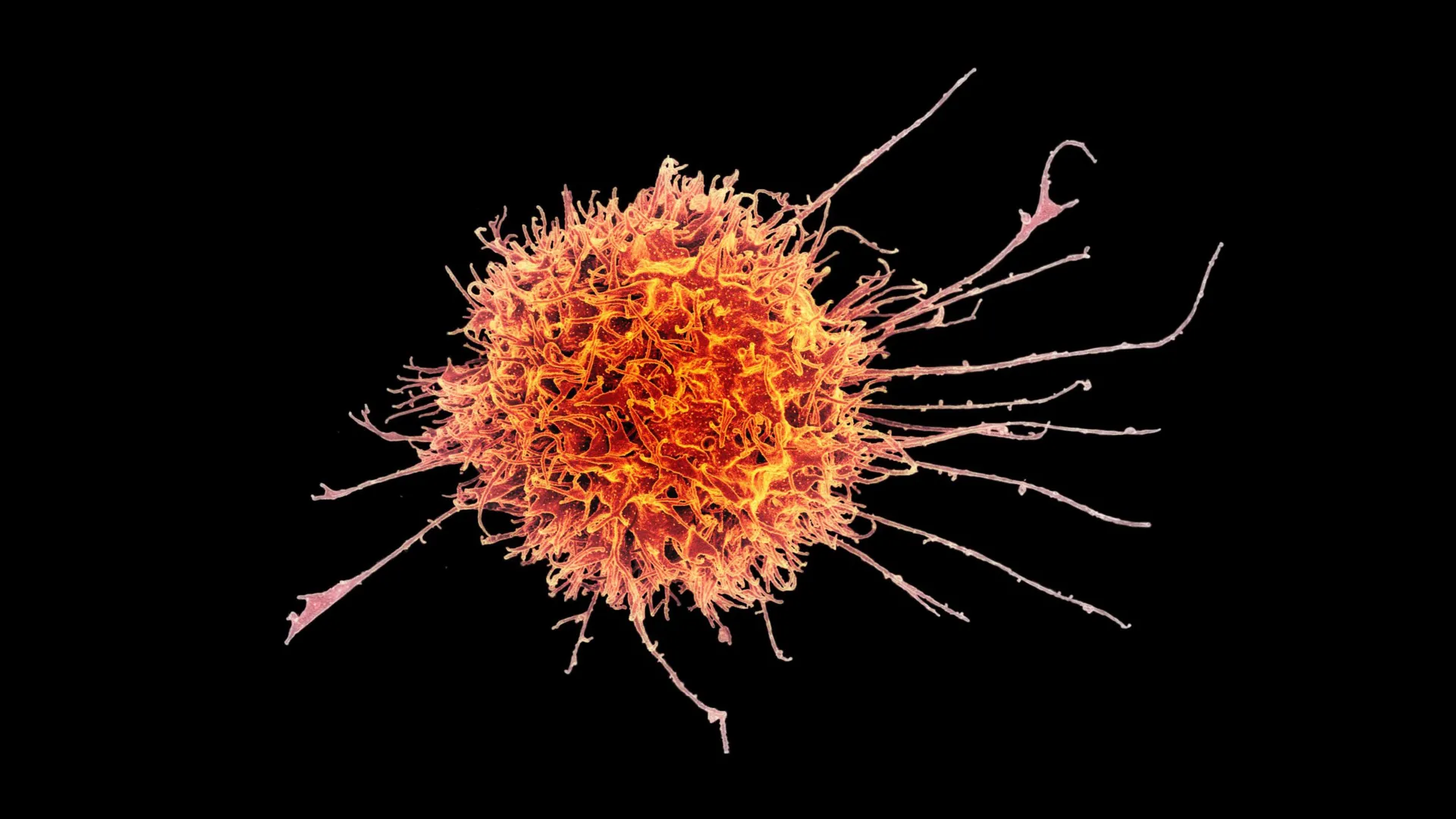
While immunotherapy has fundamentally altered the landscape of cancer treatment—particularly for liquid malignancies like leukemia and lymphoma—solid tumors have remained an elusive fortress. These tumors, which constitute the vast majority of cancer cases, possess a hostile microenvironment that physically repels immune cells and actively suppresses their function. Now, a breakthrough study from Stanford Medicine, published in Science Translational Medicine, offers a promising new strategy: engineering "tissue-resident" natural killer (NK) cells capable of infiltrating and dismantling solid tumors.
This innovation represents a potential paradigm shift in cancer care, moving away from the cumbersome, patient-specific manufacturing required for current cell therapies toward an accessible, "off-the-shelf" model.
The Challenge of the Solid Tumor Fortress
For decades, the primary focus of cancer immunology was the bloodstream. T cells, B cells, and natural killer cells circulate through the body like a patrol force, scanning for pathogens. However, solid tumors are not merely collections of malignant cells; they are complex ecosystems. They develop a physical stroma that acts as a barrier, and they secrete chemical signals—such as transforming growth factor-beta (TGF-b)—that effectively put the immune system to sleep or turn immune cells against the body’s own defense mechanisms.
"For a long time, the study of immunology and disease in humans was concentrated on the blood immune cells," explains Dr. John Sunwoo, the Edward C. and Amy H. Sewall Professor in the School of Medicine and the study’s senior author. "With the advancement of tools and bioinformatics, we are now starting to look more at what’s going on in tissue. For most immune cells, the tissue is where the action is."
A Chronology of Discovery: From Blood to Tissue
The journey to this discovery began by rethinking the identity of natural killer cells. First identified in the 1970s, NK cells are distinct from T and B cells because they do not require a prior "education" or encounter with a specific antigen to recognize a threat. They are innate rapid responders.
Historically, scientists observed that some NK cells settle permanently in tissues like the skin, liver, and mucous membranes. However, the scientific community had been divided on their utility. Some studies suggested these tissue-resident NK (trNK) cells were passive or even immunosuppressive—a role that is actually vital during pregnancy, where they protect the fetus from the maternal immune system. Other studies suggested they were potent killers.
The Stanford team, led by Sunwoo alongside co-lead authors Dr. Nina Horowitz, Dr. Imran Mohammad, and Dr. June Ho Shin, sought to resolve this contradiction. Their methodology followed a precise experimental trajectory:
- Isolation: They isolated circulating NK cells from healthy human blood donors.
- Signal Manipulation: They subjected these cells to various combinations of cellular signals to mimic the tissue environment.
- The "Goldilocks" Discovery: The researchers identified TGF-b as the critical variable. They discovered that the timing and concentration of TGF-b were paramount. Too little, and the cells remained circulating; too much, and they became dysfunctional.
- The Breakthrough: The team found that by briefly exposing circulating NK cells to human epithelial tumor cells, they could induce the exact, short-lived burst of TGF-b and physical contact required to transform the cells into aggressive, tissue-resident killers.
Supporting Data: Why These Cells Succeed
The researchers meticulously analyzed the difference between the "good" (tumor-killing) and "bad" (immunosuppressive) trNK cells. Both types expressed surface markers CD49a and CD103, which are hallmarks of tissue residency. However, the effective killer cells expressed a unique additional marker: CD39.
Furthermore, these enhanced cells were molecularly armed for combat. They contained higher concentrations of perforin—the protein responsible for punching lethal holes in target cell membranes—and granzyme A, the toxic enzyme injected into those holes to trigger cell death.
When tested against tumor organoids in the lab, these modified cells demonstrated a remarkable ability to infiltrate the dense tissue structures. In mouse models, the therapeutic impact was undeniable. The modified NK cells significantly slowed the growth of melanoma and head and neck squamous cell carcinoma. The most potent effect occurred when these cells were paired with cetuximab, an existing monoclonal antibody that acts as a beacon, marking cancer cells for the NK cells to find and destroy.
"Even at day 30, when the other mice were sick, the mice that received the combination seemed very healthy," Dr. Sunwoo noted, emphasizing the efficacy of the dual-treatment approach.
Official Responses and Clinical Implications
The implications for human medicine are significant. Currently, CAR-T cell therapies require extracting a patient’s own immune cells, shipping them to a laboratory to be genetically engineered, and then infusing them back into the patient—a process that is expensive, time-consuming, and prone to manufacturing failures.
Because NK cells do not typically trigger an immune reaction (graft-versus-host disease) when transferred between individuals, the Stanford approach could bypass these limitations.
"It would be almost an off-the-shelf drug," Sunwoo said. "It could make cell therapy much more accessible to a wider variety of patients."
The researchers have calculated that NK cells harvested from a single donor could theoretically yield roughly 20 treatment doses within two weeks. These doses could then be cryopreserved (frozen), creating a ready-to-use inventory for hospitals. This transition from "bespoke" therapy to "off-the-shelf" accessibility is viewed as the "holy grail" of modern immunotherapy.
Looking Ahead: The Path to the Clinic
The team is not stopping at the laboratory bench. Dr. Sunwoo and his colleagues are currently preparing for a Phase I clinical trial aimed at patients with advanced squamous cell carcinoma. Pending FDA approval, the study could commence by the end of the year.
The patent-pending process for producing and expanding these "cytotoxic tissue-resident natural killer cells" is already being refined. While the researchers remain cautious—noting that mouse models, while useful, are not identical to human physiology—the preliminary success is a beacon of hope for patients with aggressive, treatment-resistant solid tumors.
This work, which included contributions from researchers at Ohio State University and Washington University School of Medicine, was supported by the National Institutes of Health, the Tai Tsun Wu Research Fund for Natural Killer Cell Immunotherapy, and the Stanford Bio-X Fellowship.
As the field of immunotherapy continues to evolve, the shift toward engineering cells that can thrive within the complex geography of solid tumors represents a critical frontier. By turning the tumor’s own signaling language against it, the Stanford team has opened a door to a new generation of cancer treatments that are as potent as they are scalable.