












The integration of generative artificial intelligence (AI) into the medical landscape stands as one of the most transformative, yet contentious, developments in modern healthcare. While traditional AI has long assisted in diagnostic imaging and predictive analytics, the emergence of Large Language Models (LLMs) and generative tools capable of creating original text, images, and clinical insights has forced the U.S. Food and Drug Administration (FDA) to re-evaluate its regulatory framework. As these technologies proliferate, the agency is embarking on a pivotal mission to establish guidelines that ensure patient safety without stifling the rapid pace of medtech innovation.
The Current Landscape: A Regulatory Vacuum
Despite the hype surrounding generative AI, it is critical to note that as of early 2026, there are no generative AI-enabled medical devices on the market that have received full FDA clearance or approval. While the agency has authorized more than 1,500 AI-enabled devices to date, these have largely been confined to "locked" algorithms—tools that perform specific tasks with predictable, consistent outputs.
Generative AI, by contrast, is "probabilistic." Its tendency to produce varied outputs based on complex inputs makes traditional validation processes difficult. Furthermore, the industry is grappling with the phenomenon of "hallucinations"—where a model provides a confident but factually incorrect medical recommendation—and the long-term challenge of "model drift," where performance quality degrades as the underlying data environment changes.
Chronology of Regulatory Engagement
The FDA’s journey toward generative AI oversight has been marked by a transition from observation to active policy development:
- Pre-2024: The FDA focused primarily on Software as a Medical Device (SaMD), creating frameworks for adaptive AI that required strict re-validation protocols for any algorithm updates.
- August 2025: The FDA’s Center for Devices and Radiological Health (CDRH) published a landmark discussion paper, formally soliciting public and industry feedback. This marked the agency’s transition from theoretical discussions to concrete policy drafting.
- Late 2025: The agency began integrating generative AI into its "Technology-Enabled Meaningful Patient Outcomes" (TEMPO) pilot program, which allows developers to gather real-world performance data in a controlled environment, exempting them from immediate premarket authorization requirements.
- 2026 Forward: The FDA has signaled that it will prioritize "competency-based assessments," a shift in strategy intended to accommodate the unpredictable nature of generative outputs.
Supporting Data and Emerging Technologies
Several high-profile projects currently occupy the "breakthrough" designation status, signaling that the FDA is actively engaging with the industry to understand these tools’ capabilities.
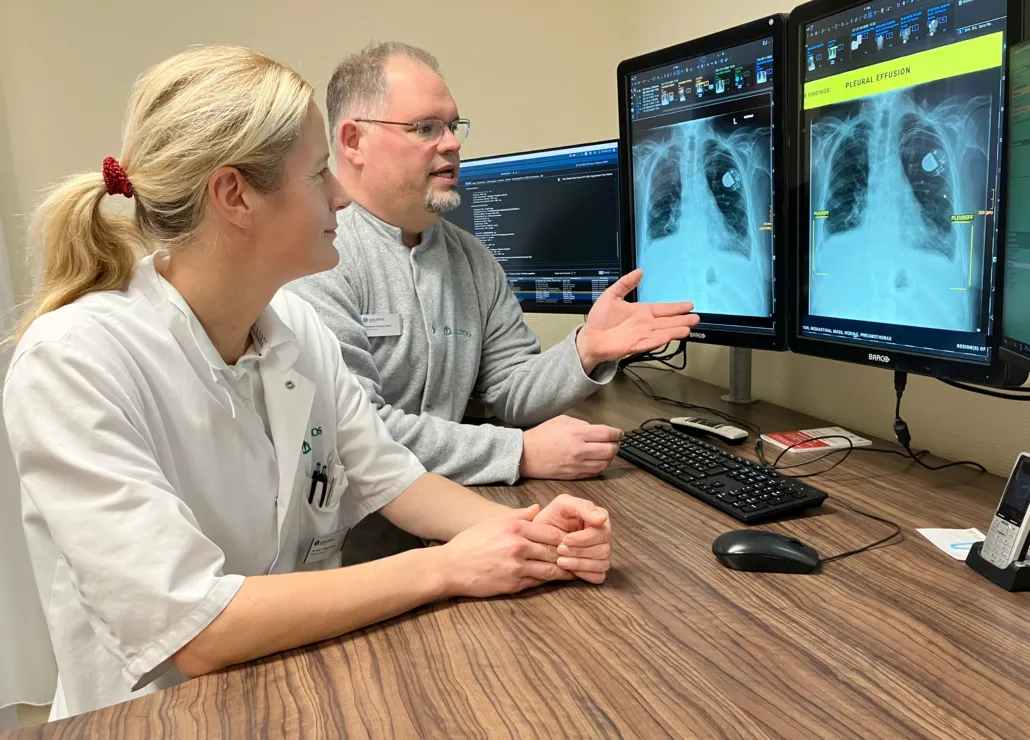
Companies like Aidoc and Radiology Partners are developing generative AI features capable of interpreting chest X-rays and drafting preliminary radiology reports. Similarly, Modella AI has gained attention for its tool designed to assist pathologists in analyzing complex tissue samples.

These tools remain in the "breakthrough" phase, meaning they are undergoing intense scrutiny but have not yet received a green light for commercial release. Conversely, the market is seeing a surge in "gray-area" tools. For example, in 2024, Dexcom introduced a generative AI feature to its over-the-counter glucose monitoring system that provides personalized wellness recommendations. Because this feature was classified as wellness support rather than a diagnostic medical device, it bypassed the formal premarket FDA submission process. This has created a bifurcated market: one side strictly regulated and slow-moving, and the other rapidly expanding outside of FDA jurisdiction.
Official Perspectives: The "Competency-Based" Approach
The FDA’s discussion paper suggests a departure from traditional "under-the-hood" code inspection. Because generative models are often too complex to audit in their entirety, the agency is exploring a "competency-based assessment"—an approach akin to how medical boards evaluate human physicians through exams and supervised practice.
"We are moving past a place where you can really see completely under the hood," explains Suzanne Levy Friedman, a partner at Honigman. The agency is also weighing the adoption of "Foundation Model Device Master Files." This would allow developers of underlying AI models (the "engines" powering a device) to submit proprietary data to the FDA in a confidential capacity, similar to how pharmaceutical companies handle the chemical composition of drug delivery systems.

The Balancing Act
The regulatory challenge is compounded by political pressure. The current administration has advocated for faster AI adoption, urging agencies to remove bureaucratic bottlenecks. However, legal experts like Kayla Cristales of Haynes Boone suggest that while the rhetoric favors deregulation, the FDA remains fundamentally committed to safety. "They’re really starting to go through the motions more than just talk," Cristales notes. The consensus among attorneys is that the FDA will likely pivot toward a model of "trust, but verify," relying heavily on manufacturers to report performance metrics and postmarket data in exchange for faster, more flexible premarket pathways.
Implications for the Future of Healthcare
The implications of these regulatory shifts are profound for both the medtech industry and the public.
For Medtech Developers
The primary concern for manufacturers is the risk of being a "guinea pig." Many companies are intentionally keeping their AI tools in the administrative space—streamlining paperwork or scheduling—to avoid triggering FDA oversight. However, for those seeking to build diagnostic tools, the lack of definitive guidance creates a "patchwork" of uncertainty. As Sharif Vakili, CEO of UpDoc, points out, regulatory leadership is the only way to prevent a chaotic environment where bad actors offer dangerous, unverified AI tools to patients.

For Patients and Clinicians
The ethical implications of generative AI in medicine are significant. NYU’s Kellie Owens and other ethicists argue that the current reliance on "vendor responsibility" is insufficient. There is a growing call for oversight that extends to commercial chatbots and AI health companions—tools that currently operate with little to no medical oversight.
As the FDA’s fiscal year 2026 agenda moves forward, we can expect to see specific guidance regarding:
- Clinical Evidence: How to validate generative AI that "learns" and changes over time.
- Postmarket Monitoring: Establishing a "vigilance" framework where AI performance is continuously audited in the field.
- Mental Health AI: With nearly 25% of large language model users reporting that they utilize these tools for mental health support, the FDA is under mounting pressure to define when a chatbot crosses the line into a regulated medical device.
Conclusion: A New Era of Oversight
The FDA’s foray into generative AI represents a critical juncture in the evolution of digital health. By moving away from rigid, static requirements toward dynamic, competency-based benchmarks, the agency is attempting to bridge the gap between innovation and safety.
For the medical device industry, the message is clear: the era of the "wild west" in medical AI is coming to an end. Whether the FDA’s new guidelines will provide the necessary clarity to spur a new wave of innovation or result in a period of regulatory caution remains to be seen. What is certain, however, is that the future of medicine will be defined by how effectively regulators can govern a technology that is, by its very nature, constantly evolving.