









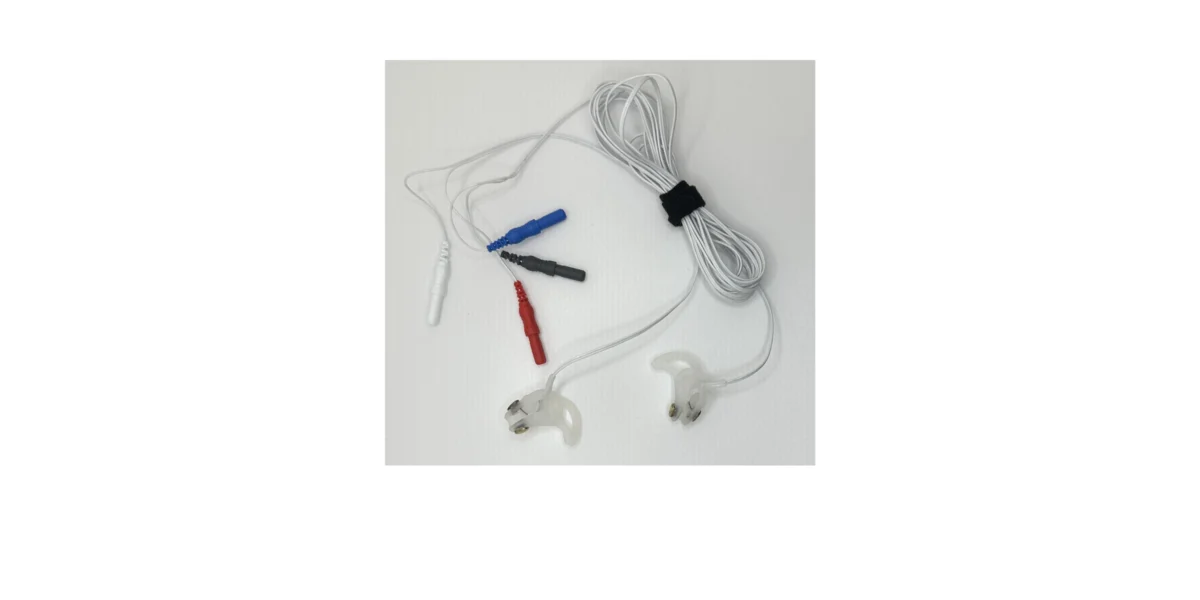
In a significant development for sleep medicine and neuro-diagnostic research, Zircadia has officially unveiled its new 4-lead in-ear ExG electrode system. Designed to bridge the gap between high-fidelity data collection and patient-centric comfort, this technology represents a potential departure from traditional, cumbersome scalp-based electrode arrays. Currently designated for research use, the system is engineered to integrate seamlessly with existing polysomnography (PSG) and home sleep testing (HST) infrastructure. With an ambitious roadmap, Zircadia is now working toward securing US Food and Drug Administration (FDA) clearance for clinical deployment by early 2027.
The Evolution of Sleep Monitoring: Breaking the "Scalp Barrier"
For decades, the standard for sleep staging has relied on scalp-based EEG electrodes. While clinically effective, these systems are notorious for their lack of comfort—often involving skin abrasion, conductive pastes, and complex head-mounting arrays that can disrupt the very sleep they intend to measure.
Zircadia’s new system addresses these historical limitations by shifting the point of signal acquisition to the ear canal. By leveraging the proximity of the ear to the brain’s temporal lobes and the brainstem, these in-ear electrodes can capture high-quality neurophysiological signals with a form factor that feels essentially identical to wearing standard consumer earbuds.
Key Technical Specifications and Versatility
The core of Zircadia’s innovation lies in its adaptability. The gold-plated electrodes are designed to offer superior signal conductivity while maintaining biocompatibility. Unlike traditional electrodes that are strictly "wet" (requiring conductive gel) or "dry," the Zircadia system offers the flexibility of both modalities depending on the researcher’s signal-to-noise requirements.
Multi-Modal Diagnostic Capabilities
The system is not merely an EEG tool; it is a comprehensive diagnostic platform. Through its 4-lead configuration, it provides support for:
- Electroencephalogram (EEG): Facilitating precise sleep staging through brain wave analysis.
- Electromyogram (EMG): Monitoring muscle activity, which is crucial for identifying REM sleep disorders and sleep-disordered breathing.
- Electrooculogram (EOG): Tracking rapid eye movements, an essential metric for diagnosing REM-related conditions.
- Electrocardiogram (ECG): With specific configuration, the system can monitor heart rate variability, offering insights into autonomic nervous system function during sleep.
By consolidating these functions into a single, compact in-ear device, Zircadia enables clinicians and researchers to collect a robust data set without the "wire clutter" that typically characterizes a standard PSG setup.
Chronology of Development: From Concept to Research Utility
The development of the Zircadia system follows a multi-year trajectory focused on miniaturization and signal integrity.
- Early R&D (2023-2024): Zircadia began internal prototyping, focusing on ergonomic studies to ensure that the earbuds could be worn throughout an eight-hour sleep cycle without inducing discomfort or triggering the ear’s natural rejection response.
- Validation Phase (2025): The company conducted preliminary signal-fidelity studies, comparing in-ear data against gold-standard scalp EEG to ensure that the sleep staging metrics remained statistically consistent.
- Current Status (2026): With the research-use-only launch, Zircadia is opening the door for academic institutions and private research facilities to integrate the technology into clinical trials, further validating the system’s utility across diverse patient populations.
- The Path to 2027: The company is currently refining its manufacturing processes and compiling the regulatory dossier required for FDA 510(k) clearance, aiming for a market entry for clinical sleep diagnostics by the first quarter of 2027.
Implications for Clinical Practice and Home Sleep Testing
The implications of this technology for the future of sleep medicine are profound, particularly regarding the decentralization of care.
The Rise of the "Patient-Friendly" HST
Home Sleep Testing (HST) has been a growth sector, but its efficacy is often limited by the quality of data collected in an unsupervised environment. Many patients find it difficult to properly apply electrodes to their scalps, leading to poor signal quality and, consequently, high "re-test" rates. Zircadia’s earbud-style interface simplifies the application process to a level of ease that matches consumer electronics. If a patient can put in earbuds to listen to music, they can effectively set up their own diagnostic equipment.
Reducing Clinical Burden
In the laboratory setting, the time required for a sleep technician to "hook up" a patient—which can take upwards of 45 minutes—is a significant bottleneck. Zircadia’s system offers the potential to slash setup times, allowing clinics to increase patient throughput without compromising the quality of the sleep study.
Official Stance and Market Outlook
While Zircadia has maintained a disciplined focus on its research-use-only launch, the broader implications for the diagnostic equipment industry are clear. By ensuring broad compatibility with existing OEM (Original Equipment Manufacturer) hardware, Zircadia is not asking sleep labs to discard their current investments in PSG systems. Instead, they are positioning the in-ear electrodes as an "add-on" that enhances the capabilities of existing infrastructure.
"The goal," as noted by industry analysts, "is to make sleep medicine less of an event and more of a routine." By lowering the barrier to entry for high-quality diagnostic data, Zircadia aims to increase the number of individuals who are diagnosed and treated for obstructive sleep apnea (OSA) and other circadian rhythm disorders.
Addressing the Challenges Ahead
Despite the optimism surrounding this technology, the road to 2027 is not without hurdles. The FDA maintains rigorous standards for medical devices, particularly those that collect neurological data.
- Signal Artifacts: The company must demonstrate that the system is resilient against movement artifacts—a common issue in any sensor-based device, but especially one situated in the ear canal where jaw movement during sleep can cause signal noise.
- Long-Term Comfort: While earbuds are generally comfortable, wearing them for 8-10 hours consecutively poses unique dermatological challenges. Zircadia is currently finalizing biocompatibility testing to ensure long-term wearability for all skin types.
- Data Interpretation: Clinicians are trained to interpret scalp-based EEG. As part of their 2027 rollout, Zircadia will likely need to provide educational support to ensure that sleep technologists understand the nuances of in-ear signal interpretation.
Conclusion: A New Era of Sleep Monitoring
Zircadia’s 4-lead in-ear system serves as a prime example of how consumer-facing design philosophies are successfully infiltrating the medical device sector. By prioritizing user comfort and ease of use, the company is addressing the "compliance gap" that has long plagued sleep studies.
If the company successfully navigates the regulatory landscape over the next 18 months, the early 2027 launch could fundamentally change the economics and logistics of sleep medicine. As the industry moves toward more patient-centered, data-rich diagnostic models, tools like Zircadia’s in-ear electrodes will likely become the standard-bearer for how we measure the most mysterious and essential third of our lives: sleep.
Researchers interested in adopting the platform for current studies are encouraged to reach out to Zircadia to evaluate compatibility with their existing OEM systems. As the company continues to collect data and refine its algorithms, the promise of a more comfortable, more accessible, and more accurate future for sleep diagnostics draws ever closer.