







As the 25th anniversary of the September 11, 2001, terrorist attacks approaches, the collective memory of a nation remains tethered to the images that defined that day. While the world watched the plumes of smoke rising from the Twin Towers in New York, a separate, equally harrowing drama was unfolding in the heart of the American defense establishment. Just five minutes away from the Arlington studios of WETA—the longtime home of PBS NewsHour—the Pentagon had been struck.
For three men—cameramen Jeff Rathner and Ed Lee, and then-intern Josh Gershenson—the day was defined by a frantic, adrenaline-fueled sprint toward the inferno. Their footage, captured in the immediate, chaotic aftermath of the impact, remains a vital part of the historical record. Two and a half decades later, they recount the moments that changed their lives and the trajectory of American history.
The Chronology of Chaos: September 11, 2001
The Initial Strike and the Immediate Response
The morning of September 11 began with the standard rhythm of a newsroom. However, within an hour of the first plane striking the World Trade Center, the atmosphere at WETA shifted from routine to existential urgency.
Jeff Rathner, a WETA cameraman, was on the road when reports of smoke at the Pentagon began filtering over the radio. He was near the Washington Boulevard exit when the reality of the situation became clear. “I was right at the exit for Washington Boulevard,” Rathner recalls. “About 10 seconds later, I came through. There was smoke coming from the Pentagon.”
Simultaneously, at the NewsHour assignment desk, the call went out for support. Josh Gershenson, then a 24-year-old desk assistant, was tasked with joining veteran cameraman Ed Lee to document the scene. Gershenson describes his role as that of a "24-year-old doofus" tagging along with a seasoned professional into an environment that would quickly descend into total carnage.
Entering the "Wounded Animal"
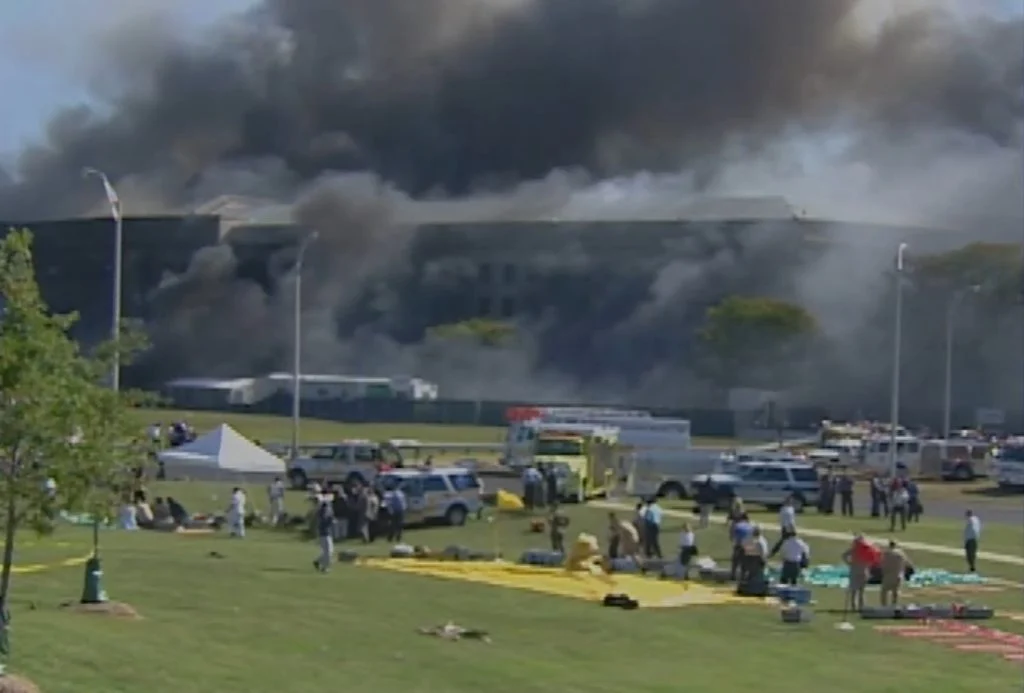
As Lee and Gershenson sped toward the Pentagon, they found themselves tailing fire engines, driving toward a scene that defied conventional description. Lee recalls the visual impact of the building upon arrival: “We jumped in the van. We followed the fire engines in to the Pentagon. And just right in front of us is this burning—and it was like a big animal that had been wounded.”
Rathner, arriving just nine minutes after the impact, found himself in a surreal landscape. The absence of a visible plane—save for scattered debris—created a vacuum of information. “There was no evidence of a plane anywhere,” Rathner notes. “I had figured it had gone into the inner courtyard, but I didn’t have time really to think about that because I just started to grab my gear and shooting.”
The Line in the Sand
As the crew moved closer, they encountered security personnel attempting to establish a perimeter. The authorities, fearing a secondary strike or a collapsing structure, ordered the press back. However, the journalists—driven by the singular imperative of documentation—pushed forward.
Gershenson remembers the confrontation: “All these other people are going the other way, and we got to a certain point where the security personnel said: ‘You can’t go any further.’ And Ed said: ‘No, we’re going farther. We’re here to cover this story. You can’t stop us.’”
The perimeter was not merely an act of crowd control; it was a tactical calculation based on the expected blast radius of a potential second strike. This tension defined the work of the WETA crew: they were operating in a space where the next few minutes could mean the difference between witnessing history and becoming part of the casualty count.
Supporting Data: The Human and Material Cost
Evidence of the Impact
Amidst the billowing black smoke and the roar of the fire, the crew documented the physical remnants of the disaster. Ed Lee noted the presence of debris—nuts, bolts, and fragments of metal—that clearly belonged to a commercial aircraft. These small, mundane objects provided the first concrete evidence of the scale of the mechanical destruction.
The Sight of High-Level Response
The scene was not just one of destruction, but of immediate, desperate efforts to mitigate the loss of life. Rathner recalls a moment of surreal clarity amidst the chaos: seeing individuals, including a man who appeared to be Secretary of Defense Donald Rumsfeld, helping to pull bodies from the wreckage. It was a visual anchor that underscored the gravity of the attack; the highest levels of the U.S. government were not merely observers, but active participants in the rescue efforts on the ground.
The "Oven" Effect
The fire, fueled by jet fuel, created an atmosphere of oppressive heat. Gershenson describes the sensory experience: “The sky was blacked out with a black, thick cloud, and that fire just—it was like an oven. It just never stopped burning.” As the flames burst forth, the structural integrity of the building began to fail, culminating in the collapse of a wall—a moment that remains etched in the memories of those who filmed it.
Official Responses and the Fear of the "Second Wave"
Throughout the morning, the fear of additional incoming threats dominated the Pentagon’s tactical response. The scent of jet fuel, drifting toward the Capitol, created a pervasive sense of dread.
The most terrifying moment for the crew occurred when a warning rippled through the scene: “There’s another plane coming in. Everybody, run.” This alert, captured on tape, reflects the widespread panic that gripped Washington that morning. Ed Lee reflects on that moment, noting that the warning likely referred to what would eventually become the flight that crashed in Shanksville, Pennsylvania.
For the journalists, this was the ultimate test of their resolve. They were no longer just observers; they were targets. The requirement to document the event while simultaneously fearing for their lives created a psychological duality that few outside the profession can fully comprehend.
Implications: The End of Innocence
The Burden of Memory
Twenty-five years later, the footage captured by the WETA team stands as a testament to the reality of the attacks. For Rathner, the experience remains a constant companion: “It’s something that will stay with me the rest of my life. I mean, I can still remember just about every detail.”
The duty to document, however, came at a personal cost. Gershenson, who spent the day with a clipboard, tracking their movements and ensuring they captured the most vital angles, felt a profound obligation to the future. “I felt an obligation to preserve the moment,” he says. “We were really proud that we had the best, closest footage that anyone else would ever have.”
A Nation Forever Changed
The attack on the Pentagon was not merely an attack on a building; it was an assault on the perception of American safety. Rathner, reflecting on the moment the adrenaline briefly faded, articulated the sentiment shared by millions that day: “I thought about what this really meant, being attacked on our own soil. It never happened before, and things are never going to be the same again.”
The WETA crew’s experience serves as a microcosm of the 9/11 experience: the transition from normalcy to absolute crisis, the struggle to make sense of the unthinkable, and the lingering, indelible mark left by the day the world changed. As we look back from the vantage point of a quarter-century, their footage remains not just a historical asset, but a raw, human connection to a day that redefined the American experience.
Notice: This report utilizes transcribed testimony from the WETA news team. While transcripts are generated through both machine and human processes, they serve as the primary oral history of the events described herein.