









As we cross the threshold into our sixties, the conversation around fitness often shifts from aesthetics to autonomy. Maintaining upper-body strength is no longer a vanity project; it is a critical pillar of independent living. Whether you are pushing yourself out of a deep armchair, bracing against a counter to regain your balance, or simply carrying heavy groceries, the muscles in your chest, shoulders, and arms are your primary tools for navigating the physical world.
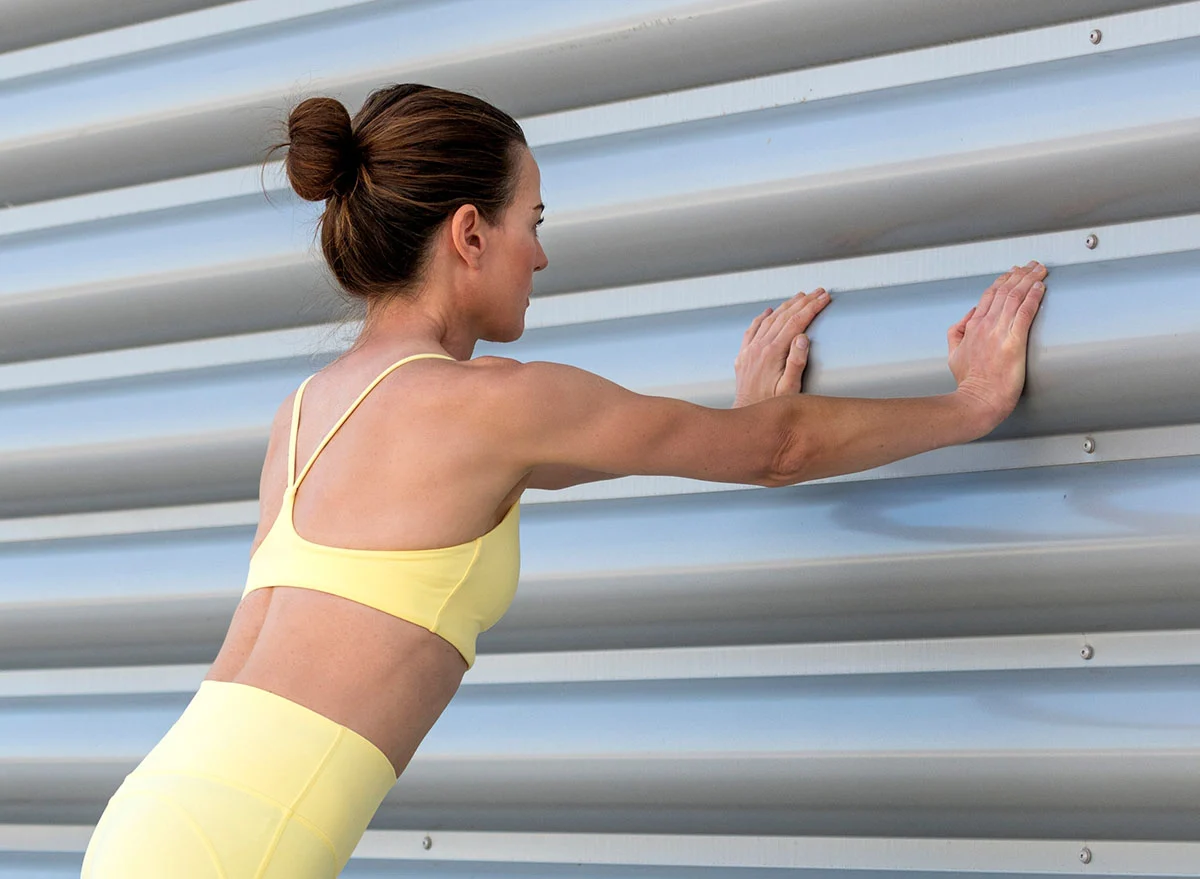
For many, the standard floor push-up feels intimidating or physically unattainable. However, the wall push-up offers a sophisticated, highly effective alternative that builds functional power without the joint stress of floor-based training. This 14-minute routine is designed to bridge the gap between sedentary habits and active living, providing a sustainable pathway to strength.
The Core Necessity: Why Upper-Body Strength Matters
Research consistently highlights that physical decline in the later stages of life is often linked to a loss of functional muscle mass. A study published in the Journal of Gerontology notes that upper-body strength is a pivotal indicator of one’s ability to perform "activities of daily living" (ADLs).
When you neglect your push muscles, you aren’t just losing definition; you are losing the ability to perform basic self-care tasks. The wall push-up is a low-impact solution that mimics the biomechanics of a standard push-up while significantly reducing the load on the wrists and lower back. By utilizing the wall as a training partner, you can gradually increase your resistance, ensuring that your body remains resilient, agile, and capable of handling the demands of everyday life.
The Chronology of Progress: A Structured Approach
Building strength after 60 is a marathon, not a sprint. To avoid injury and ensure consistent progress, this routine is structured to move from foundational stability to dynamic control.
Phase 1: Foundation (Weeks 1–2)
In the first two weeks, focus exclusively on the Wall Push-Up. Do not worry about speed. The goal is to master the "long line" from head to heels. If you find yourself arching your back, move your feet closer to the wall to reduce the difficulty.
Phase 2: Engagement (Weeks 3–4)
Introduce the Wall Push-Up Hold. This phase is about "Time Under Tension." By pausing at the bottom of the movement, you recruit stabilizing muscles in the rotator cuff that are often overlooked in faster, momentum-based workouts.
Phase 3: Integration (Weeks 5–6)
Introduce the Wall Shoulder Tap and the Close-Grip Push-Up. This is where we shift from linear pushing to multi-planar stability. By alternating your weight from one side to the other, you force your core to fire, which is essential for balance.
Phase 4: Mastery (Week 7 and beyond)
Integrate the Wall Push-Up to Reach. This final movement combines strength with range-of-motion, preparing your body for real-world scenarios where you may need to reach for a shelf or stabilize yourself against a moving object.

Supporting Data: The Science of Low-Impact Training
The efficacy of wall-based resistance training is backed by biomechanical principles. According to data from the National Center for Biotechnology Information (NCBI), resistance training in older adults increases bone mineral density and improves muscular coordination.
The wall push-up specifically isolates the pectoral major, the anterior deltoids, and the triceps. By keeping the body at an incline, the percentage of body weight being lifted is significantly lower than a floor push-up—typically ranging from 30% to 50% of total body weight—making it an ideal "entry-level" exercise that can be scaled indefinitely by simply adjusting the distance of your feet from the wall.
Professional Perspectives and Clinical Implications
Physical therapists often advocate for "closed-chain" exercises, where the hands are fixed against a stable object. Unlike dumbbells or machines, which require complex stabilization, the wall push-up provides a stable, predictable surface.
"The primary barrier to fitness for many seniors is the fear of falling or the inability to return to a standing position once on the floor," says Dr. Elena Rossi, a specialist in geriatric physical therapy. "By keeping the athlete in a standing position, we eliminate the ‘floor-phobia’ barrier. The wall becomes a tool that allows them to push hard without the psychological or physical risk of getting down on the ground."
The implications are clear: by standardizing this 14-minute routine, individuals can see marked improvements in shoulder health and postural alignment within just 30 days.
The 14-Minute Routine: Detailed Execution
This routine is designed to be performed 2–4 days per week. Always leave a rest day between sessions to allow for muscle recovery.
The Warm-Up (2 Minutes)
- Shoulder rolls (forward and backward)
- Gentle arm swings
- Slow, deliberate neck rotations
The Workout (10 Minutes)
- Wall Push-Ups: 2 sets of 10 reps. Focus on a 2-second descent and a 2-second ascent.
- Wall Push-Up Hold: 2 sets of 20 seconds. Keep your elbows at a 45-degree angle from your torso.
- Wall Shoulder Tap: 2 sets of 8 taps per side. Keep your hips square to the wall to prevent "swaying."
- Close-Grip Wall Push-Up: 2 sets of 8 reps. Keep your hands shoulder-width apart to target the triceps.
- Wall Push-Up to Reach: 2 sets of 6 reps per side. Reach vertically after each press.
The Cooldown (2 Minutes)
- Chest stretch against a doorframe
- Triceps overhead stretch
- Deep breathing to lower heart rate
Long-Term Implications for Healthy Aging
The true value of this routine lies in its simplicity. When exercise is complex, it is rarely sustained. By dedicating just 14 minutes, four times a week, you are investing in a future where you don’t have to ask for help to lift a suitcase into an overhead bin or to stand up from a deep, low-slung sofa.
As you progress, the "progressive overload" principle applies: as the exercises feel easier, simply step your feet one inch further from the wall. This minor change increases the leverage, requiring more force from your muscles.
Final Considerations for Safety
- Surface: Ensure your wall is flat and your feet are on a non-slip surface.
- Footwear: Wear supportive athletic shoes to maintain grip.
- Listen to your body: If you experience sharp, shooting pain in your joints (not just muscle fatigue), stop immediately and consult a professional.
- Hydration: Always drink water before and after your routine to maintain muscle elasticity.
By reclaiming your upper-body strength, you are doing more than just building muscle; you are fortifying your independence. The wall is always there—use it to push yourself toward a stronger, more capable version of you.