









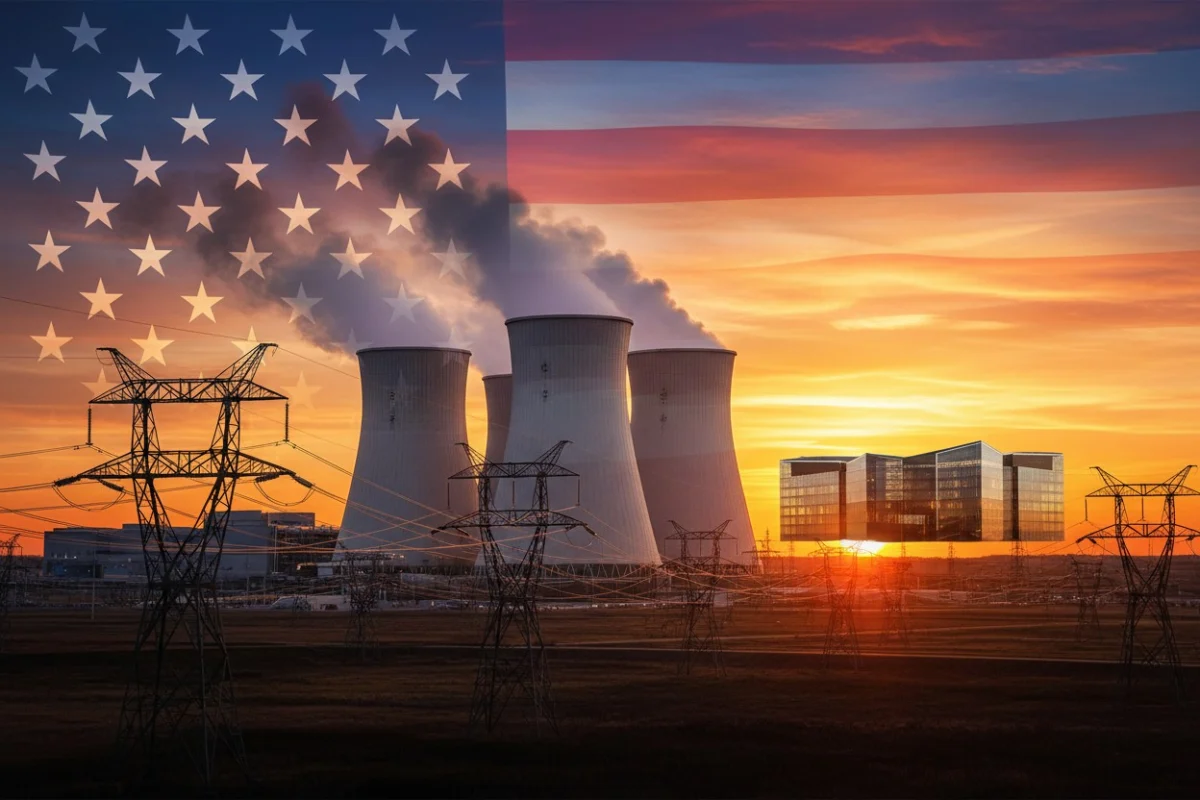
In a landmark move signaling the aggressive expansion of the American energy grid, the U.S. Department of Energy (DOE) has officially closed on a $1.9 billion loan to NextEra Energy. This massive capital infusion is earmarked for the revival of the Duane Arnold Energy Center, a 615-megawatt nuclear facility in Linn County, Iowa. The plant, which had been dormant since its decommissioning in 2020, is now slated for a comprehensive refurbishment, with a target operational restart date set for 2029.
This initiative is not merely a localized infrastructure project; it is a cornerstone of a broader federal strategy to secure the nation’s energy sovereignty. By providing low-cost financing, the DOE aims to lower the barrier to entry for capital-intensive nuclear restarts, ensuring that the United States can meet the unprecedented electricity demands of the artificial intelligence (AI) era.
The Strategic Partnership: Powering the AI Frontier
The revival of Duane Arnold is underpinned by a significant commercial anchor: Google. Under an agreement initially unveiled in October of the previous year, the tech giant will serve as the primary customer for the plant’s output. As Google continues to scale its cloud computing and AI infrastructure, it faces a voracious appetite for consistent, carbon-free baseload power.
This deal underscores a shifting paradigm in the tech industry, where the largest players are no longer satisfied with buying renewable energy credits. Instead, they are actively participating in the financing and procurement of dedicated, high-capacity generation assets. By securing a reliable stream of electricity from a revived nuclear reactor, Google is insulating its Iowa-based data center operations from the volatility of the broader energy market.
This loan marks the second of its kind from the DOE’s Loan Programs Office (LPO), following the $1 billion agreement reached last year with Constellation Energy to restore a reactor at the Three Mile Island facility in Pennsylvania. Together, these projects represent a strategic pivot, transforming retired nuclear assets into vital hubs for the digital economy.
Chronology: From Decommissioning to Resurrection
The story of the Duane Arnold Energy Center is a reflection of the tumultuous history of American nuclear power over the last half-century.
- 1974: The plant officially comes online, beginning nearly 50 years of continuous service as a reliable provider of carbon-free electricity to the Iowa grid.
- 2020: Citing economic headwinds—driven primarily by the prevalence of cheap natural gas and stagnant demand growth—NextEra Energy makes the decision to shutter the facility. A significant storm event further complicated the economics of continuing operations, leading to the plant’s early retirement.
- 2024: As the AI revolution creates an unprecedented surge in demand for electricity, the federal government begins looking toward legacy nuclear sites as the fastest route to expanding capacity.
- 2025: Negotiations between NextEra Energy and the Department of Energy culminate in the finalization of the $1.9 billion loan agreement.
- 2029 (Targeted): Following extensive refurbishment of the reactor and supporting infrastructure, Duane Arnold is scheduled to return to the grid, providing 615 megawatts of power to the region.
The Economic and Regulatory Landscape
The $1.9 billion loan is structured to provide the financial stability required for long-term industrial projects. By lowering financing costs, the DOE is effectively de-risking the project, allowing NextEra to focus on the technical challenges of bringing a dormant reactor back to life.
However, the road to 2029 is not without obstacles. The nuclear industry continues to grapple with high startup costs, lengthy regulatory review processes, and the complexities of modernizing infrastructure that was designed in the early 1970s. Despite these hurdles, the momentum for a "nuclear renaissance" is palpable. Industry experts and federal officials argue that nuclear energy is uniquely positioned to satisfy the dual requirements of carbon neutrality and high-capacity reliability—the latter of which wind and solar struggle to provide without massive, expensive battery storage arrays.
The funding for this project traces back to legislative efforts aimed at bolstering American energy infrastructure. Much of the capital deployed by the current administration comes from long-standing pools of funds, including allocations from the Inflation Reduction Act. While some critics argue over the allocation of these funds, the current administration has maintained that redirecting capital toward high-impact energy projects is a necessary response to the shifting global landscape.
Official Responses and Strategic Vision
Greg Beard, the director of the Energy Department’s Loan Programs Office, articulated the government’s stance during the announcement. "Duane Arnold is exactly the kind of investment that will help restore American nuclear leadership, strengthen our energy security, and deliver the affordable, reliable power Americans need to fuel our nation’s future," Beard stated.
The sentiment is echoed by broader administration goals. In July, at a White House ceremony, President Trump celebrated "historic milestones" for civilian nuclear energy, highlighting the success of private-sector companies in meeting ambitious nuclear deployment targets. The administration’s focus has been to ensure that by the nation’s 250th anniversary, the U.S. nuclear fleet is significantly expanded, utilizing both restarted legacy plants and the deployment of dozens of small modular reactors (SMRs).
While NextEra Energy has maintained a reserved stance on the specific financial terms of the loan, the company’s commitment to the project is clear. The partnership with Google serves as a private-sector validation of the project’s viability, suggesting that the industry views the restart not as a gamble, but as a necessary step to meet future load growth.
Implications for AI and Global Energy Security
The urgency behind this project is best understood through the lens of the current AI arms race. A recent report from OpenAI highlighted a staggering projection: the organization estimates a requirement for 100 gigawatts of new energy capacity annually to keep pace with the power needs of advanced AI data centers. To put this in perspective, 100 gigawatts is equivalent to the consumption of roughly 80 million households.
The report identifies electricity as "the new oil," a critical resource that will define global dominance in the 21st century. The document warns that the United States is currently being outpaced by international competitors—notably China—which added 429 gigawatts of new capacity in 2024, compared to just 51 gigawatts in the United States. In this context, the restart of Duane Arnold is not merely an isolated utility upgrade; it is a matter of national competitiveness.
Environmental and Regulatory Tensions
While the government and tech companies view nuclear power as the solution, the path forward faces opposition. In December, a coalition of over 230 environmental organizations issued a formal letter to Congress, calling for a "national data center moratorium." These groups argue that the massive electricity and water consumption required to maintain AI data centers poses a threat to local grids and environmental sustainability.
The DOE, however, maintains that the Duane Arnold loan does not imply an endorsement of any specific energy policy, but rather a commitment to meeting the indisputable growth in demand. The government’s position is that without the reliable baseload power provided by nuclear, the transition to a high-tech, carbon-neutral economy will be fundamentally unattainable.
Conclusion: A Turning Point
The $1.9 billion loan for the Duane Arnold nuclear plant represents more than a financial transaction. It is a defining moment for American energy policy, marking a transition from the era of nuclear stagnation to one of active, state-backed industrial policy.
As the project moves toward its 2029 restart, all eyes will be on the technical progress at the Linn County site. If successful, Duane Arnold could serve as a template for other shuttered facilities across the country, proving that the infrastructure of the past can be successfully retooled to power the innovations of the future. The "nuclear renaissance" is no longer a theoretical concept; it is an active construction project, fueled by the insatiable energy needs of the AI age and a federal commitment to ensuring the United States remains at the forefront of global technological development.