









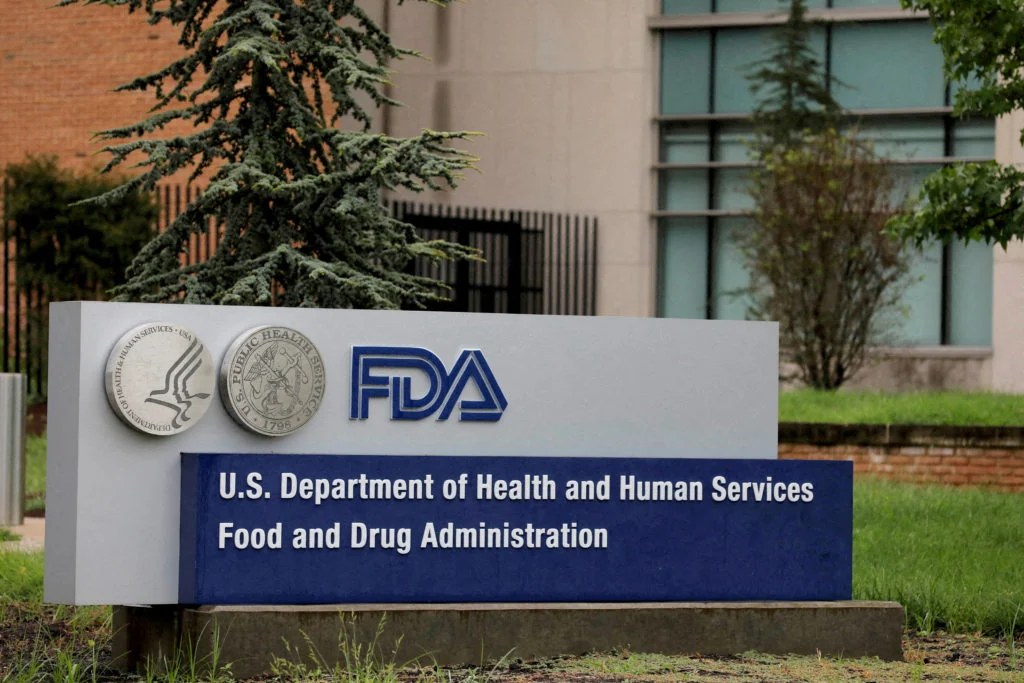
WASHINGTON — A nationwide outbreak of cyclospora—a parasite that causes debilitating intestinal distress—linked to contaminated iceberg lettuce has reignited a fierce debate over the integrity of the American food supply chain. While the recall of salad products supplied to major restaurant chains like Taco Bell, Pizza Hut, and KFC has drawn headlines, the incident has exposed a more systemic, long-term vulnerability: the U.S. Food and Drug Administration (FDA) is increasingly struggling to police the vast network of international farms and processing plants that feed the American public.
As the volume of imported produce continues to surge, the regulatory apparatus tasked with ensuring its safety is faltering. Agency records reveal that FDA inspections of foreign food facilities have plummeted nearly 35% since 2019, the last full year before the COVID-19 pandemic effectively paralyzed global travel and site-based oversight. Today, even as the world has returned to normalcy, the FDA’s inspection capacity remains stunted by staffing shortages, administrative turmoil, and a reliance on outdated protocols that experts argue are ill-equipped for the modern food economy.
The Anatomy of an Outbreak: A Case Study in Delay
The recent cyclospora outbreak serves as a grim case study in the limitations of current federal oversight. The recall was formally announced on July 17, triggered by clusters of illness reported across multiple states. However, it took nearly a month for FDA investigators to reach the suspected source: a Taylor Farms facility in Guanajuato, Mexico.
For food safety experts, the one-month lag between the identification of a threat and the arrival of "boots on the ground" is an unacceptable failure in a landscape where pathogens move quickly through fresh produce ecosystems.
"When these outbreaks happen in fresh produce, you have to respond quickly because these are very complex and changing ecosystems," said Frank Yiannas, the former top food safety official at the FDA. "It took us too long to get boots on the ground."
The delay was further compounded by procedural friction. While the FDA eventually conducted an inspection, the agency faced significant headwinds. In a bizarre turn of events earlier in the investigation, regulators were forced to retract a faulty test result that had incorrectly identified cyclospora on a sample of Taylor Farms lettuce at the U.S. border. While the FDA maintains that the farm is the likely source of the parasite, Mexican food authorities have pushed back, asserting that their own internal testing has yielded no positive samples or hygiene red flags at the facility. This diplomatic and scientific impasse highlights the growing difficulty of verifying contamination in a globalized market.
A Decade of Missed Targets and Diminished Capacity
The crisis in oversight is not a sudden development, but rather the culmination of over a decade of failed legislative goals. Following a series of high-profile, deadly outbreaks involving spinach and cantaloupe, Congress passed the Food Safety Modernization Act (FSMA) in 2011. The law was intended to revolutionize the safety of the food supply, mandating rigorous testing, hygiene training, and—crucially—aggressive, consistent international inspections.
Under the provisions of the FSMA, the FDA is theoretically required to inspect more than 19,000 international food sites annually. Yet, the agency has never come close to meeting this mandate. Even at the height of its activity in 2019, the FDA managed only 1,700 foreign inspections—less than 10% of the congressional target.
Former FDA regulators point to a chronic lack of funding as the primary culprit. For years, the agency’s food safety budget has remained essentially stagnant, failing to keep pace with the exponential growth in food imports. The Government Accountability Office (GAO) has repeatedly criticized the FDA for failing to identify an appropriate, realistic annual inspection target, leaving the agency in a perpetual state of "playing catch-up" with a global industry that moves faster than its regulators.
Internal Upheaval and the "Staffing Drought"
The operational challenges facing the FDA are exacerbated by severe personnel issues. The pandemic triggered a wave of retirements among veteran inspectors, and the agency has struggled to replace them. The current workforce, numbering around 420 staffers dedicated to food inspections, faces a chronic vacancy rate of 10% to 15%.
The work is notoriously grueling. Foreign inspectors often spend more than half of their working time on the road, navigating complex logistics, foreign languages, and international travel requirements. This high-stress environment has led to significant attrition, leaving the agency with a younger, less experienced pool of investigators.
The situation has been further complicated by administrative shifts under the Trump administration. While frontline inspectors were not the primary targets of recent mass job cuts, the agency eliminated more than half of the staff responsible for handling travel logistics and bookings. This has placed the burden of itinerary management, flight coordination, and lodging directly onto the inspectors themselves, detracting from their primary mission of identifying health risks.
"Until you can better incentivize people to stay in those positions, I think the agency is going to continue to see high attrition," said Michael Rogers, who spent 35 years in various inspection roles at the FDA. "That ultimately may impact the FDA’s ability to enhance and increase inspections."
Rethinking Oversight: Beyond the Physical Inspection
As the traditional inspection model struggles to keep pace, the FDA has begun exploring "alternative" approaches to ensure safety. The Trump administration has proposed a pilot program involving one-day inspections—a concept that has drawn sharp criticism from industry veterans. Critics like Rogers argue that abbreviated visits are a "check-the-box" exercise that lacks the depth of traditional, week-long inspections, which are necessary to uncover deep-seated sanitation failures.
FDA officials, however, argue that the reliance on physical site visits is an outdated paradigm. "Inspections will never be the only way to ensure the safety of imported products given the massive volume coming into the country," says Susan Mayne, former FDA food director and current professor at Yale University. "That’s why the FDA uses border inspections, importer inspections, sampling, and other tools."
Some experts suggest the solution lies in technology. Machine learning, real-time supply chain monitoring, and remote auditing could potentially allow the FDA to target its limited resources toward the highest-risk facilities.
Furthermore, the 2011 FSMA law included a requirement for manufacturers to implement standardized barcoding for produce, allowing for near-instantaneous tracing of contaminated items. Despite the urgency, implementation has been delayed repeatedly due to industry pushback. "There’s widespread acknowledgment that these are complex issues," says Brian Ronholm of Consumer Reports. "But when you have 17 years to prepare for a final exam, you should be able to pass it."
The Road Ahead: Implications for Public Health
The statistics for the current fiscal year are sobering: companies have already announced more than 480 food recalls, a figure that is on track to eclipse almost every year of the last half-decade. With foreign food inspections falling an additional 17% in fiscal year 2025, reaching only 1,140 total visits, the gap between the amount of food entering the U.S. and the level of oversight applied to it is widening.
The implications for public health are profound. As the FDA continues to struggle with recruitment, funding, and the adaptation of its regulatory framework, the American consumer remains the final line of defense in a system that is increasingly prone to error.
Whether through increased congressional appropriations, the successful implementation of long-delayed digital tracking, or a fundamental restructuring of how the FDA approaches foreign oversight, one thing is clear: the current model is under unsustainable pressure. For now, the "fragile harvest" continues, with the nation waiting to see if regulators can modernize before the next major outbreak occurs. As former FDA official Frank Yiannas concluded, "We can’t use the same approaches and limited tools that we’ve used for the past 30 years."