




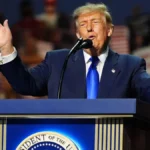







WASHINGTON, D.C. — As the military campaign against Iran enters its grueling sixth month, the White House has introduced a stark new variable into the geopolitical calculus: the U.S. midterm elections. President Donald Trump, speaking to reporters on Wednesday, September 9, asserted that the hostilities—which have disrupted global energy markets and rattled the Strait of Hormuz—would reach an “immediate” conclusion following the November 5 vote.
The president’s remarks have sent shockwaves through Washington and foreign capitals alike, raising profound questions about whether American military engagement is being calibrated to suit a domestic political timeline. With oil prices fluctuating in direct response to the volatility in the Persian Gulf and the Democratic opposition mounting a fierce critique of the administration’s strategy, the war has become the singular defining issue of the autumn campaign season.
The Calculus of Conflict: A Political Timeline
President Trump’s assertion that the war will dissipate in the immediate aftermath of the midterms suggests that the administration perceives Tehran to be at a breaking point. “They can’t hold out any longer,” the President told reporters, framing the Iranian government as “desperate” to influence the outcome of the American elections.
This framing suggests a White House strategy of attrition, where military operations are maintained at a specific intensity to prevent a full-scale regional conflagration while simultaneously keeping the Islamic Republic under maximum pressure. Secretary of State Marco Rubio has reportedly signaled to key allies that the White House is pivoting away from large-scale offensive operations, focusing instead on a rigid enforcement of sanctions.
However, political analysts remain skeptical of the President’s optimistic timeline. “War is rarely as obedient to an electoral calendar as a campaign manager might wish,” noted one defense expert. By tethering the conflict’s resolution to a specific date in November, the administration has effectively placed the credibility of its foreign policy squarely on the ballot.
Chronology of the Hostilities
The conflict, which erupted following a series of targeted U.S. strikes on Iranian military assets, has rapidly evolved into a multifaceted struggle for regional dominance.
- Months 1-2: The initiation of hostilities saw rapid U.S. air strikes aimed at degrading Iranian command-and-control centers. Tehran responded with asymmetrical warfare tactics, shifting focus toward maritime disruption.
- Months 3-4: The theater of operations expanded to the Strait of Hormuz. Iranian forces, utilizing anti-ship missiles and drone swarms, targeted commercial vessels. Tensions hit a flashpoint when Tehran confirmed targeting 10 vessels, including two U.S. warships, marking the most direct engagement between the two nations in decades.
- Months 5-6: The war has settled into a grinding, low-intensity conflict. Despite the lack of confirmed U.S. casualties, the humanitarian toll in Iran has become a point of contention, with reports emerging from state media regarding civilian fatalities, including an incident at a wedding in Hormozgan Province.
Economic Volatility and the "Energy Tax"
The economic fallout of the conflict has been immediate and severe. As a critical chokepoint for global oil transit, the Strait of Hormuz has become the world’s most dangerous maritime corridor. The administration has explicitly linked the surge in domestic fuel prices to the conflict, with President Trump promising that the “energy tax” currently being paid by Americans will subside once the military situation is resolved post-election.
The administration’s strategy—often described internally as an “economic D-Day”—seeks to combine kinetic military action with suffocating financial sanctions. By targeting the Iranian economy, the White House hopes to force Tehran to the negotiating table. Yet, as the war stretches into its half-year mark, the effectiveness of this dual-track strategy is being questioned by economists who warn that the market’s “war premium” on oil is becoming entrenched.
Official Responses and Political Firestorm
The Democratic Party has moved to capitalize on the administration’s foreign policy struggles. As the six-month mark of the war passes, Democratic leadership has launched a coordinated messaging campaign under the slogan, “No end in sight.”

“The American people deserve to know if our service members are being deployed for national security or for political optics,” stated a senior Democratic strategist. The opposition argues that the administration’s failure to secure a definitive victory—or even a clear de-escalation path—has exposed the flaws in the “maximum pressure” doctrine.
The White House, for its part, has remained largely insulated from these criticisms, declining to provide detailed responses to the press regarding the specific mechanics of its post-election transition plan. While President Trump continues to insist that the conflict will evaporate on November 6, the silence from the Pentagon regarding troop movements and force postures suggests that the military planning may not be as definitively aligned with the election date as the President’s public rhetoric implies.
Regional Dynamics and Historical Parallels
The conflict is not occurring in a vacuum. Regional powers have played an outsized role in the escalation of hostilities. Israeli leadership, in particular, has characterized the toppling of the current Iranian regime as a fundamental mission, signaling a desire for a more aggressive posture than the one currently being maintained by the White House.
Critics of the administration’s strategy draw direct parallels to past American interventions in the Middle East. The prevailing belief that overwhelming firepower can force sovereign nations into compliance has historically yielded mixed results, and observers warn that the Trump administration risks repeating the errors of previous administrations.
The complexity of these regional interests—from the security of Israeli borders to the stability of energy markets in the Arabian Peninsula—suggests that even if the White House were to declare a victory in November, the underlying tensions that fueled the war would likely persist.
Implications for the Future
The coming weeks represent a high-stakes gamble for the administration. By promising a resolution to the conflict immediately following the midterm elections, the President has set a standard that will be scrutinized by both his supporters and his detractors.
If the conflict continues beyond November, the administration will face a crisis of credibility. Conversely, if the intensity of the war wanes, the President will likely claim a masterful execution of a long-term geopolitical strategy. However, the reality of the conflict—defined by persistent maritime threats and the unpredictability of Iranian retaliation—suggests that the resolution may not be dictated by the ballot box, but by the complex, often chaotic, realities of the region itself.
As the nation approaches November 5, the "No end in sight" narrative will continue to clash with the administration’s promises of a swift conclusion. For now, the world watches the Strait of Hormuz, where the movement of oil tankers remains the true indicator of the war’s trajectory—and the ultimate test of the President’s promise.
Summary Data Table: Impact of the Conflict (Year-to-Date)
| Metric | Status |
|---|---|
| Duration | 6 Months |
| Primary Theater | Strait of Hormuz / Persian Gulf |
| U.S. Military Status | Active (Low-intensity/Sanctions-focused) |
| Energy Impact | Significant increase in global fuel prices |
| Diplomatic Status | Stalled (Focus on post-election resolution) |
| Primary Political Goal | Maintain stability until Nov. 5 elections |
Disclaimer: This report is based on current intelligence, administration statements, and ongoing regional developments. As of this writing, there have been no official reports of direct combat between U.S. and Iranian ground forces, though the maritime theater remains highly volatile.