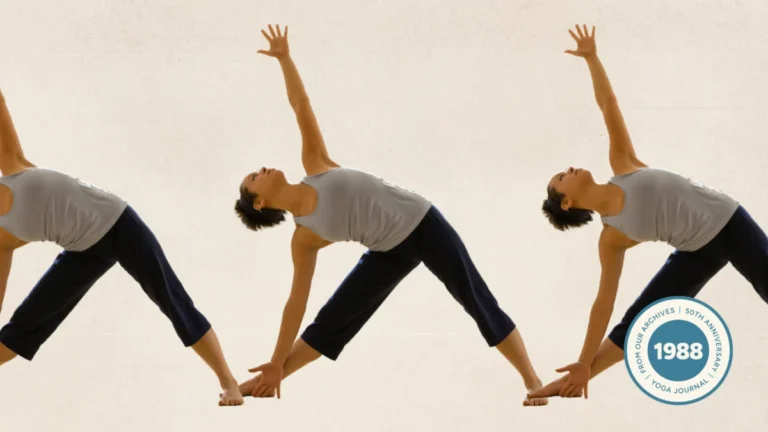









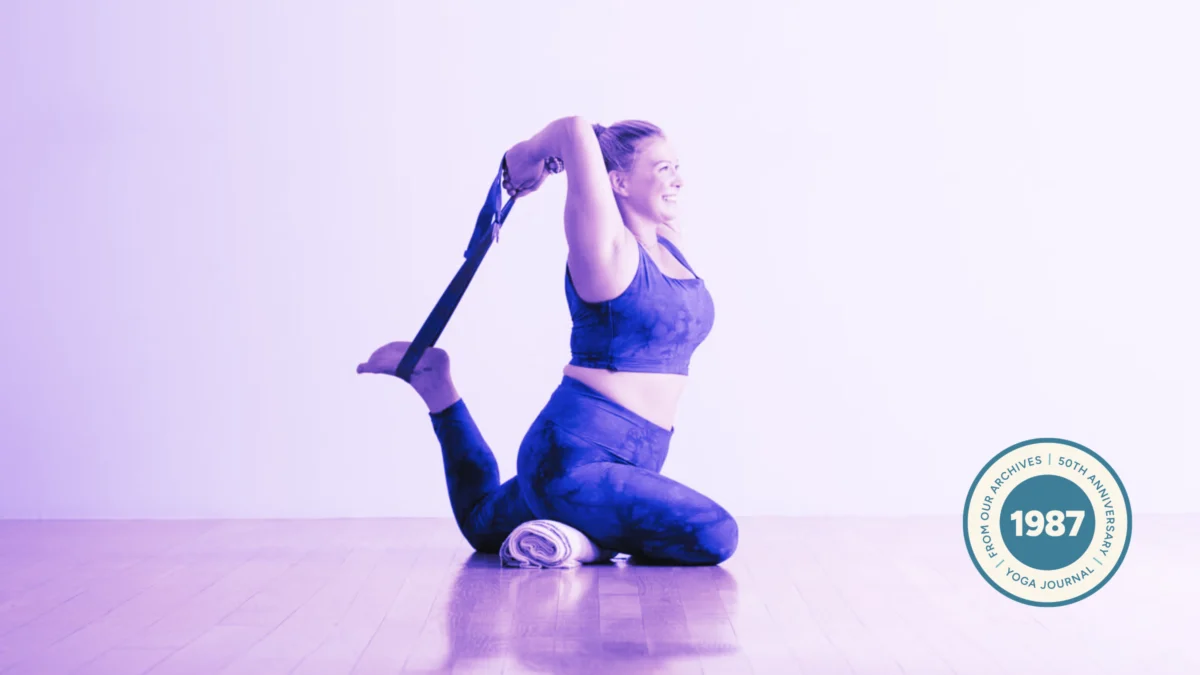
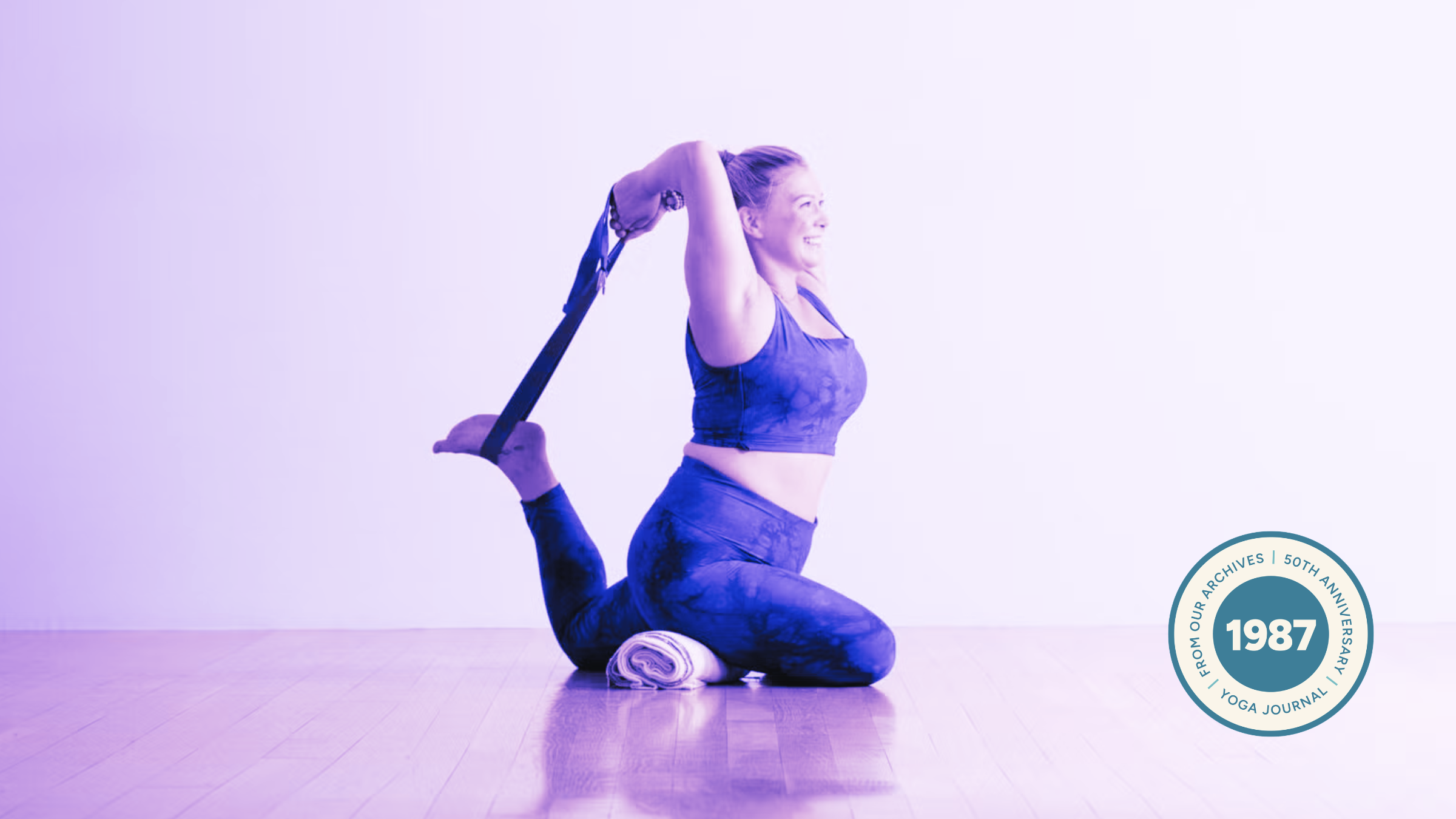
Published September 10, 2026. This archival feature reflects on a seminal exploration of anatomy, breath, and the Pigeon Pose, originally published in the July-August 1987 issue of Yoga Journal.
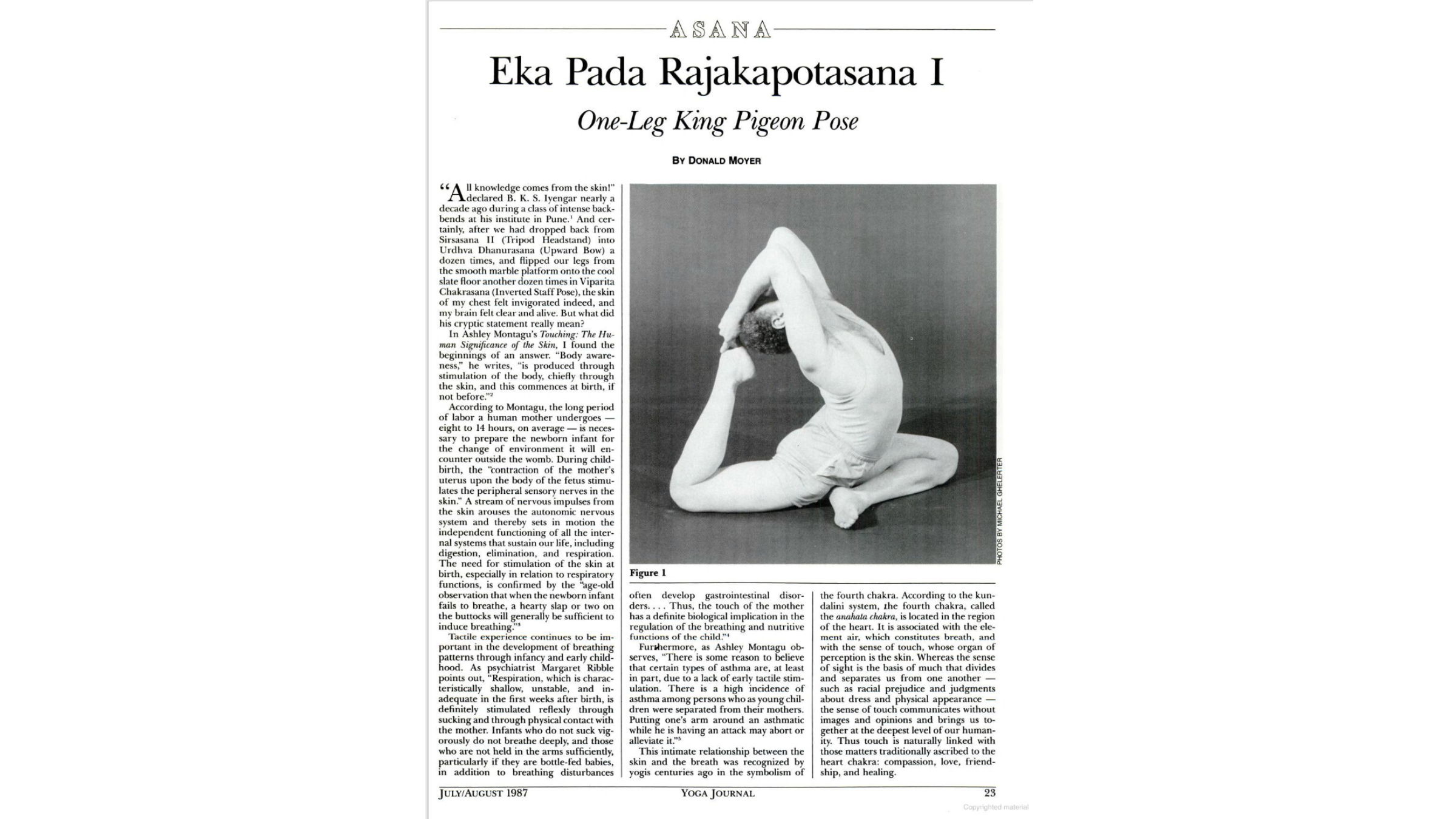
In the annals of yoga history, few figures have cast a shadow as long—or as precise—as B.K.S. Iyengar. Nearly four decades ago, in the hallowed halls of his Pune institute, the yoga master offered a provocation that would reshape the practice for generations: "All knowledge comes from the skin!"
While the statement sounds cryptic to the uninitiated, it serves as the cornerstone for a sophisticated understanding of how the body communicates with the brain. Whether executing a demanding transition from Sirsasana II (Tripod Headstand) to Urdhva Dhanurasana (Upward Bow), or moving between the rigid marble of an institute floor and the cool slate of a practice room, the practitioner’s skin acts as the primary sensory bridge between the internal landscape and the external environment.
The Science of Tactile Awareness: From Birth to Breath
The philosophical assertion that the skin is the primary organ of perception is supported by biological science. In his influential work, Touching: The Human Significance of the Skin, Ashley Montagu posits that body awareness is a direct byproduct of tactile stimulation, a process that begins in utero and accelerates during the physiological trauma of birth.
The labor process—a grueling eight to 14 hours—is not merely a transition for the infant; it is a sensory awakening. The contractions of the uterus stimulate the peripheral sensory nerves, sending a cascade of nervous impulses to the autonomic nervous system. This "first touch" kickstarts the internal systems required for life: digestion, elimination, and, most crucially, respiration.
Yogic tradition recognized this millennia ago, mapping the relationship between touch and the Anahata (Heart) chakra. Associated with the element of air, the heart center is where the physical act of breathing meets the emotional capacity for compassion. While sight often serves to categorize and divide, touch is an integrative force—a way of knowing that requires no judgment, only presence.
B.K.S. Iyengar and the Healing Power of Surface
For B.K.S. Iyengar, the realization that the skin was not merely an anatomical "packaging" for the muscles and bones arrived through his own journey of healing. In his early years, struggling with poor health and the toxins of unaddressed childhood ailments, Iyengar observed his own perspiration during practice.
"When I noticed the water gradually changing, my attention went onto the skin," Iyengar recalled. "I asked myself: is the skin just an anatomical cover, or is it an organ of perception? When I started moving the skin, the smell started disappearing, and I realized why ancient people said the skin is an organ of perception."
Iyengar concluded that the quality of the skin is a diagnostic map for the organs within. If the skin of the front rib cage is constricted, the intercostal muscles inevitably follow suit, preventing the lungs from reaching their full capacity. This realization shifted his entire methodology: to change the breath, one must first liberate the skin.
The Experimental Practice: A Two-Part Breath Study
To grasp the efficacy of this approach, one need only perform a brief, guided experiment.
- The Internal Focus: Recline in Savasana (Corpse Pose) and focus exclusively on the lungs. Observe how the breath moves—or fails to move—within the rib cage and abdomen. Most practitioners will find the breath shallow, localized, and potentially restrictive.
- The Surface Focus: Shift your awareness to the skin of the rib cage. Imagine the skin as a porous, expansive membrane. As you invite the skin to soften and broaden, observe the physiological ripple effect.
Typically, this shift in focus causes the rib cage to rise with a natural, wave-like cadence. The lungs, once constricted by internal effort, respond to the external "skin-space" by expanding fully and naturally.
The Anatomy of Eka Pada Rajakapotasana I
This philosophy of skin-awareness is nowhere more critical than in the practice of advanced backbends, specifically Eka Pada Rajakapotasana I (One-Legged King Pigeon Pose). The pose, which mimics the proud, lifted chest of a pigeon, is a gateway to the heart chakra. However, it is also a site of potential compression.
Chronology of Preparation
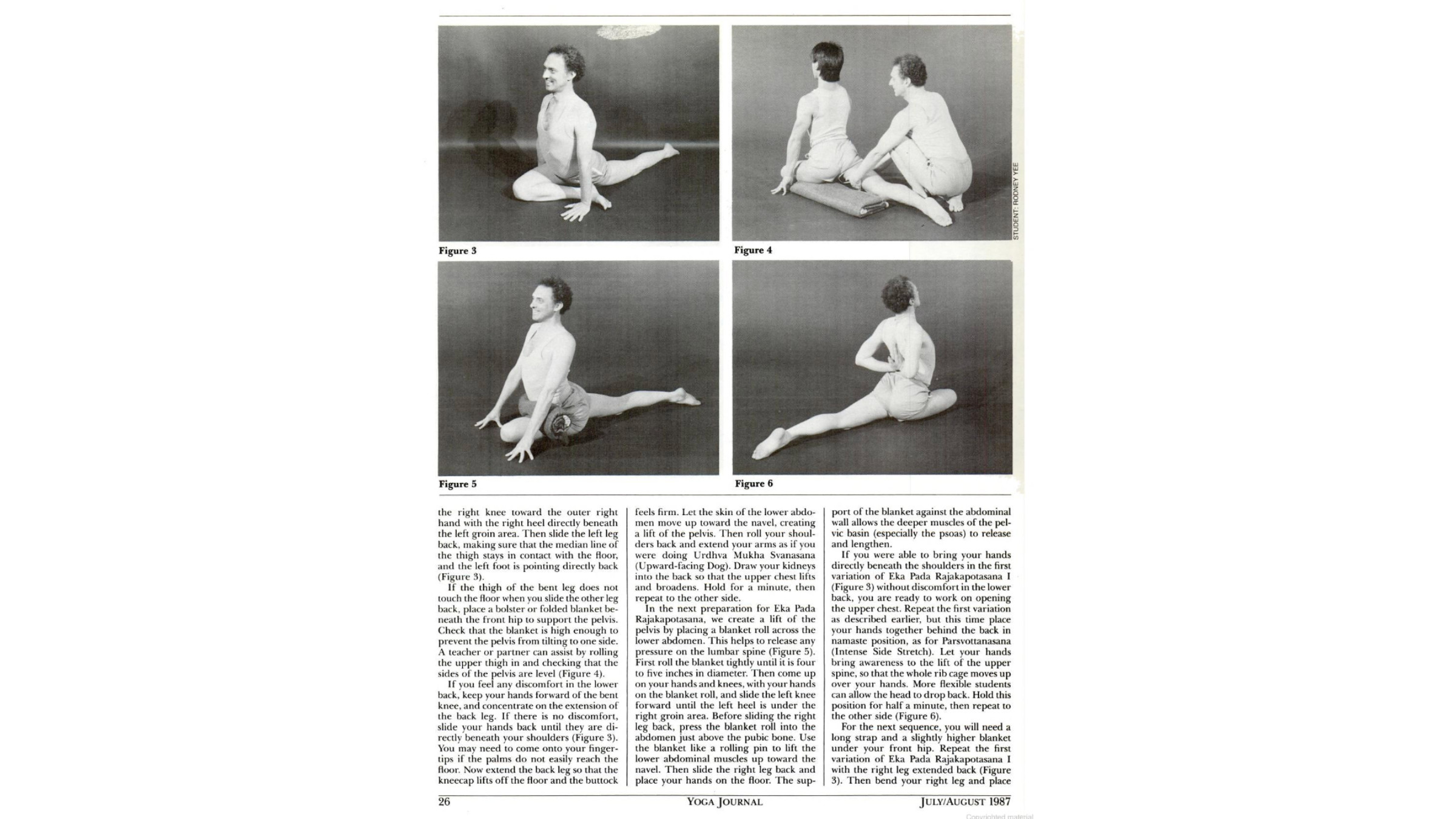
To approach this advanced posture safely, practitioners must follow a disciplined progression, building upon intermediate foundations:
- Foundation: Mastery of Salabhasana (Locust), Dhanurasana (Bow), and Urdhva Mukha Svanasana (Upward-Facing Dog) is mandatory.
- Pelvic Alignment: Tight quadriceps often inhibit backbending. Using props like bolsters or folded blankets under the front hip is essential to maintain a level pelvis.
- Abdominal Release: Utilizing a rolled blanket under the lower abdomen acts as a "rolling pin," encouraging the psoas and deeper pelvic muscles to release rather than grip.
Technical Execution
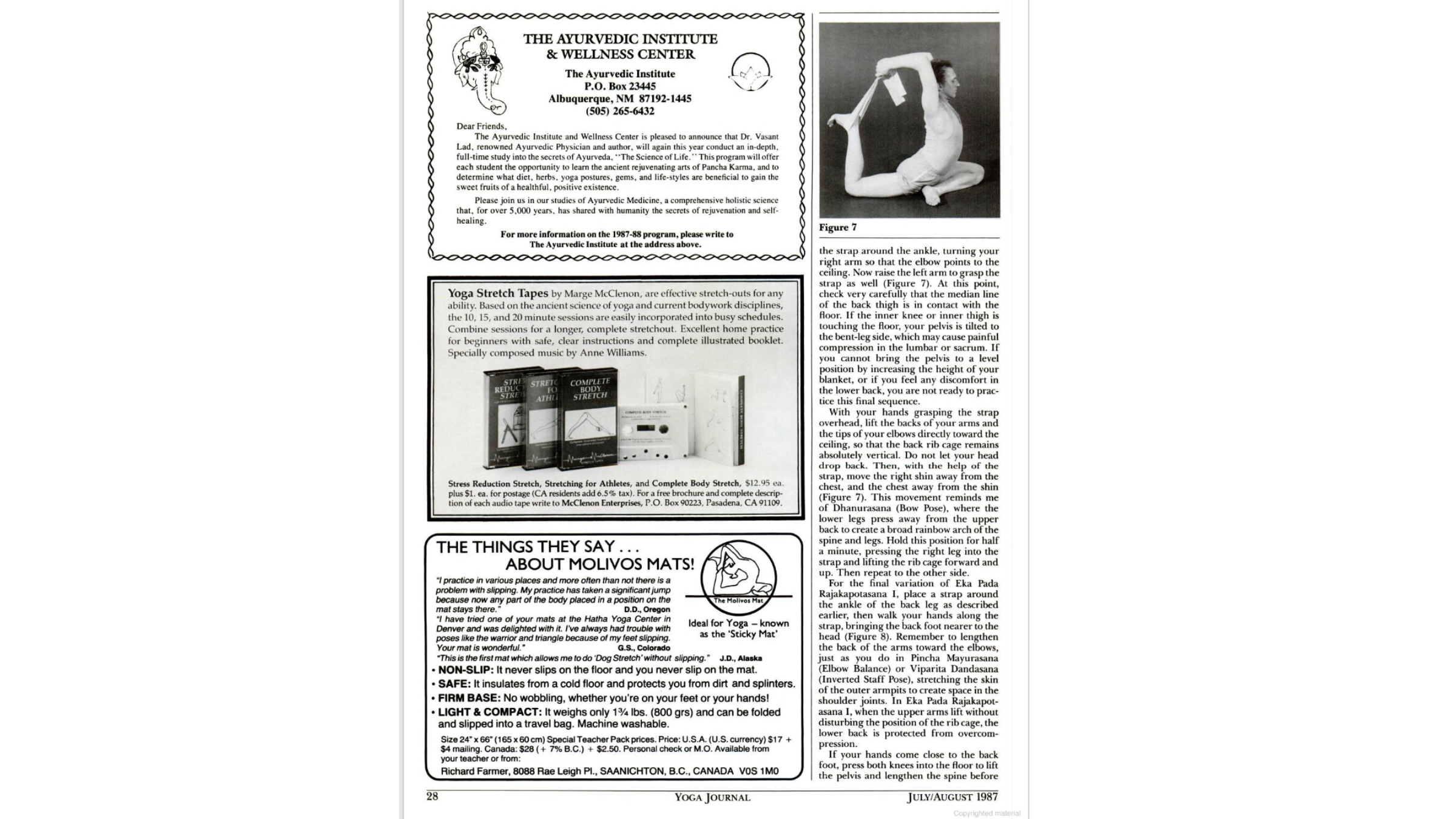
As you move into the final variations of the pose, the focus must remain on the relationship between the skin of the arms and the rib cage. By stretching the skin of the outer armpits, one creates the space necessary to protect the lumbar spine.
When grasping the foot, the breath often quickens—an involuntary response to the intensity of the stretch. The practitioner’s goal is to "pacify the breath" by continuing to release the skin of the front chest. This creates the "rainbow arch" of the spine that characterizes the classical form of the posture.
Implications for Modern Practice
The enduring lesson of Iyengar’s 1987 archive is a critique of modern "willful" yoga. Many practitioners treat the breath as a task to be mastered through force or rhythmic manipulation. However, by imposing an arbitrary pattern on the breath, we often create more tension than we resolve.
Instead, the Iyengar method suggests that the breath should be invited, not commanded. By working indirectly—through the skin, through alignment, and through the cultivation of sensory awareness—we set in motion the body’s innate, self-regulating mechanisms.
Summary of Key Takeaways:
- The Skin as Sensor: Treat the skin as an active participant in your practice, not just a surface.
- The Indirect Approach: To open the chest, focus on the skin of the rib cage rather than the lungs themselves.
- Prop Usage: The use of blankets and straps is not a sign of weakness, but a tool for precise anatomical adjustment, allowing the psoas and pelvis to open safely.
- Nurturing the Self: The "healing touch of the mind" is the ultimate tool in asana practice. By nurturing the body through awareness, we improve our quality of response to life’s external pressures.
In our current era, where sensory overload is constant, the wisdom of 1987 remains strikingly relevant. We are not just building flexible bodies; we are refining our ability to perceive, to soften, and to breathe through the complexities of our own physical form. When we master the skin, we unlock the heart—and when the heart is open, the breath finally finds its home.